1-day private tour · Morocco
9-Day Jewish Heritage Tour of Morocco: Casablanca to Marrakech
A private 9-day Jewish heritage tour of Morocco, from the Jewish Museum of Casablanca and the Ibn Danan Synagogue in Fes to the mellah and Miaara cemetery of Marrakech, with the Sahara and the kasbah road in between.
About This Tour
· Morocco
Morocco held the largest Jewish community in the Muslim world for centuries, and the traces of it are still here: the mellahs of Fes and Marrakech, synagogues that are still cared for, cemeteries whitewashed every spring, and a museum in Casablanca that exists nowhere else in the Arab world. This private 9-day route visits them in the order history left them, from the Atlantic coast to the edge of the Sahara.
Most Jewish Morocco tours are run as fixed group departures on fixed dates. This one is private: your own driver-guide, your own vehicle, your own dates, and licensed local guides in Casablanca, Fes and Marrakech who know these quarters properly rather than reciting a script at the gate.
Tour Highlights
The best of this journey
Photo Gallery
9-Day Jewish Heritage Tour of Morocco: Casablanca to Marrakech
Tour Itinerary
Day by day, 9 days
-
Iti1
Day 1: Arrive Casablanca — the Jewish Museum and Beth-El
Your driver meets you at Casablanca airport. Depending on your arrival time, we begin at the Museum of Moroccan Judaism, the only museum of its kind in the Arab world, housed in a former Jewish orphanage and holding Torah scrolls, textiles, and reconstructed synagogue interiors from across the country.
Then Temple Beth-El, still in use and known for its stained glass, and a drive past the Hassan II Mosque on the ocean before dinner.
-
Iti2
Day 2: Casablanca to Fes by way of Rabat and Meknes
We drive north to Rabat for the mellah in the old city and the Jewish cemetery above the river, then on to Meknes, where the Jewish quarter sits beside the imperial walls of Moulay Ismail.
Into Fes in the late afternoon, with two nights there.
-
Iti3
Day 3: Fes — the mellah, Ibn Danan, the cemetery
A full day with a licensed Fes guide. The mellah of Fes el-Jdid was the first Jewish quarter in Morocco, created in the fourteenth century, and its houses still carry the balconies that distinguish them from the rest of the medina.
The Ibn Danan Synagogue, seventeenth century and carefully restored, with its bimah and the mikveh beneath. Then the Jewish cemetery, its white tombs stepped down the slope, and the tomb of Solica. In the afternoon the wider medina: Al-Qarawiyyin, the tanneries, Bab Boujloud.
Today is on foot with a licensed local guide, because the old city is a place you have to be walked through to understand.
In Fes that means Fes el-Bali, the walled medina founded in the ninth century, the Chouara tanneries seen from the terraces above, the Al-Qarawiyyin mosque and university, and the mosaic and brass workshops still working in the lanes.
The Bou Inania madrasa is one of the few religious buildings in Fes open to non-Muslim visitors, and its cedar and zellij work repays the stop.
The mosaic workshops still cut each zellij tile by hand with a chisel, which is the only way the pieces lock without a gap.
-
Iti4
Day 4: Sefrou, the Middle Atlas and down to Erfoud
South to Sefrou, a small town that held one of the oldest and proportionally largest Jewish communities in Morocco and was known as Little Jerusalem. The mellah and the old synagogue buildings remain, quieter and less visited than those in Fes.
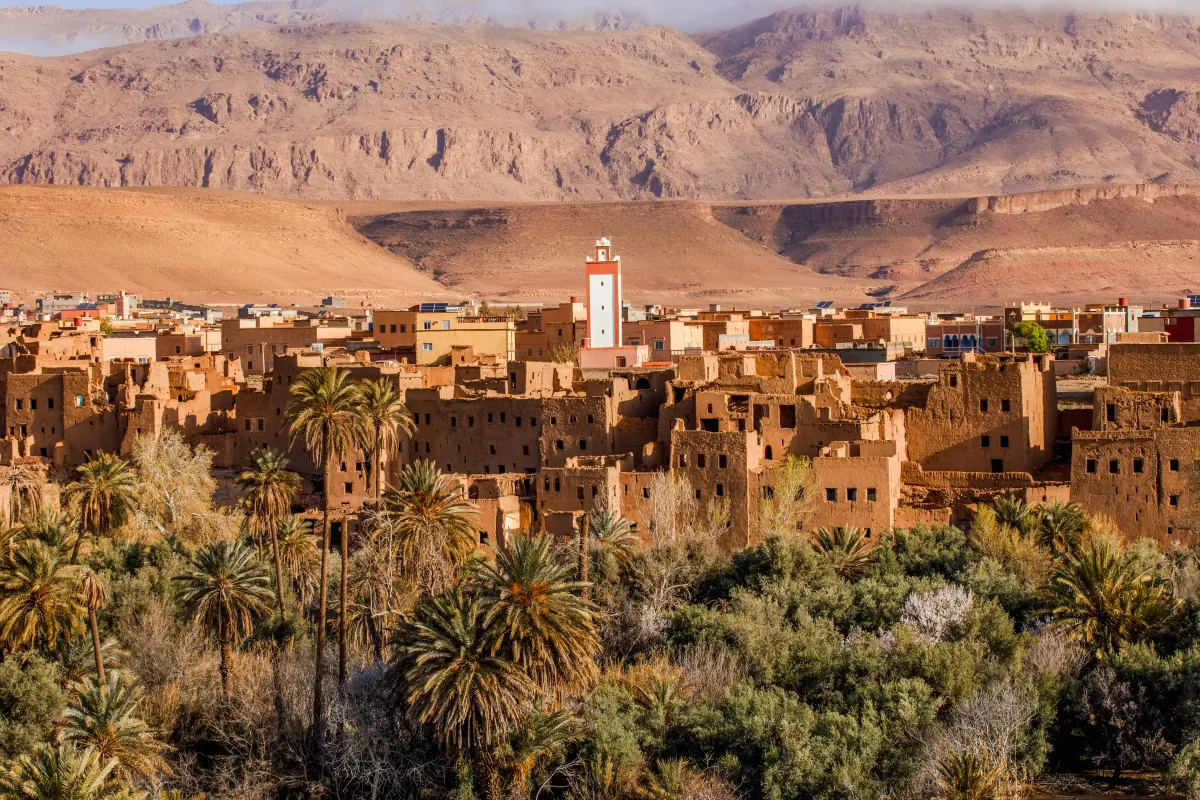
Then up through the cedar forest at Azrou, across the Middle Atlas by Midelt, and down the Ziz Valley with its long palm oasis to Erfoud.
-
Iti5
Day 5: Rissani, the Tafilalet and the Erg Chebbi dunes
The Tafilalet oasis was a trading crossroads for centuries, with Jewish merchants working the caravan routes that ran south across the Sahara. We visit the market at Rissani and the ruins of Sijilmassa, the caravan city those routes were built around.
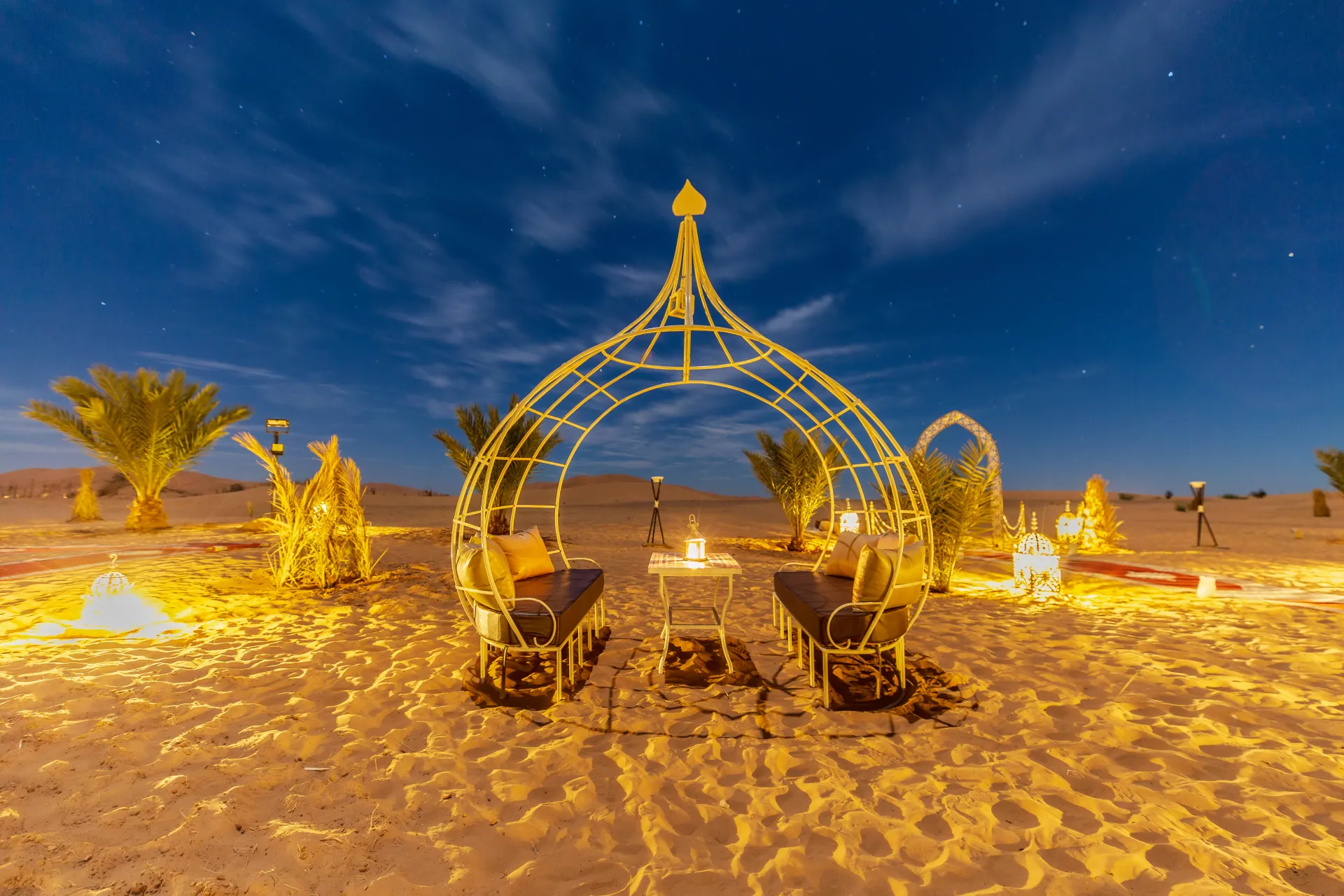
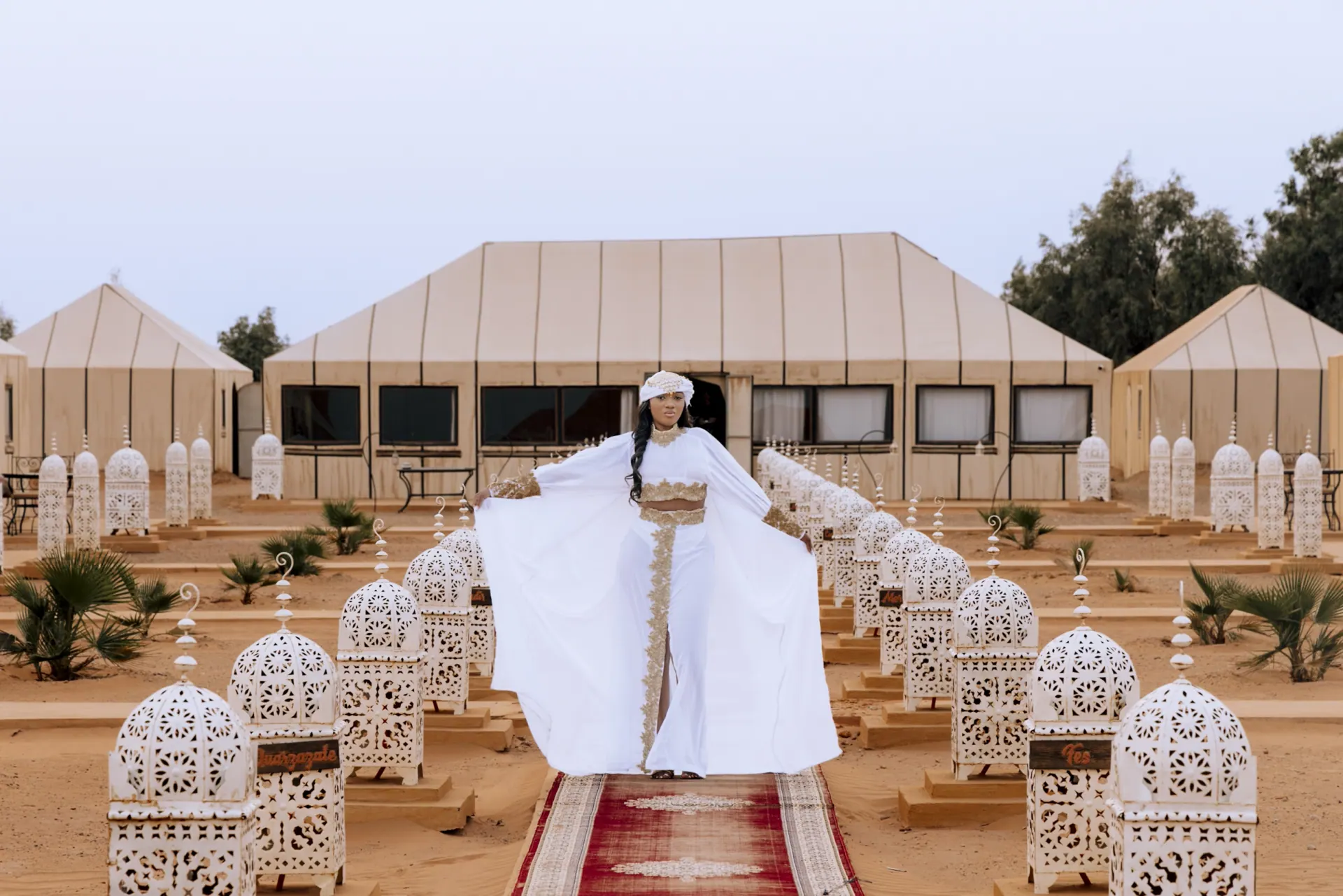
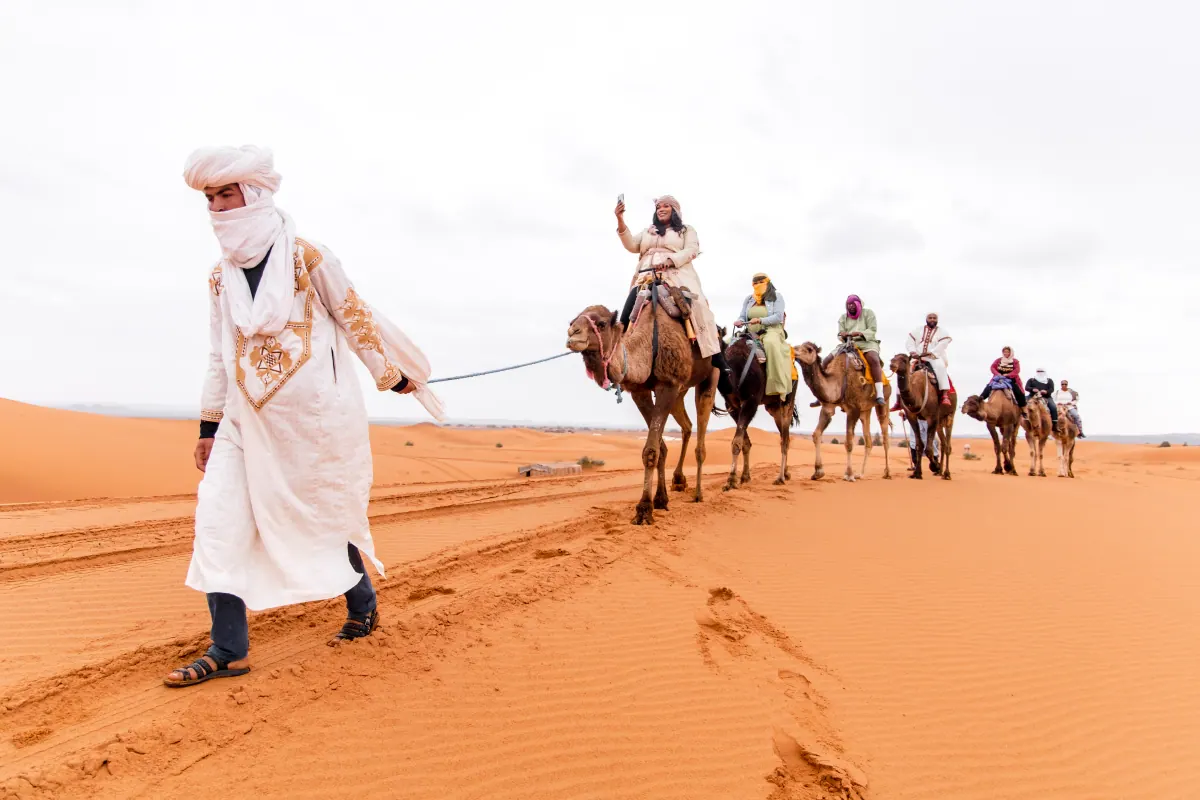
In the afternoon, camels out onto the Erg Chebbi dunes for sunset and a night in a desert camp.
The desert takes the second half of the day: a camel ride into the dunes timed for the light, with the sand turning from gold to deep orange as the sun drops.
Dinner is at camp under a sky with no light pollution at all, usually with drums around the fire, and the night is spent in a tent before the sunrise back over the dunes.
Sunrise over the dunes comes early but nobody regrets it: the light arrives before the heat, and the sand is still cold underfoot.
Dinner at camp is tagine cooked over the fire, and the drums usually come out once the plates are cleared.
-
Iti6
Day 6: Merzouga to the Dades Valley through the gorges
Sunrise over the dunes, then west along the old caravan road. The Todra Gorge, where the cliffs close to a few metres apart, and lunch beside the river.
Along the Road of a Thousand Kasbahs to the Dades Valley for the night.
-
Iti7
Day 7: The Rose Valley, Ouarzazate and Ait Ben Haddou
Through the Valley of Roses and Skoura's palm grove, then Ouarzazate and the Taourirt kasbah.
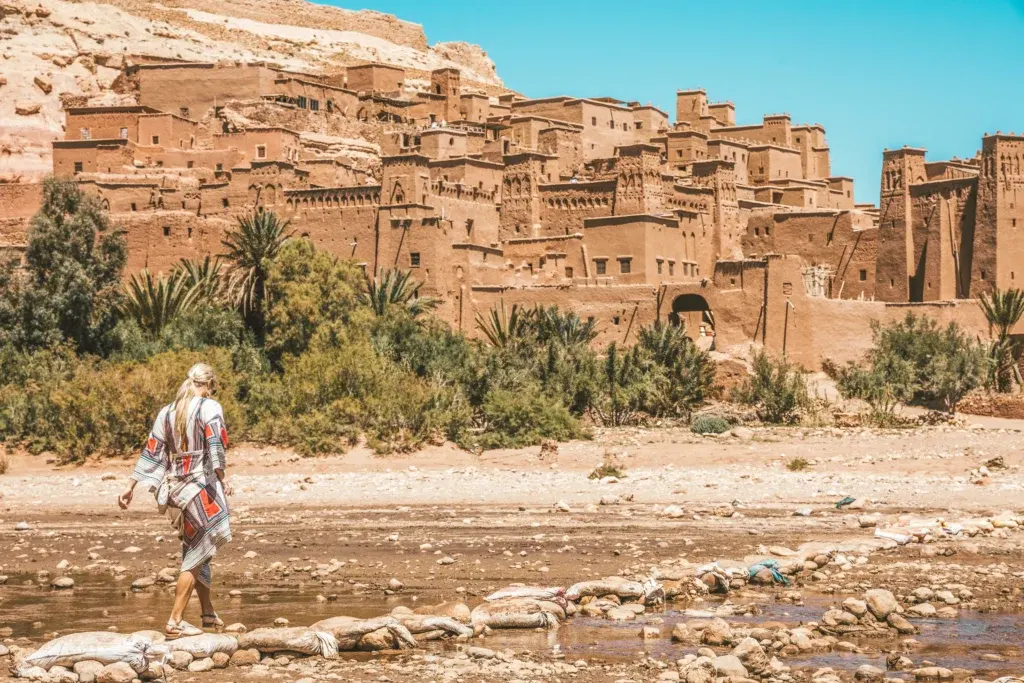
We reach Ait Ben Haddou in time to walk up through the earthen village before the light goes. Night facing the kasbah, or on into Marrakech if you would rather have the extra evening there.
-
Iti8
Day 8: Over the Tizi n'Tichka to the Marrakech mellah
We cross the High Atlas by the Tizi n'Tichka pass and come down into Marrakech.
The afternoon is the mellah: Slat al-Azama Synagogue, founded in the sixteenth century by Jews expelled from Spain and still in use, the spice and jewellery lanes that grew up around the quarter, and the Miaara cemetery, the largest Jewish cemetery in Morocco.
-
Iti9
Day 9: Marrakech — the medina, then onward
A morning with a licensed Marrakech guide if you want it: Bahia Palace, the Saadian Tombs, the souks and Jemaa el-Fna.
Your driver takes you to the airport whenever your flight leaves. If you would rather add Essaouira for its Jewish quarter, the Haim Pinto Synagogue and the Bayt Dakira heritage centre, we can extend the trip by a day or two.
Today is on foot with a licensed local guide, because the old city is a place you have to be walked through to understand.
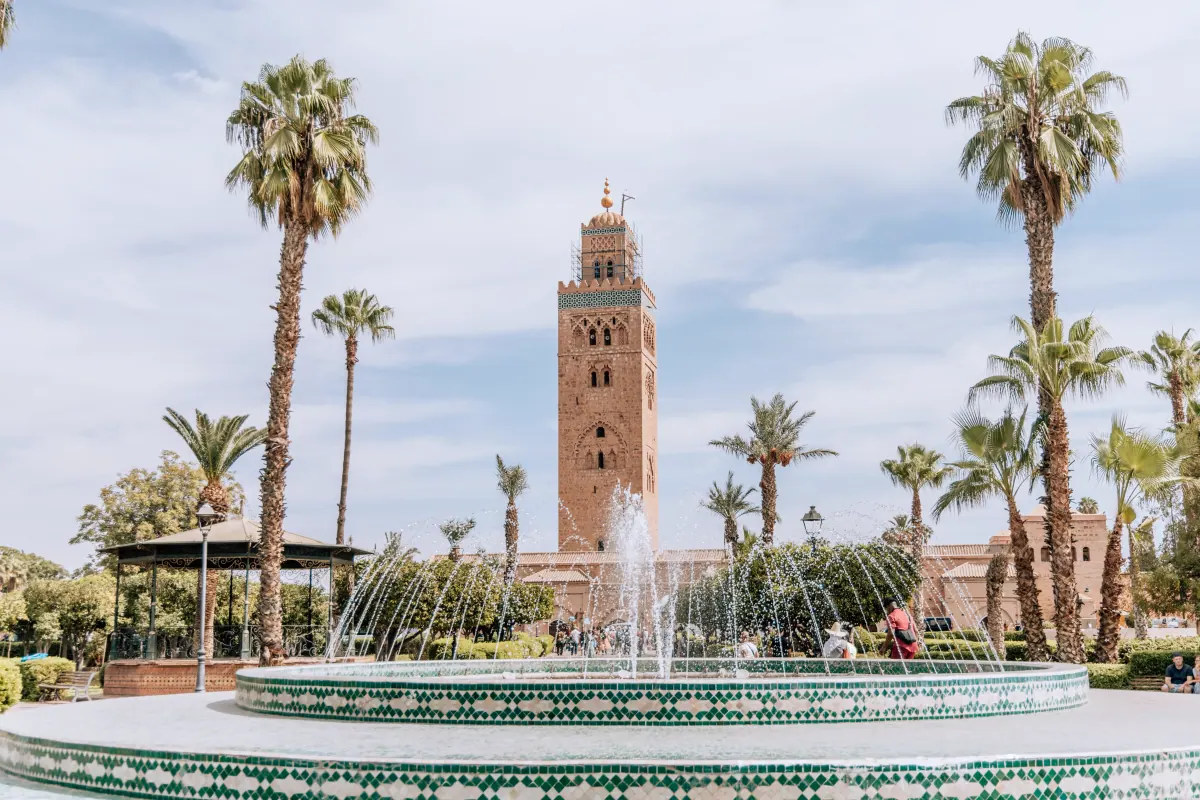
In Marrakech that usually means the Koutoubia minaret, the Bahia palace, the Saadian tombs and the souks behind Jemaa el-Fna, ending in the square itself as the food stalls are lit.
The souks are organised by trade, so you pass a lane of dyers, then one of slipper makers, then the ironworkers, each with its own noise and smell.
The Ben Youssef madrasa housed students for four centuries, and its carved stucco and zellij are the finest surviving work of their kind in the city.
What the Price Includes
Everything covered in the price
Price Includes
- ✓ Private air-conditioned vehicle and driver-guide for all 9 days
- ✓ Door-to-door pickup and drop-off, airport to airport
- ✓ 8 nights' accommodation: riads in Fes and Marrakech, a Sahara camp, kasbah hotels on the road
- ✓ Breakfast daily, and dinner where you are staying outside the cities
- ✓ Official licensed city guides in Fes and Marrakech
- ✓ Camel trek onto the Erg Chebbi dunes at sunset
- ✓ A route built around the heritage sites rather than fitted around them
- ✓ All fuel, tolls and parking
- ✓ Help arranging synagogue visits where access needs to be requested in advance
- ✓ A single contact from your first message until your flight home
Price Excludes
- ✗ International flights and any transfers not listed in the itinerary
- ✗ Lunches, drinks and bottled water
- ✗ Entrance fees to museums, synagogues and monuments
- ✗ Tips for your driver-guide and city guides
If this itinerary does not quite match what you had in mind, tell us your ideas and we will rebuild it around them.
Tour Map
Morocco
Why Book This Tour
What makes it worth the time
The sites are scattered across the country, and the ones that matter are not always the ones signposted. Reaching the Ibn Danan Synagogue, the Miaara cemetery and the Sefrou mellah in one trip needs a route planned around them, not a standard tourist loop with a synagogue added at the end.
Nine days gives the heritage sites the time they need and still crosses the country properly — the Middle Atlas, the Erg Chebbi dunes, the Todra and Dades gorges and Ait Ben Haddou. The Jewish south was not only in the cities, and the drive through the Tafilalet and the kasbah road is part of the story rather than filler between museums.
Know Before You Go
Practical travel notes
- Pricing is per person and drops as your group grows. Tell us how many of you there are and we will send an exact quote.
- Some synagogues and cemeteries keep irregular hours or are opened by a caretaker. We contact them ahead of your dates, but access is never guaranteed on a fixed schedule, and we will tell you honestly when something is uncertain.
- Essaouira is the most common addition to this route, for the Haim Pinto Synagogue and the Bayt Dakira heritage centre. It adds one to two days.
- Kosher catering can be arranged in Casablanca, Fes and Marrakech with notice. Outside the cities it is not available, and we will say so rather than promise it.
- There is no fixed group departure. The dates are yours and the pace is yours.
Frequently Asked Questions
Questions about this tour
Are the synagogues still in use?
Some are. Slat al-Azama in Marrakech and Temple Beth-El in Casablanca still hold services, and the Jewish community in Casablanca remains the largest in Morocco. Others, including Ibn Danan in Fes, are preserved as heritage sites and opened for visitors by a caretaker.
Do I need to be Jewish to take this tour?
No. The route is a history of Morocco told through one of its oldest communities, and it is booked by people of every background, including families tracing ancestors and travellers who simply want a different way into the country.
Can you help me find a family name or a grave?
Sometimes. Cemetery records in Morocco are uneven, and the keepers at Miaara in Marrakech and the Fes cemetery can often help if you give us names and approximate dates well before you travel. We will be straight with you about what is realistic rather than promising a discovery.
Is kosher food available?
In Casablanca, Fes and Marrakech it can be arranged with advance notice. On the desert and kasbah sections of the route it cannot. Vegetarian and fish meals are straightforward everywhere, and we will plan around whatever you need.
Is Morocco safe for Jewish travellers?
Morocco has a long-standing Jewish community, protected synagogues and a monarchy that has publicly maintained those ties, and Jewish heritage travel here is well established. As with any trip we keep you with your own driver-guide throughout, and we will give you our honest read on conditions at the time you travel.
Can the itinerary be changed?
Yes. Every tour we run is private and written for the people on it. Add Essaouira, spend longer in Fes, skip the desert, start in Marrakech instead of Casablanca — tell us and we will rebuild the route around it.
You May Also Like
More private Morocco tours
 15 Days - 14 Nights
Finest Private 15-day Casablanca Morocco tour
A private 15-day Morocco tour from Casablanca
View Tour Details → 7 days - 6 nights
Amazing 7-day tour to Morocco Casablanca
A private 7-day tour from Casablanca to Marrakech
View Tour Details → 4 days - 3 nights
Finest Casablanca to Marrakech in 4-day
A private 4-day tour from Casablanca to Marrakech across Morocco
View Tour Details →