Why start a tour in Ouarzazate
Tours from Ouarzazate begin where the mountains end and the desert starts. The town sits at 1,150 metres on the southern side of the High Atlas, and everything south and east of it — the Draa valley, the Dades and Todra gorges, the dunes at Zagora and Merzouga — is closer from here than from anywhere else in Morocco.
That is the practical case for departing from Ouarzazate rather than Marrakech: you skip the four-hour mountain crossing at both ends of your trip. A group that flies into Ouarzazate, or arrives by road and stays a night, can be standing on a dune the following evening.
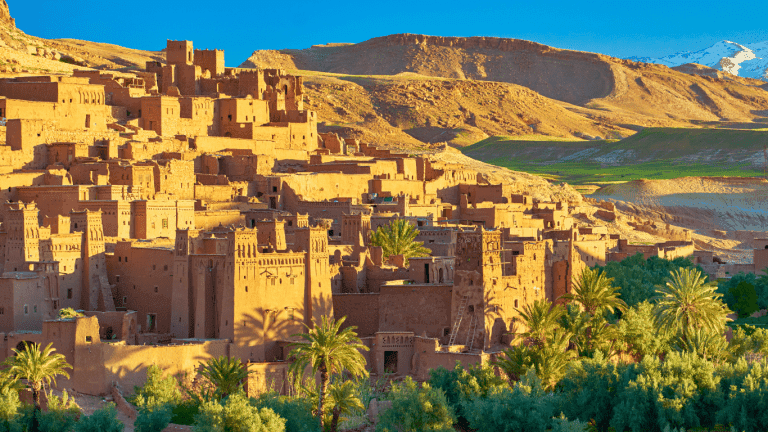
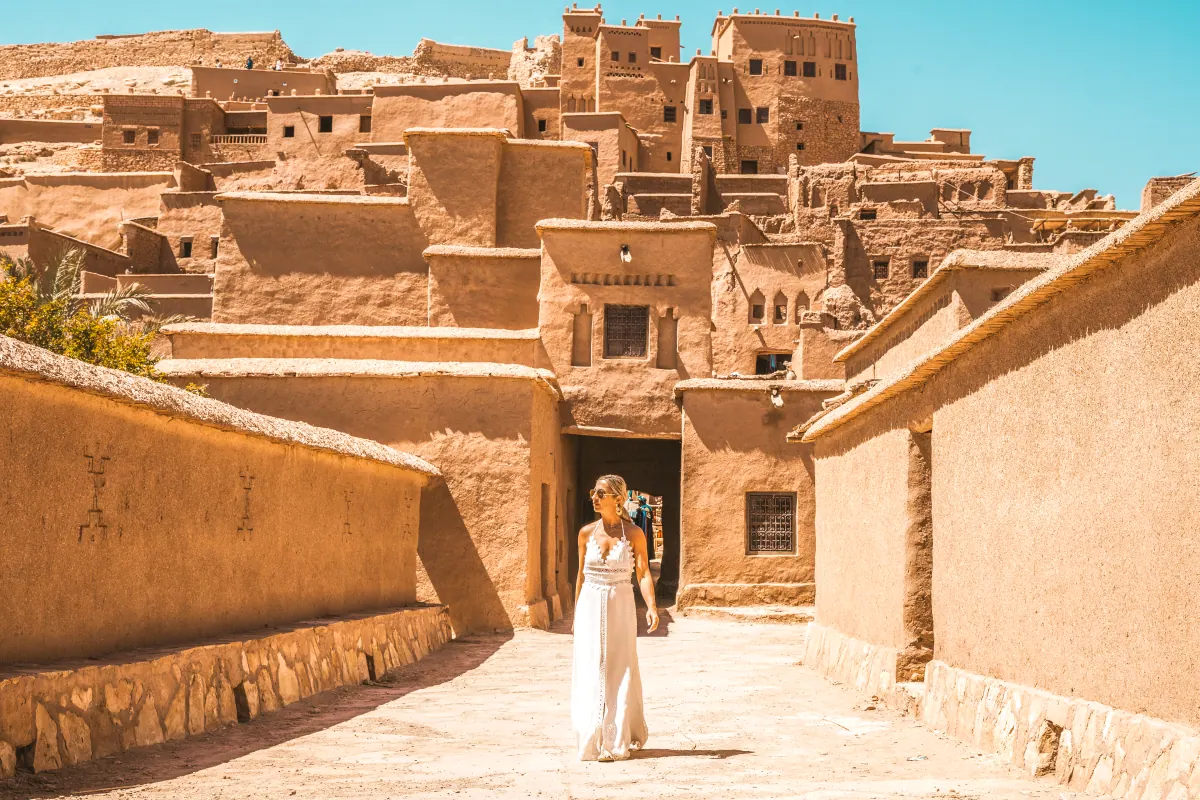
The town is also worth a day in its own right. Ait Ben Haddou, the fortified ksar that has stood in for Jerusalem, Rome and Yunkai on screen, is thirty minutes away and a UNESCO World Heritage Site. Atlas Studios and CLA Studios are among the largest film facilities in the world, and the Taourirt Kasbah in the centre of town is the real thing rather than a set.
What leaves from here
Three routes cover most of what people want:
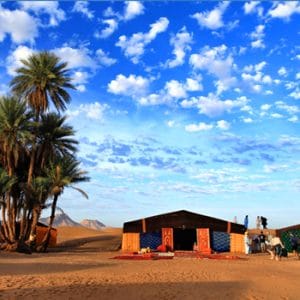
- The Merzouga run. Three days east through the Valley of Roses, the Dades gorge and Todra, ending with a camel trek into the Erg Chebbi dunes and a night in a desert camp.
- The Zagora run. Two days south down the Draa valley through the largest palm grove in Morocco, to smaller dunes and a camp under the same sky, for groups with less time.
- Kasbahs and cinema. A single day covering Ait Ben Haddou, the film studios and the Fint oasis, which suits anyone passing through on a longer itinerary.
Every tour we run from here is private: your own vehicle, your own driver-guide, and a schedule that bends around your group. See our full range of Morocco tours for routes that start elsewhere.
When to come
Ouarzazate is high, dry and clear. March to May and September to November are the best months, with warm days and cold nights. Rose harvest in the nearby Kalaat M’Gouna valley falls in May and is worth planning around.
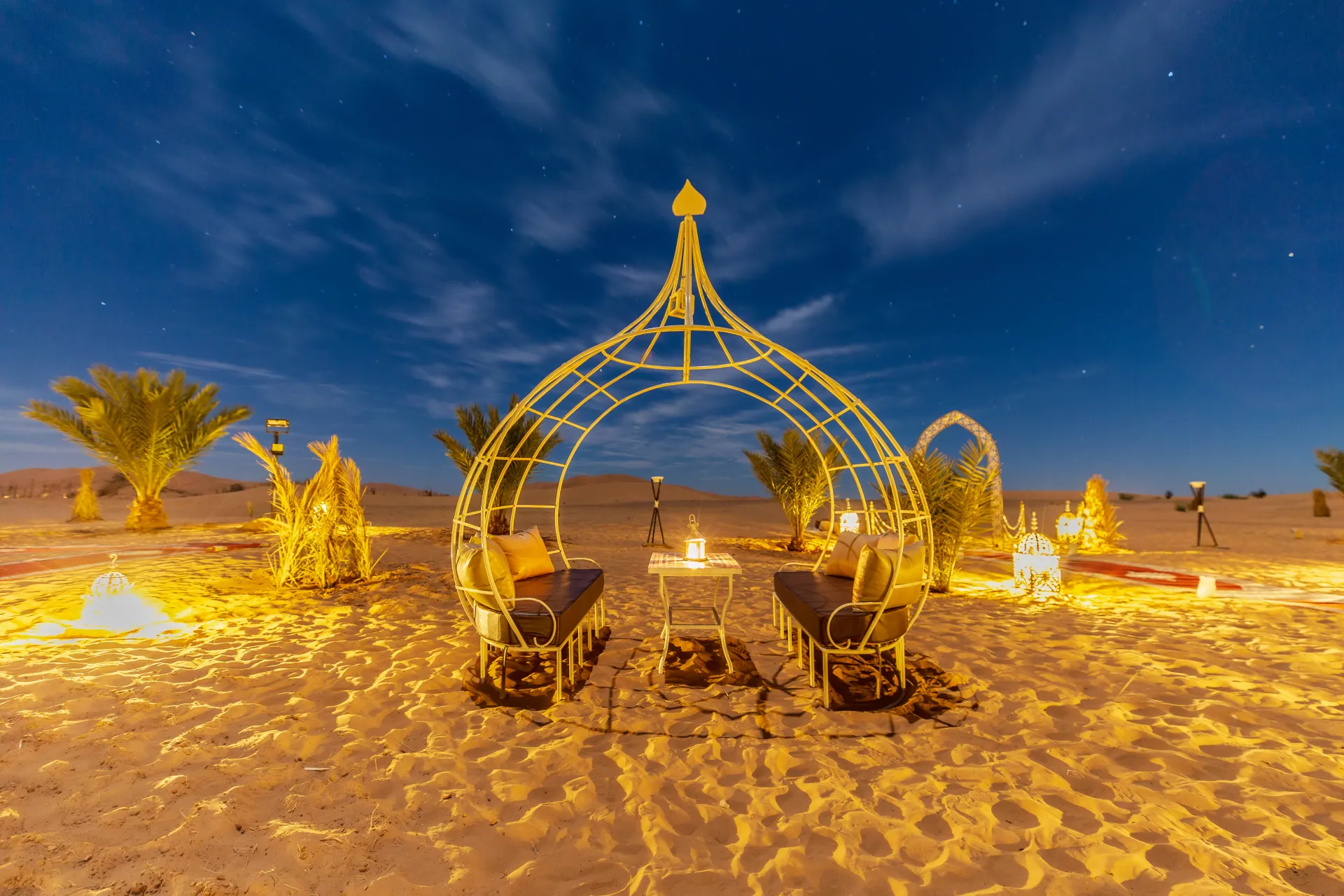
Summer is genuinely hot, above 40°C in July and August, and desert nights only become comfortable after dark. Winter days are pleasant and bright but nights in a desert camp drop close to freezing; good camps provide heavy blankets and braziers, and you should bring a warm layer regardless of the month.
Getting here
Ouarzazate has its own airport (OZZ) with domestic connections from Casablanca. Most visitors arrive by road: four hours from Marrakech over the Tizi n’Tichka pass, which is a spectacular drive in itself, or from the desert side if they are working their way west. We can collect you from the airport, from your hotel in town, or from anywhere along the route.
Frequently asked questions
Is Ouarzazate worth visiting?
Yes, both as a base and as a destination. Ait Ben Haddou is one of the finest surviving earthen ksars anywhere and a UNESCO World Heritage Site, the film studios are among the world’s largest, and the Taourirt Kasbah sits in the centre of town. It is also the shortest starting point for the Sahara.
How far is Ouarzazate from the Merzouga dunes?
Around 360 kilometres, or five to six hours of driving without stops. Nobody sensibly does it in one push: the standard trip takes three days, breaking the journey at the Dades or Todra gorges so the drive stays under four hours a day.
Can I do a desert tour from Ouarzazate in two days?
Yes, if you head south to Zagora rather than east to Merzouga. Zagora is roughly 160 kilometres away, which makes a two-day trip with a night in a desert camp comfortable. Merzouga has the taller dunes but needs three days from here.
Do I need a 4×4 for tours from Ouarzazate?
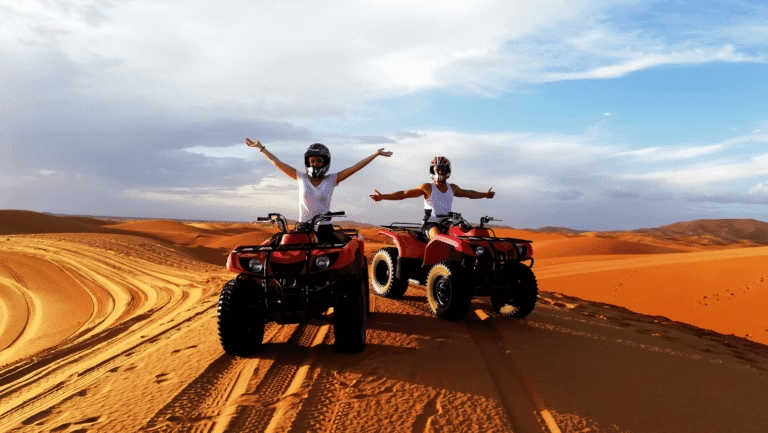
Not for the main routes, which are surfaced roads the whole way. A 4×4 is used for the final stretch into the desert camps, and for off-road sections if your itinerary includes them. We match the vehicle to the route and confirm it in writing before you book.
Is Ouarzazate a good base for families?
It works well. Driving distances from here are shorter than from Marrakech, the town is calm and easy to walk around compared with a large medina, and the film studios are the rare cultural stop that children actively enjoy.