Frequently Asked Questions
Planning Your Trip
When is the best time to visit Morocco?
There is really no time of year when you wouldn't enjoy your trip to Morocco, though it does get crowded during the winter holidays. Spring and autumn (March to May, September to November) are the mildest, with temperatures between 11°C and 32°C. Winter runs December to February at 7°C to 21°C, with snow in the mountains. Summer can reach 19°C to 40°C in the middle of the day — excellent on the Atlantic coast, hard work in the Sahara at noon.
When is the peak season to visit Morocco?
Tourist numbers peak in December and April, the two holiday seasons. Demand pushes accommodation prices up sharply and the best riads and camps are booked out very early. If you plan to travel then, start looking months ahead — or pick a quieter month and get more out of the country for less.
How many days do I need in Morocco?
Three to four days covers one region, such as Marrakech plus a short desert run. Seven days links the imperial cities with the Sahara at a comfortable pace. Ten to fifteen days covers the country properly — Chefchaouen, Fes, the dunes, the gorges, Marrakech and the coast — without spending every day in the car.
Do I need a visa to visit Morocco?
Citizens of the EU, UK, US, Canada, Australia, New Zealand, Japan and many Latin American countries enter visa-free for up to 90 days. Your passport must be valid for at least six months beyond arrival. Rules change, so confirm with your nearest Moroccan consulate before booking flights.
What is the best city to start a Morocco tour?
Marrakech is the most common choice — the widest flight options and the closest to both the Atlas and the desert. Casablanca suits trips that include Rabat and the north. Fes works well if you want to travel south through the Sahara and finish in Marrakech. Tangier is for travellers arriving from Spain.
How far in advance should I book?
For spring and autumn, two to three months ahead secures the best riads and desert camps. Easter, Christmas and New Year fill up four to six months out. Outside those peaks a last-minute trip is often still possible — message us and we'll tell you honestly what is available.
Money & Costs
Will the price be the same if we are 2, 3 or more people?
No — the price per person drops as the group grows, because the private vehicle and driver-guide are shared between more travellers. Send us your exact group size and dates and we'll come back with a clear all-in price per person.
Will the price be cheaper for a last-minute booking?
Usually the opposite. We hand-pick the best riads and desert camps and the good ones fill quickly, so last-minute requests are harder to place and can cost more, not less. Booking early secures the better accommodation and a smoother trip.
What currency is used in Morocco?
The Moroccan dirham (MAD). It is a closed currency, so you cannot buy it before you arrive — withdraw from an ATM at the airport or change cash at a bureau de change. Airport rates are usually fair and ATMs are widely available in cities.
Should I carry cash or use cards?
Both. Hotels, riads and larger restaurants take cards, but souks, small cafés, taxis, rural guesthouses and tips all run on cash. Keeping the equivalent of €100 to €150 in dirhams on you and topping up as you go works well.
How much should I budget per day?
On top of the tour, allow roughly €10 to €20 per person per day for lunches and drinks, and €5 to €15 for entrance fees on sightseeing days. Everything else is what you choose to spend in the souks.
Is tipping expected in Morocco?
Yes, but the amounts are small. A few dirhams for a café waiter, 10 to 20 MAD for a porter, and on a multi-day private tour most travellers give their driver-guide somewhere between €5 and €10 per day per group. It is a thank-you, never an obligation.
Safety & Health
Is Morocco a safe country?
Yes. Tourism matters enormously to the Moroccan economy, and the government puts real resources into visitor safety — including tourist police and government-accredited guides who complete formal training. Crime and extremism rates are comparable to many European countries: low and uncommon. The realistic risks are pickpocketing in crowded medinas and overpaying if you don't haggle.
Is it safe to travel alone in Morocco without a guide?
Once you know your way around and are comfortable with the local culture, travelling on your own is fine, and it saves money. But some places genuinely need a professional guide — you will notice this quickly outside the towns, particularly in the desert, where you need someone who knows the terrain and can arrange the camels.
Is Morocco safe for solo female travellers?
Many women travel Morocco alone and have a wonderful time, but persistent street attention is common, especially in Marrakech and Fes. Dressing modestly, walking with purpose and using a private guide for medina days makes a large difference. We arrange female-friendly riads and can request a driver experienced with solo travellers.
Do I need vaccinations for Morocco?
No vaccinations are required for entry from Europe or North America. The standard recommendations are routine boosters plus hepatitis A and typhoid. Speak to your doctor or a travel clinic four to six weeks before you fly.
Can I drink the tap water?
Stick to bottled or filtered water. Tap water is chlorinated and safe in the plumbing sense, but the mineral content differs enough to upset stomachs. Bottled water is cheap and everywhere — and we keep water in the vehicle on every tour.
What about food safety?
Moroccan food is generally very safe. Eat where it is busy, favour freshly cooked tagines and grills over anything sitting out, and go easy on raw salads and unpeeled fruit in the first days while your system adjusts.
Culture & Etiquette
Does Morocco have a dress code for female visitors?
No. You are free to dress however you choose. The one restriction is visiting a mosque such as Hassan II, where modest clothing is required to enter, exactly as it would be in a church — no shorts or tank tops. As anywhere, being thoughtful about clothing helps you avoid unwanted attention.
Do I need to speak Arabic or French?
No. Moroccan Arabic (Darija) and Berber are the everyday languages, French is widespread in cities and business, and Spanish is common in the north. Your driver-guide handles everything. A couple of words still go a long way — shukran for thank you, la shukran for no thank you.
Is alcohol available in Morocco?
Yes, but discreetly. Licensed hotels, riads, tourist restaurants and supermarkets sell alcohol. Most medina restaurants do not, availability drops during religious holidays, and drinking in public is not acceptable.
Can I take photos of people?
Always ask first. Many Moroccans, particularly older people and women in rural areas, would rather not be photographed, and some souk vendors and performers expect a small payment. Landscapes, architecture and street scenes without identifiable faces are no problem at all.
How does haggling work in the souks?
It is expected, and it should stay friendly. Start around a third of the opening price, move slowly, keep smiling, and be willing to walk away — that is usually when the real price appears. If you have no intention of buying, don't start negotiating.
Desert Tours
What is a night in a Sahara desert camp actually like?
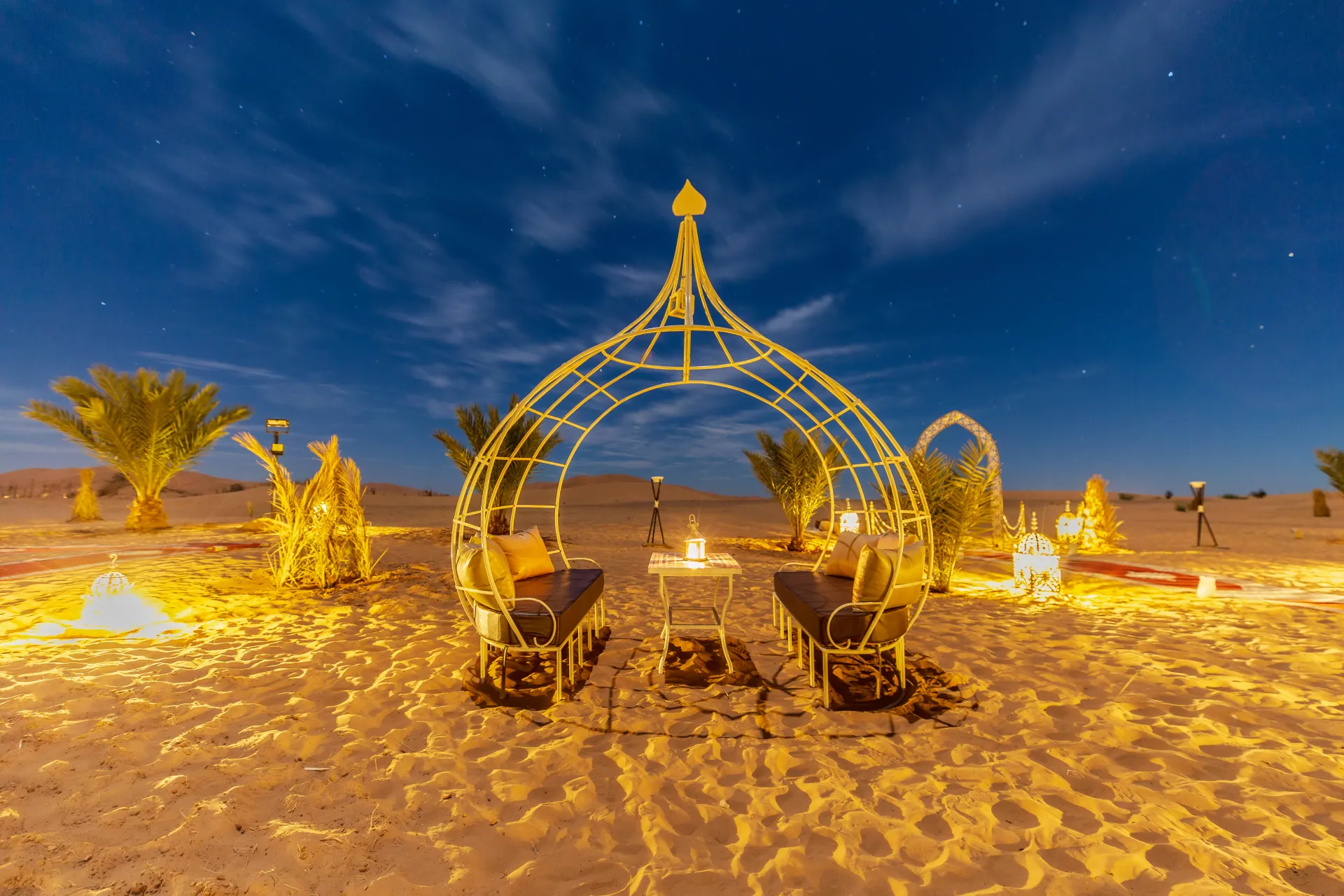
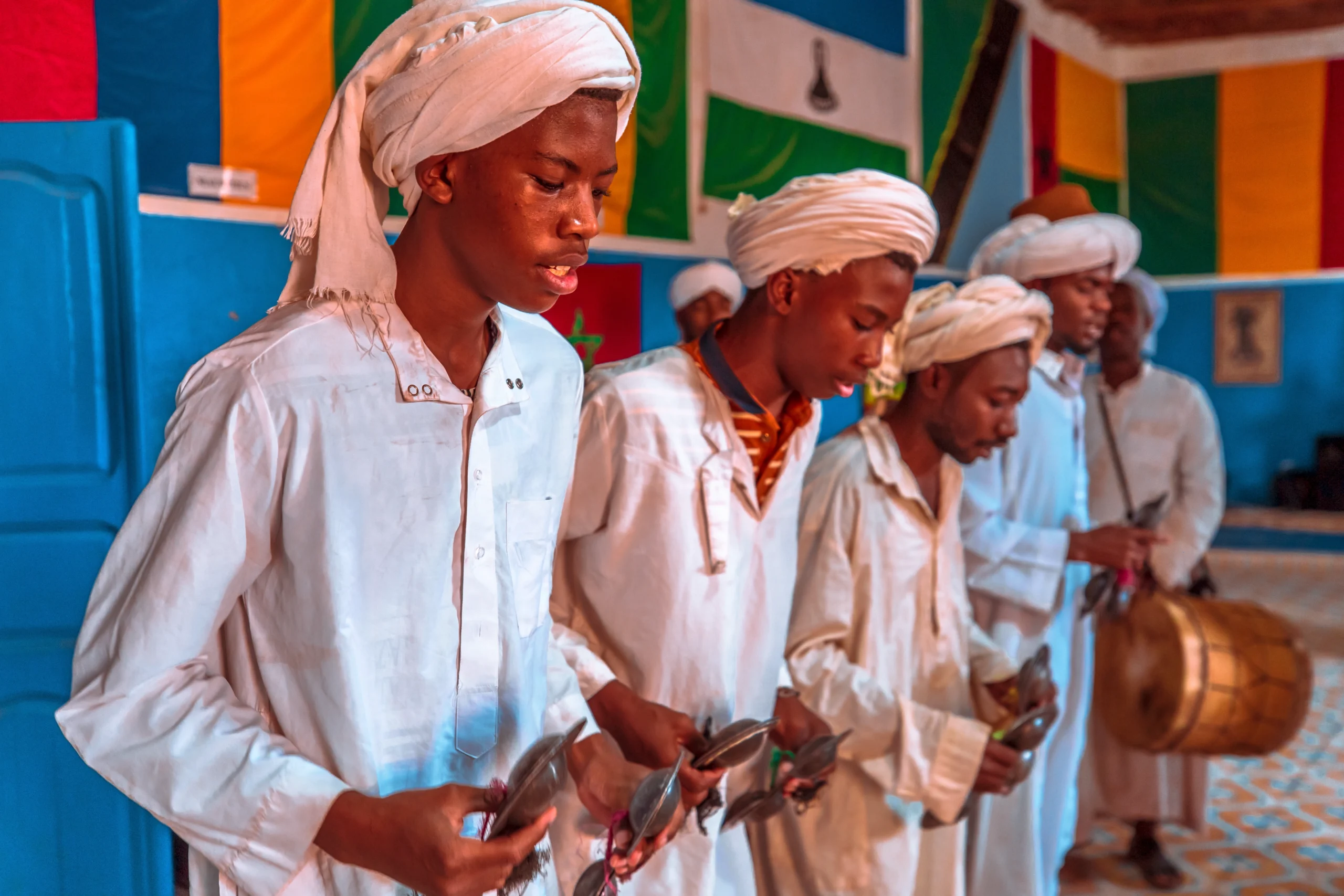
You ride camels or take a 4x4 into the dunes in the late afternoon, watch the sun go down from a high dune, then reach camp for a tagine dinner and Berber drumming around the fire. Our luxury camps have proper beds, private bathrooms with hot showers and electricity; standard camps are simpler with shared facilities. The nights are silent and the stars are extraordinary.
Merzouga or Zagora — which desert is better?
Merzouga, and it is not close. Erg Chebbi has the towering orange dunes people picture when they think of the Sahara, and it is worth the extra driving time. Zagora is nearer to Marrakech but the landscape is stony desert with far smaller dunes.
Is camel trekking difficult or uncomfortable?
Most people find an hour to ninety minutes very manageable. Mounting and dismounting is the awkward part; the ride itself is slow and rocking. If you have back problems or simply would rather not, a 4x4 transfer to camp is always available at no extra cost — just tell us.
How cold does the desert get at night?
From November to February nights can drop close to freezing. The camps provide heavy blankets, but bring a warm layer, a hat and socks. Even in spring and autumn the temperature falls sharply once the sun is down.
Is the desert suitable for children or older travellers?
Yes. We regularly take families with young children and travellers in their seventies and eighties. Camel rides are optional, 4x4 transfers are available, and we shorten the driving days to keep the pace comfortable. Tell us about any mobility needs when you enquire and we build the trip around them.
Booking With Us
Are the tours private?
Yes. Every tour we offer is completely private — just you, whoever you are travelling with, your own vehicle and your own driver-guide. No strangers, no fixed departure times and no forced shopping stops. You are always welcome to ask for extra stops along the way for photographs or anything else. If you would prefer a group desert tour to share costs, contact us and we will arrange a suitable one.
Is our tour flexible and open to changes?
Completely. Whatever accommodation you need or changes you want to make to your personalised trip, we adapt. For the smoothest planning, let us know about any modifications at least two weeks before your trip.
What is included in the tour price?
Private air-conditioned transport, an English-speaking driver-guide, accommodation in riads or hotels, a desert camp with camel trek, daily breakfast and dinner, fuel and all transport costs, plus pick-up and drop-off at your accommodation. Lunches, drinks, entrance fees, tips and travel insurance are not included.
Booking conditions and deposit
Once we have confirmed an itinerary that works for you or your group, a deposit secures your tour with Let's Visit Morocco — every tour on this site can be changed to suit you. You pay the remaining balance at the beginning of your tour in Morocco. Euros, US dollars and dirhams are all accepted.
What is your cancellation policy?
Free cancellation up to 7 days before departure, with a full refund of your deposit. Inside 7 days we will do our best to move your dates rather than charge you.
How quickly will you reply to my enquiry?
Usually within a few hours, seven days a week. If your trip is imminent, message us on WhatsApp for the fastest reply.
Morocco Tours
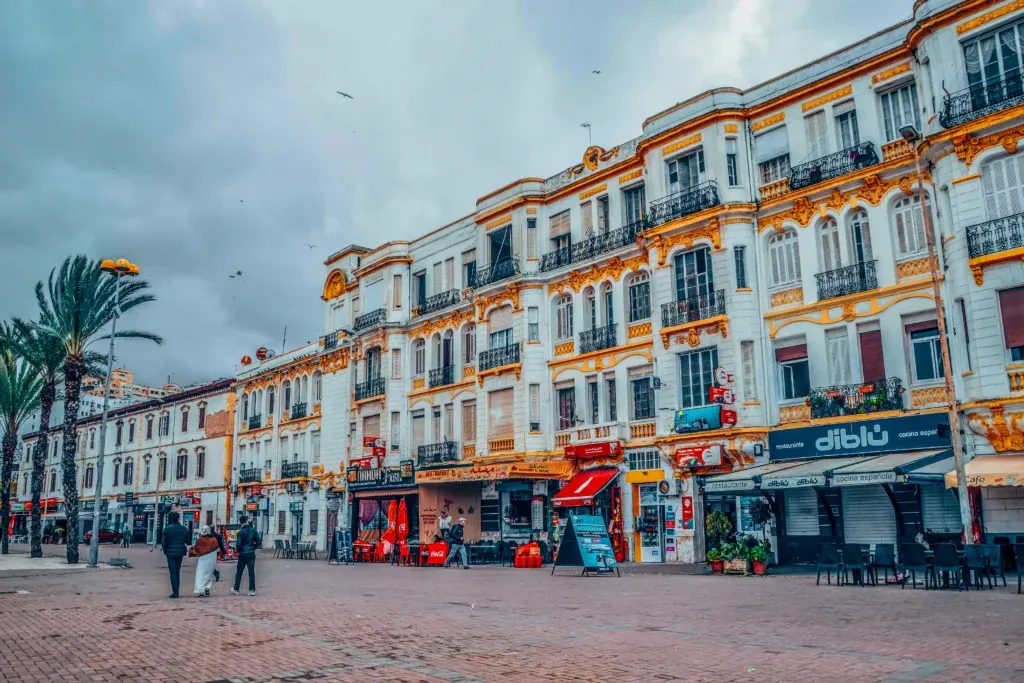 15 Days - 14 Nights
Finest Private 15-day Casablanca Morocco tour
A private 15-day Morocco tour from Casablanca
View Tour Details →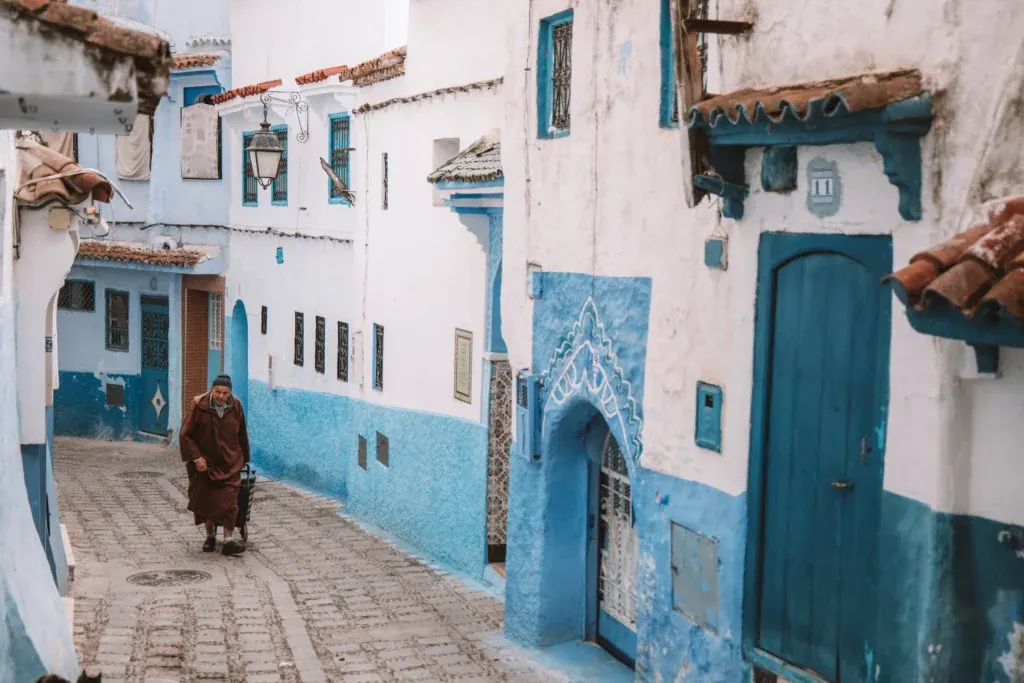 7 days - 6 nights
Amazing 7-day tour to Morocco Casablanca
A private 7-day tour from Casablanca to Marrakech
View Tour Details →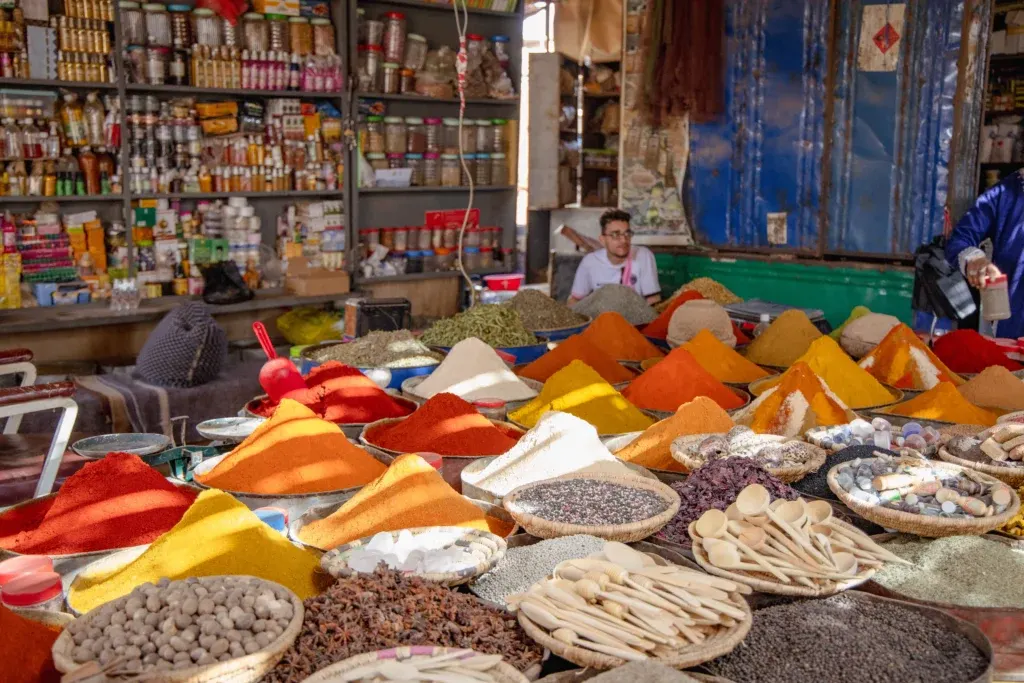 4 days - 3 nights
Finest Casablanca to Marrakech in 4-day
A private 4-day tour from Casablanca to Marrakech across Morocco
View Tour Details →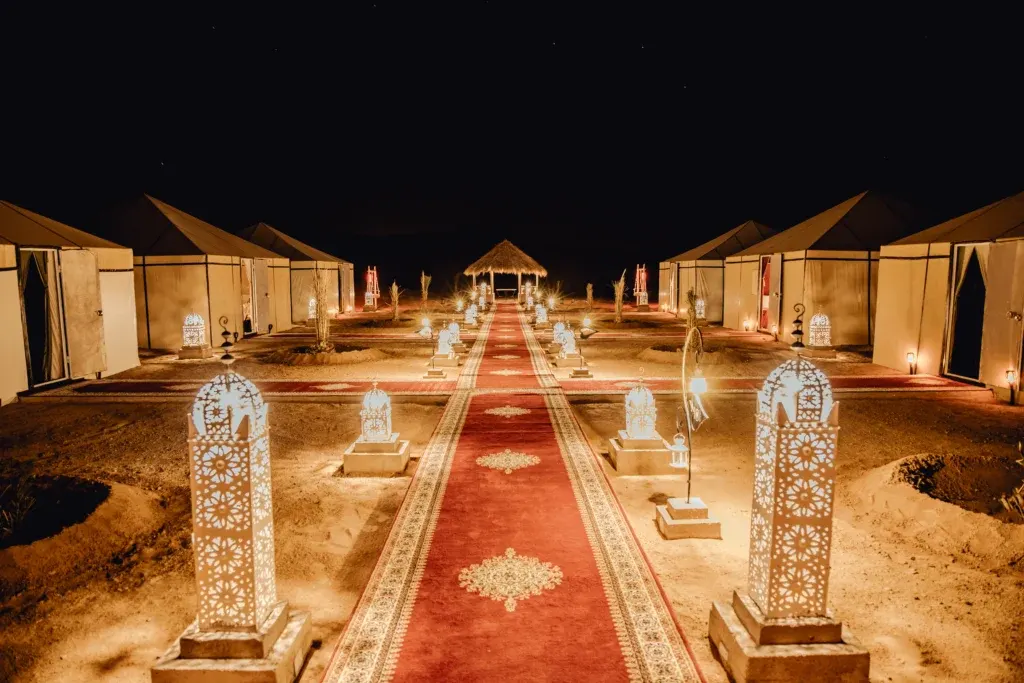 3 days 2 night
3-Day Desert Tour from Fes to Marrakech via Merzouga
A private 3-day desert tour from Fes to Marrakech across the Sahara
View Tour Details →Ready to Discover Morocco?
Tell us when you'd like to come, what you want to see and where you'd like to stay. We'll build the itinerary around it — no obligation.
Plan Your Journey →