10-day private tour · Fes
Amazing 10-Day Morocco Tour desert from Fes (Imperial Cities & Sahara)
A private 10-day Morocco tour from Fes — the imperial cities of Fes, Meknes, Rabat and Marrakech, Roman Volubilis and Casablanca's Hassan II Mosque, then the Todra and Dades gorges and two nights at the Erg Chebbi dunes with a camel trek.
About This Tour
10 days - 9 nights · Fes
This private 10-day Morocco tour Desert from Fes is the grand tour — the country’s four imperial cities, its Roman past, its Atlantic coast and the heart of the Sahara Desert, all in one seamless journey. You’ll trade the bustle of the cities for the fertile Ziz Oasis, the Todra and Dades gorges and the great Erg Chebbi dunes, where a camel trek leads to a night under the stars.
Along the way you’ll explore Fes, Meknes, Rabat and Marrakech, the Roman ruins of Volubilis and Casablanca’s Hassan II Mosque, and the UNESCO-listed kasbah of Ait Ben Haddou before crossing the Tizi n’Tichka pass into Marrakech. Fully private, expertly guided and paced entirely around you.
Tour Highlights
The best of this journey
Photo Gallery
Amazing 10-Day Morocco Tour desert from Fes (Imperial Cities & Sahara)
Tour Itinerary
Day by day, 10 days
-
Iti1
Day 1: Arrival in Fes → transfer to your riad
At your scheduled arrival time, your driver will meet you at the airport and transfer you to your accommodation in Fes. Dinner and an overnight stay in a hotel or traditional riad, ready for the journey ahead.
-
Iti2
Day 2: Guided day in Fes
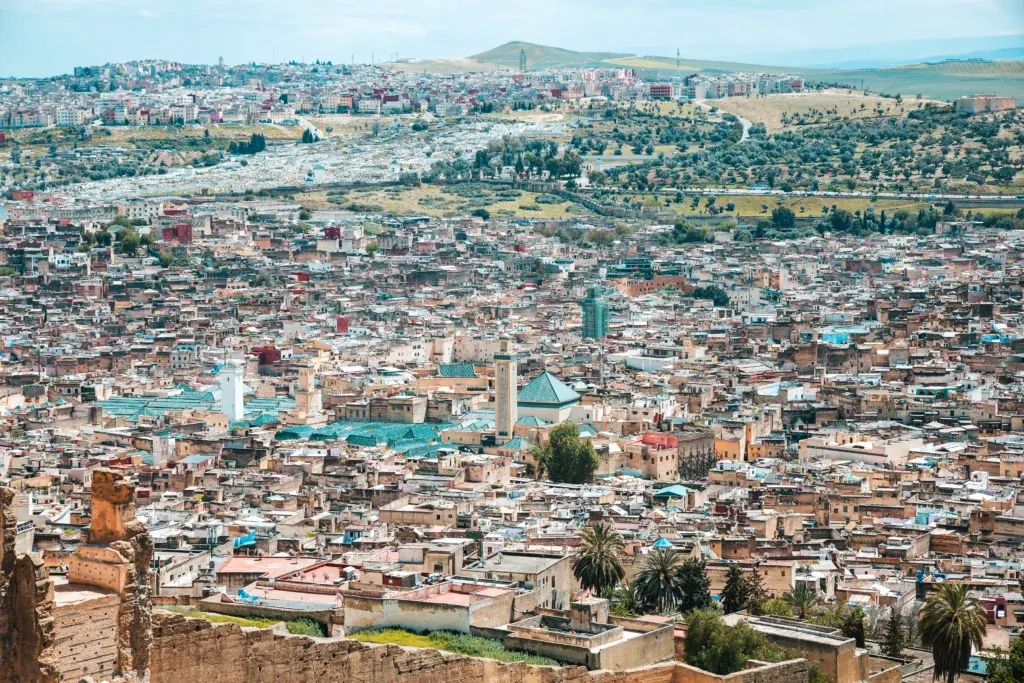
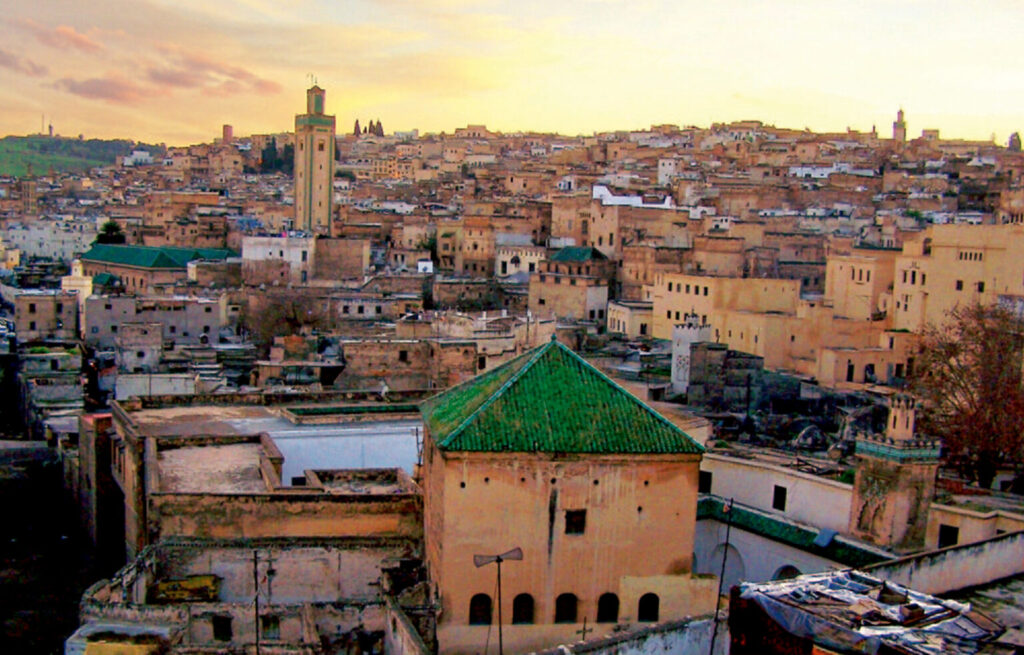
After breakfast at your riad you’ll explore Fes with a local guide, starting in the modern quarter near the Royal Palace and the historic Mellah (Jewish quarter), then a viewpoint over the entire medina.
On foot you’ll wander the UNESCO-listed medina — the world’s largest car-free urban area — where guilds of potters, dyers and tanners still work as they have for centuries. It feels like stepping back in time. Dinner and overnight in your riad.
A local guide who lives in the city walks you through it on foot, which is the only way the medina makes sense.
In Fes that means Fes el-Bali, the walled medina founded in the ninth century, the Chouara tanneries seen from the terraces above, the Al-Qarawiyyin mosque and university, and the mosaic and brass workshops still working in the lanes.
Al-Qarawiyyin was founded in 859 by Fatima al-Fihri and is recognised as the oldest continuously operating university in the world.
The mosaic workshops still cut each zellij tile by hand with a chisel, which is the only way the pieces lock without a gap.
-
Iti3
Day 3: Fes → Volubilis → Moulay Idriss → Meknes → Rabat
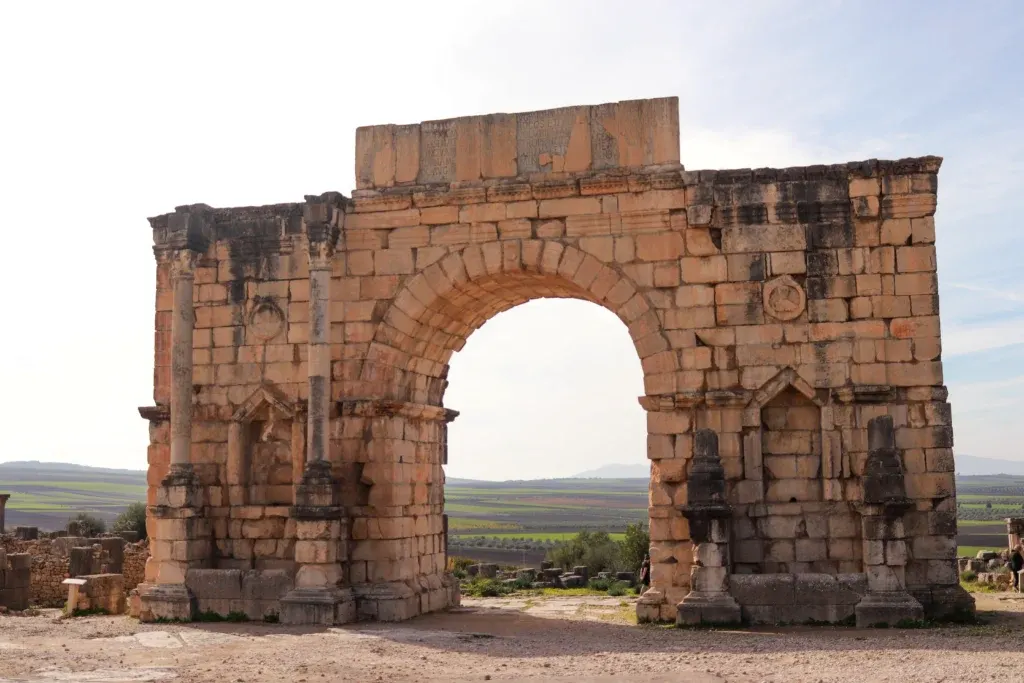
Today you’ll visit Volubilis, the best-preserved Roman ruins in North Africa and a UNESCO World Heritage Site famous for its intricate mosaics, then the sacred hilltop town of Moulay Idriss.
Next is Meknes, the imperial “city of Moulay Ismail,” with its monumental Bab Mansour gate and grand walls. In the afternoon you’ll continue to Rabat, Morocco’s capital, to see the Hassan Tower, the Mausoleum of Mohammed V and the Kasbah of the Oudayas. Overnight in Rabat.
Much of today is spent on the road, which is where a good deal of the country reveals itself. The route takes in Fes, the oldest of the imperial cities and the Roman ruins of Volubilis, with mosaics still in place where the houses stood.
As paragens sao vossas: um miradouro, um cafe de estrada, uma aldeia que merece dez minutos a pe.
-
Iti4
Day 4: Rabat → Casablanca → Marrakech
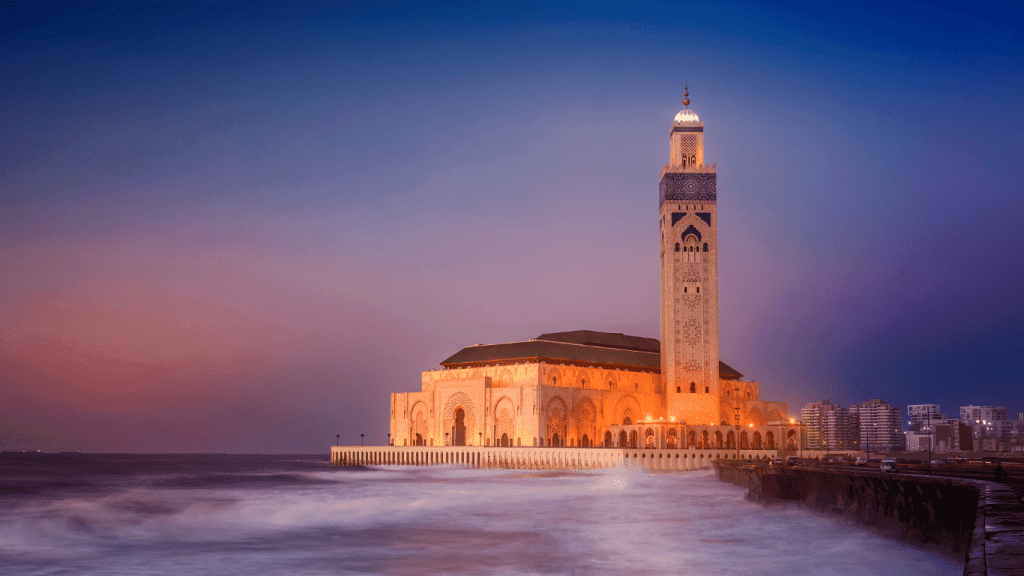
This morning you’ll visit the magnificent Hassan II Mosque in Casablanca — the largest in Morocco and one of the largest in the world, a showcase of Islamic architecture and Moroccan craftsmanship.
In the early afternoon you’ll continue to Marrakech. On arrival you’ll head straight into the energy of Jemaa el-Fna, the famous square at the heart of the medina, alive with storytellers, musicians and food stalls. Overnight in Marrakech.
A local guide who lives in the city walks you through it on foot, which is the only way the medina makes sense.
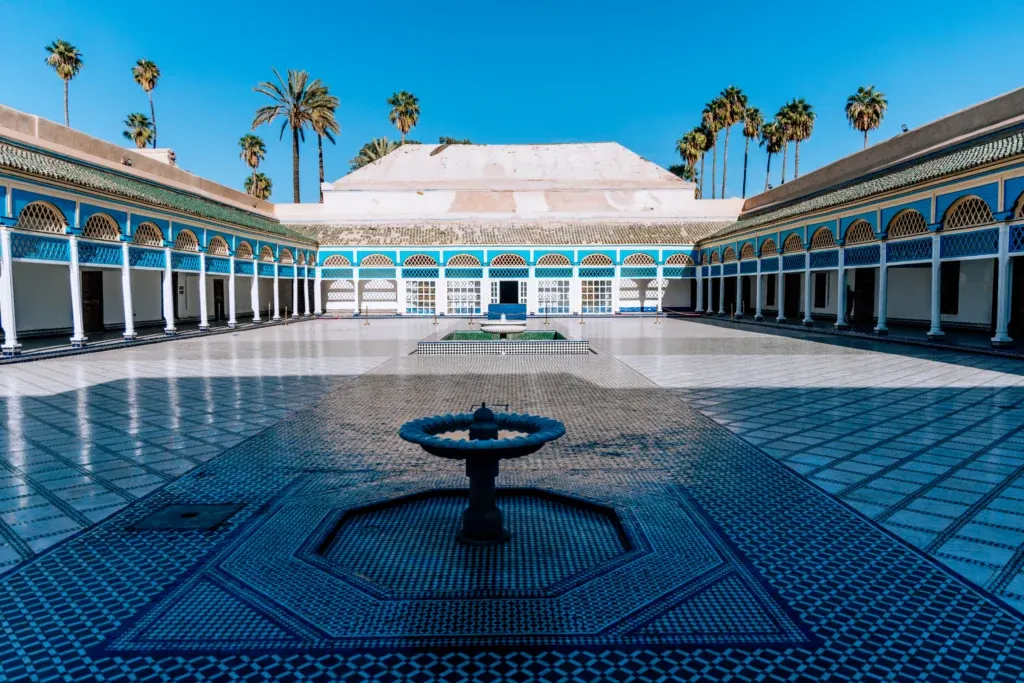
In Marrakech that usually means the Koutoubia minaret, the Bahia palace, the Saadian tombs and the souks behind Jemaa el-Fna, ending in the square itself as the food stalls are lit.
The Saadian tombs sat walled up and forgotten until 1917, which is why the tilework inside survived as well as it did.
Jemaa el-Fna is worth timing for dusk, when the food stalls are lit and the storytellers and musicians take over the square.
-
Iti5
Day 5: Guided day in Marrakech
A licensed local guide will lead a tailored tour of Marrakech’s highlights: the landmark Koutoubia Mosque, the medieval medina and its lively souks, the Saadian Tombs, the Bahia Palace, the Majorelle Garden and the Ben Youssef Madrasa.
In the evening you’ll return to your riad in the historic medina to dine and rest.
A local guide who lives in the city walks you through it on foot, which is the only way the medina makes sense.
In Marrakech that usually means the Koutoubia minaret, the Bahia palace, the Saadian tombs and the souks behind Jemaa el-Fna, ending in the square itself as the food stalls are lit.
The Koutoubia minaret sets the scale for the whole city: no building in the old town is allowed to stand higher than the palm trees around it.
The Bahia palace was built for a grand vizier who wanted every room to open onto a courtyard, and its painted cedar ceilings took craftsmen years.
-
Iti6
Day 6: Marrakech → Ait Ben Haddou → Ouarzazate → Dades Valley
Leaving Marrakech, you’ll cross the High Atlas at 2,260 m via the Tizi n’Tichka pass, with an optional detour to the hidden Kasbah of Telouet — a former palace of the Glaoui pashas with beautifully detailed cedar, plaster and tilework.
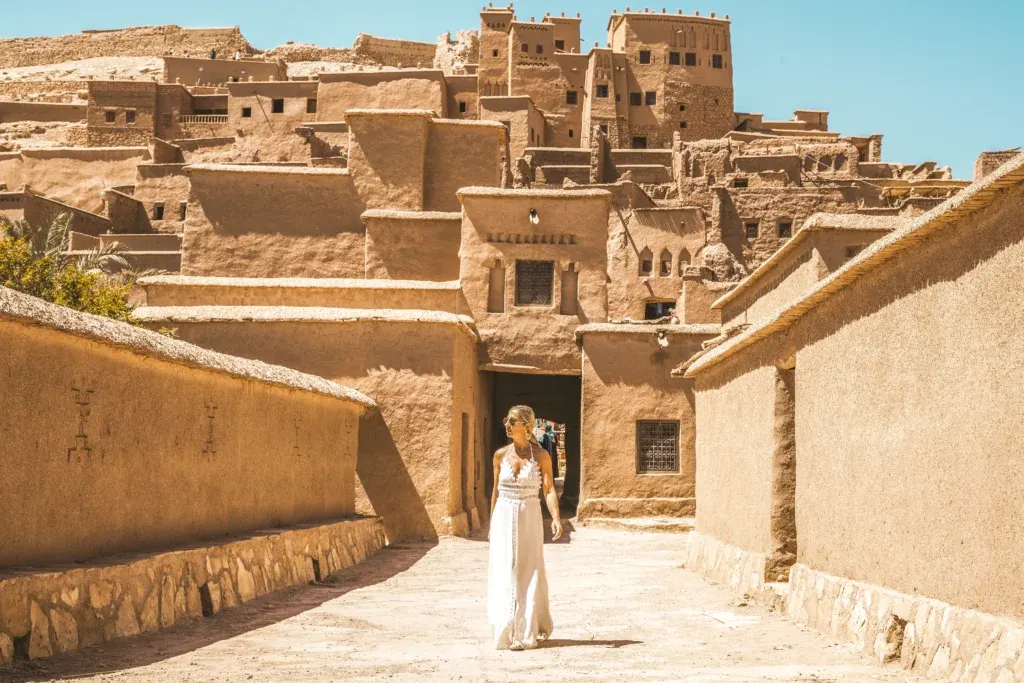
You’ll then reach the fortified ksar of Ait Ben Haddou, a UNESCO World Heritage Site and famous filming location. After lunch you’ll continue past Ouarzazate to the Skoura palm grove and the Valley of Roses, ending the day in the Dades Valley for dinner and the night.
Much of today is spent on the road, which is where a good deal of the country reveals itself. The route takes in Marrakech, the red city at the foot of the High Atlas and the fortified ksar of Ait Ben Haddou, a UNESCO World Heritage site whose earthen towers rise in tiers above the Ounila river.
As paragens sao vossas: um miradouro, um cafe de estrada, uma aldeia que merece dez minutos a pe.
-
Iti7
Day 7: Dades → Todra Gorge → Rissani → Merzouga desert
You’ll drive through the Dades Valley to admire its incredible rock formations, then follow the old mud-brick Berber villages and palm groves toward Tinghir and the Todra Gorge, where red cliffs rise 300 metres above a cool river.
Continuing via Erfoud and Rissani — the historic Sijilmassa — you’ll reach Merzouga, welcomed with a cup of tea before an overnight in a hotel or riad at the foot of the dunes.
Today is a driving day in the best sense, with the country changing as you go, passing the Dades gorge, where the road folds back on itself between walls of red rock and the Todra gorge, a 300 m canyon narrowing to a corridor barely wide enough for the river and the road.
The vehicle is private and the pace is yours, so the driver stops wherever the view, a mint tea or a photograph is worth it.
-
Iti8
Day 8: Merzouga desert — nomad families & the black desert
Today you’ll explore the Merzouga region: the seasonal Lake Sirji, the village of Khamlia with its sub-Saharan Gnawa music and culture, and the Meffis mines, before crossing behind the dunes to share tea with Berber Bedouins in their tents.
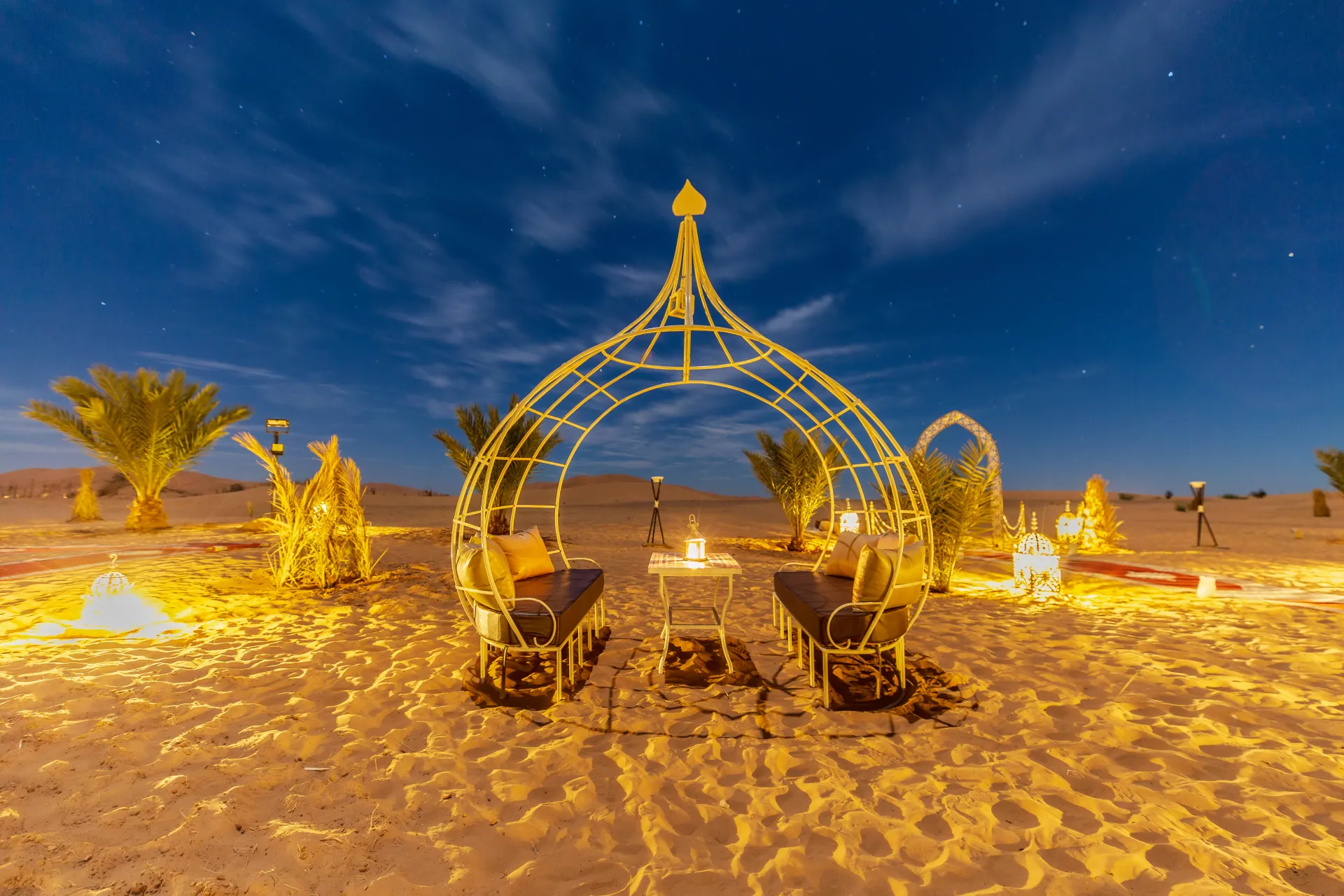
Your local guides will teach you how to ride and saddle a camel, then you’ll set out to explore the enigmatic Erg Chebbi sand sea (1–1.5 hours). Tonight you sleep like a Berber, in a tent in the heart of the Sahara.
A full day out in the Sahara: the nomad families who still live in the black tents around the erg, the old Mascara galleries where kohl was mined, the village of Khamlia and its Gnawa musicians, whose sung history came north with the caravans from Mali.
Khamlia was settled by descendants of people brought north along the caravan routes from Mali, and its Gnawa music carries that history in the rhythm.
The nomad families around the erg still move with their herds and still take visitors in for tea, which is a real household rather than a display.
The fossil beds around Erfoud were a shallow sea 400 million years ago, and the black marble cut there is full of orthoceras and trilobites.
-
Iti9
Day 9: Merzouga → Erfoud → Ziz Valley → Azrou → Ifrane → Fes
After a shower and a camel ride back from the dunes, you’ll travel to Rissani, then through the fossil town of Erfoud and the sweeping Ziz Valley, with its palm groves and canyons, over the Tizi n’Talghemt pass to Midelt for lunch.
On the road you’ll stop at the Azrou cedar forest to see monkeys living in the wild, then pass through Ifrane, the “Moroccan Switzerland,” before reaching Fes, the cultural capital. Overnight in a traditional riad in Fes.
The afternoon belongs to the desert. Camels are met at the edge of the dunes and the ride out to camp is timed so the sun goes down while you are among the sand.
Dinner is served at the camp, the drums come out after it, and the stars over Erg Chebbi are the reason most people remember this night above the rest.
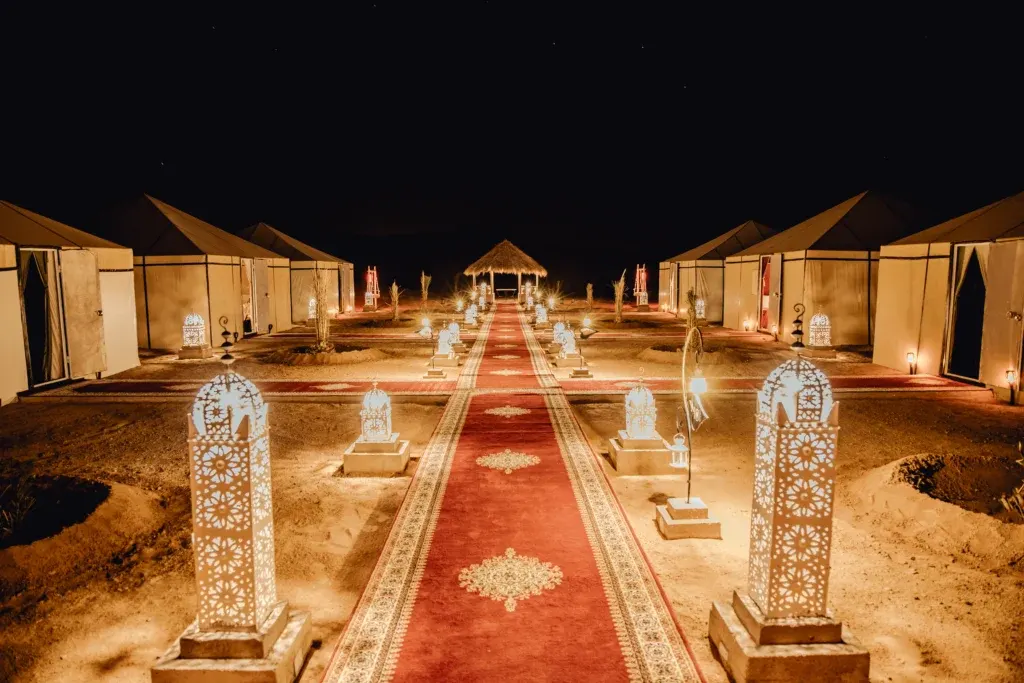
The tents have proper beds and rugs rather than sleeping mats, and the larger camps have private bathrooms.
Dinner at camp is tagine cooked over the fire, and the drums usually come out once the plates are cleared.
-
Iti10
Day 10: Fes → airport transfer
Depending on your flight time, we’ll transfer you to the airport — the end of your 10-day Morocco desert tour from Fes through the imperial cities and the Merzouga Sahara. Thank you for travelling with us.
What the Price Includes
Everything covered in the price
Price Includes
- ✓ Door-to-door pickup and drop-off at your hotel or riad
- ✓ Private, air-conditioned modern vehicle — exclusively yours for the whole trip
- ✓ Experienced, English-speaking driver-guide who knows the routes, roads and local culture
- ✓ All fuel, tolls and vehicle running costs
- ✓ Local guide in Fes & Marrakech
- ✓ Camel trek into the dunes — one camel per person, led by a local guide
Price Excludes
If this itinerary does not quite match what you had in mind, tell us your ideas and we will rebuild it around them.
Tour Map
Fes
You May Also Like
More private Morocco tours
 3 days 2 night
3-Day Desert Tour from Fes to Marrakech via Merzouga
A private 3-day desert tour from Fes to Marrakech across the Sahara
View Tour Details → Day trip
Chefchaouen Day Trip from Fes (the Blue City)
A private day trip from Fes to Chefchaouen, Morocco's famous Blue City in the Rif Mountains
View Tour Details →
Day tripMeknes & Volubilis Day Trip from Fes
A private day trip from Fes to the Roman ruins of Volubilis, the sacred town of Moulay…
View Tour Details →