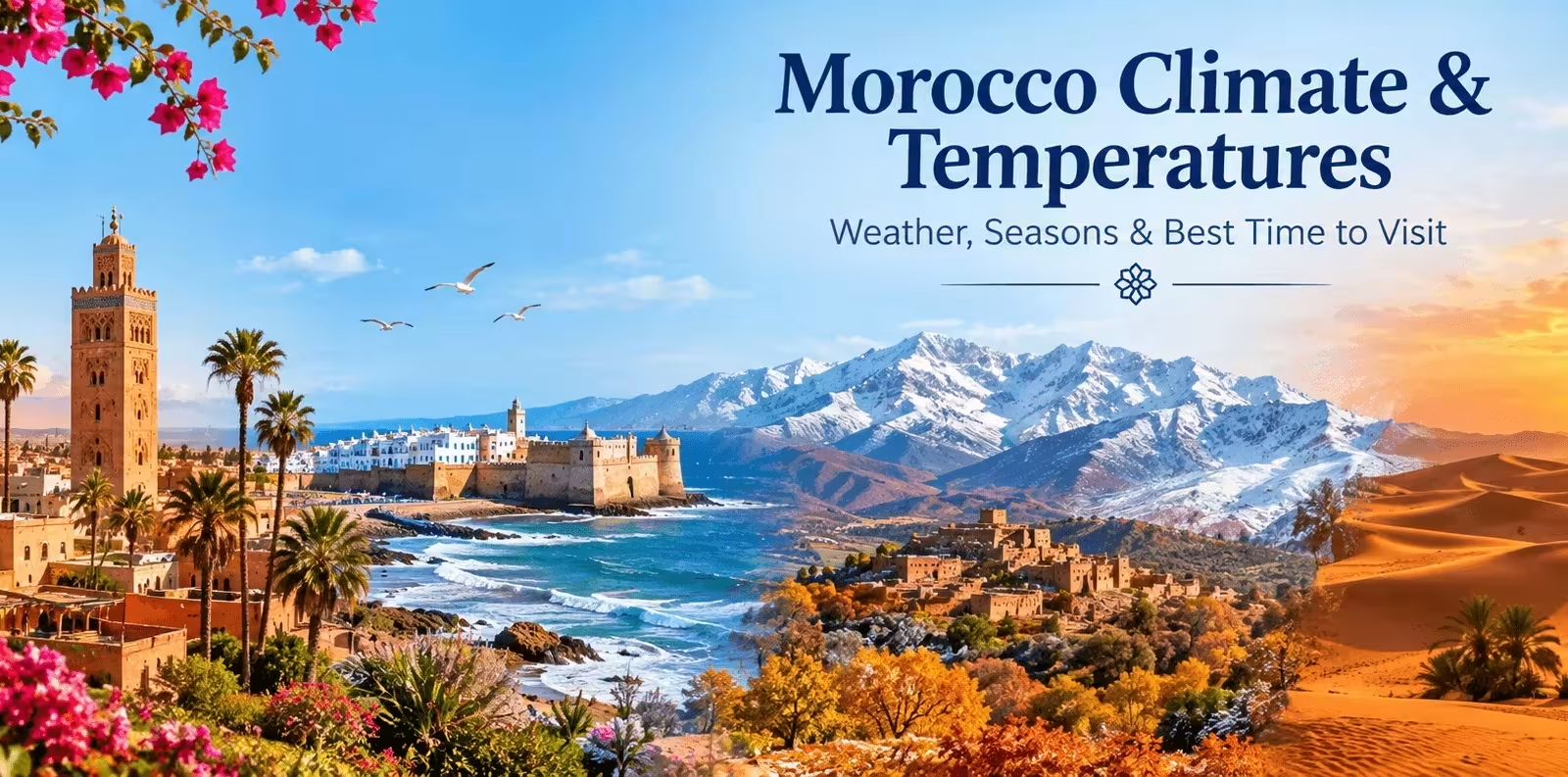
Morocco temperature swings more than almost anywhere else its size. Ask what the temperature is in Morocco and the honest answer is another question: where, and when? On the same February afternoon you can be in shirtsleeves in Marrakech, in a down jacket on a pass in the High Atlas an hour and a half away, and watching your breath fog over a desert camp after dark. The country runs from Atlantic surf to Saharan dune and over a mountain range that holds snow into May. One number never covers it.
This guide sets out what the temperature actually does across the four climates Morocco contains, month by month, and what that means for when you come and what you put in the bag. We are a Moroccan tour company and we drive these routes in every season, so most of this is what we tell guests on the phone rather than what an average on a chart suggests.
Morocco has four climates, not one
Before any monthly figure is useful, it helps to know which Morocco you are asking about. The country divides into four broad zones, and they can differ by twenty degrees on the same day.
The Atlantic coast
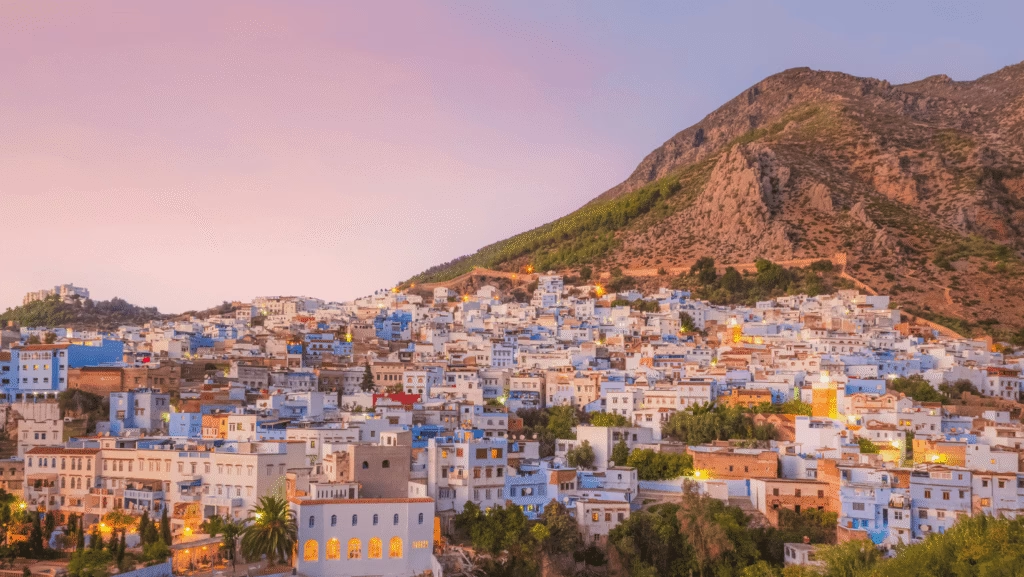
Essaouira, Agadir, Casablanca, Rabat and Tangier sit under a maritime influence that flattens the extremes. Summers stay mild, often startlingly so: Essaouira in August rarely climbs past the mid twenties Celsius while Marrakech, three hours inland, is pushing forty. Winters are cool and damp rather than cold. The trade-off is wind. Essaouira is one of the windiest stretches of coast in North Africa, which is why it is full of kitesurfers and why a warm day there can still feel sharp.
The inland imperial cities
Marrakech, Fes, Meknes and Rabat’s inland hinterland have a continental streak. Summer is genuinely hot, with July and August highs commonly in the high thirties and spikes above forty when the chergui blows in off the desert. Winter days are pleasant, often in the high teens, but nights drop close to freezing and Moroccan buildings are built to shed heat, not hold it. A riad room in January can be colder than the courtyard at noon.
The Atlas Mountains
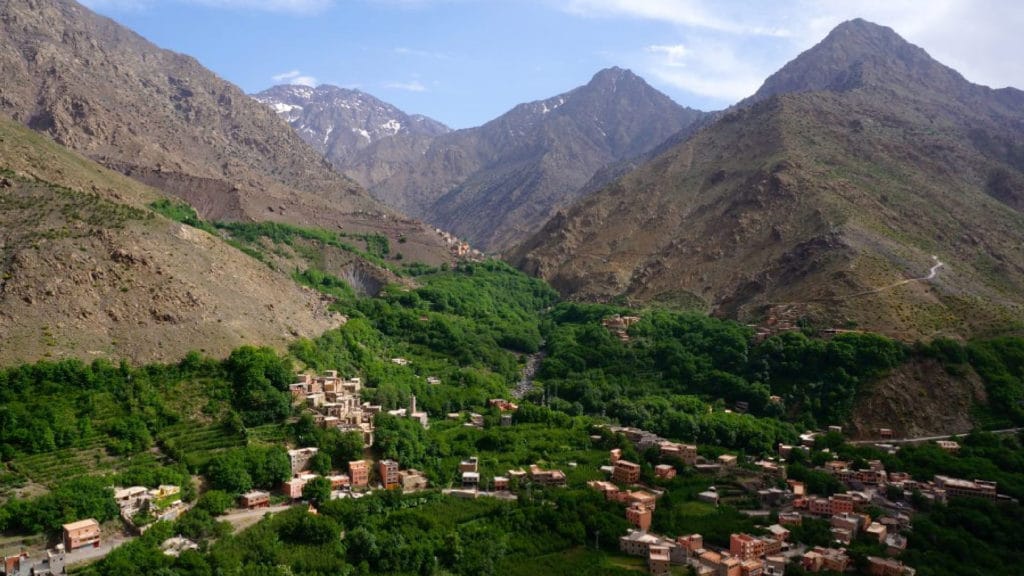
The Middle and High Atlas behave like mountains anywhere: altitude beats latitude. Ifrane, in the Middle Atlas, holds the lowest temperature ever recorded in Africa. Ski lifts run at Oukaimeden above Marrakech. Passes such as Tizi n’Tichka and Tizi n’Test can close in a storm between December and March, which matters if your route between Marrakech and the desert crosses one, and it does. Even in June the air at three thousand metres is cold once the sun goes.
The Sahara and the pre-Saharan south
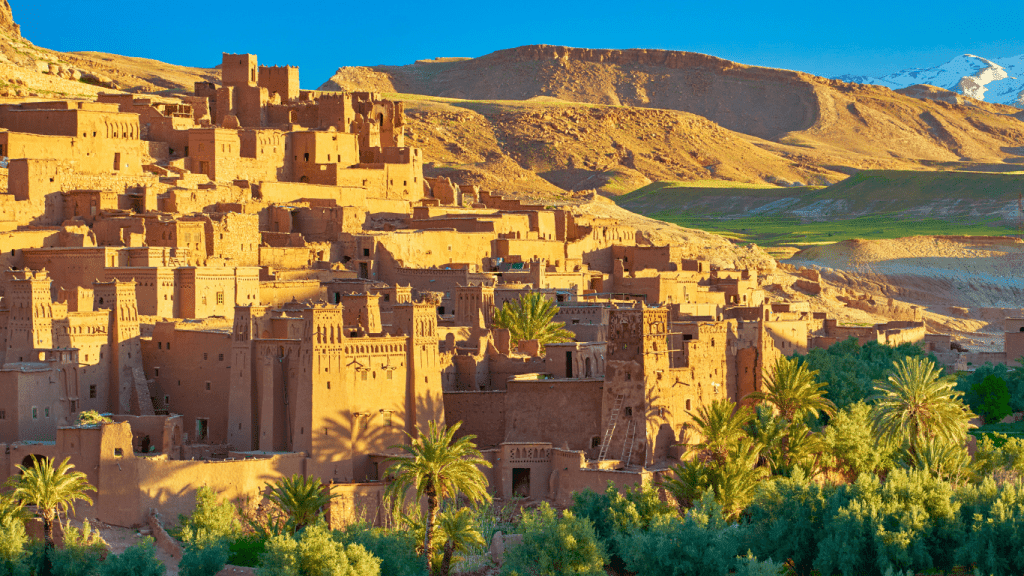
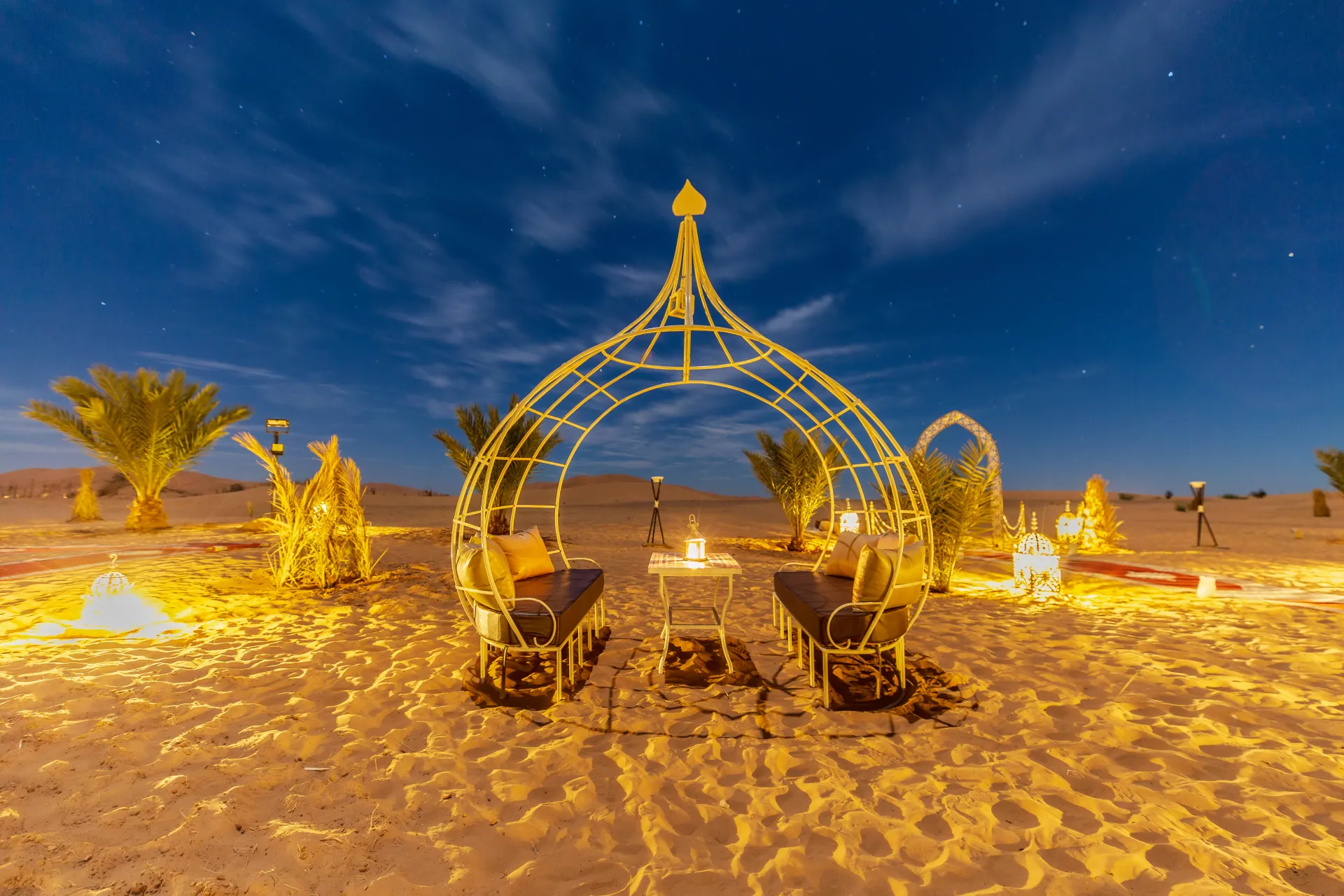
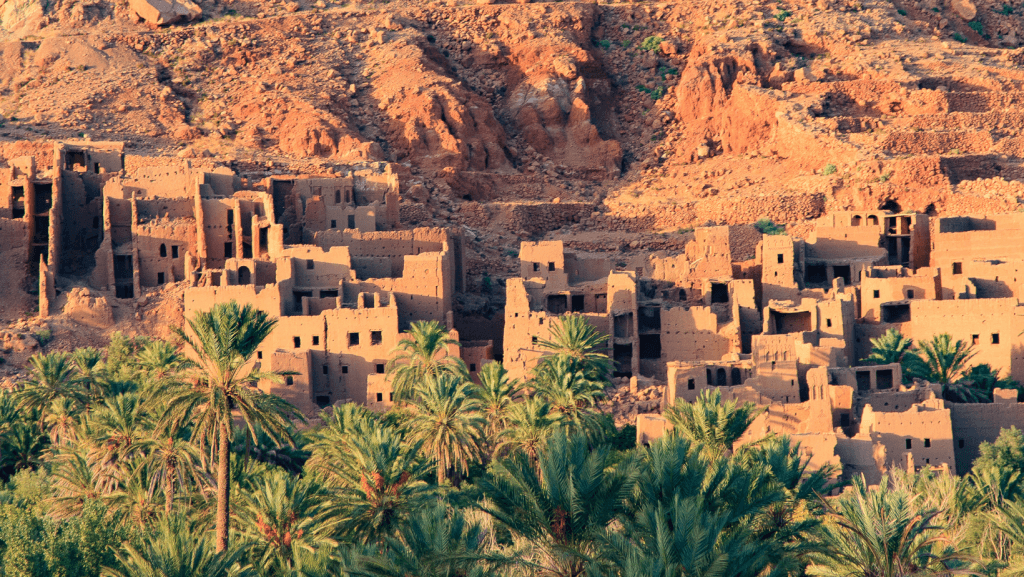
Merzouga, Zagora, Erfoud and the Draa and Ziz valleys are the true desert. From June to September the heat is not a matter of comfort but of planning: midday in July can exceed forty-five degrees, and the sensible response is to do nothing outdoors between noon and five. The compensation is the swing. Desert nights shed heat fast, and a camp that read forty-two at four in the afternoon can be pleasant by ten and cold by four in the morning. In winter the days are perfect and the nights are close to freezing.
Morocco temperature month by month
Typical daytime highs and overnight lows in Celsius, for four places that stand in for the four climates. Treat them as the shape of the year, not a forecast.
| Month | Marrakech | Essaouira | Merzouga | Imlil (Atlas) |
|---|---|---|---|---|
| January | 18 / 6 | 18 / 11 | 18 / 4 | 9 / 0 |
| February | 20 / 8 | 18 / 11 | 21 / 6 | 10 / 1 |
| March | 23 / 10 | 19 / 12 | 25 / 10 | 13 / 3 |
| April | 26 / 12 | 20 / 13 | 29 / 14 | 16 / 5 |
| May | 29 / 15 | 21 / 15 | 34 / 18 | 20 / 8 |
| June | 34 / 18 | 22 / 17 | 39 / 23 | 25 / 12 |
| July | 38 / 21 | 23 / 18 | 42 / 27 | 29 / 15 |
| August | 38 / 21 | 24 / 19 | 41 / 26 | 29 / 15 |
| September | 33 / 19 | 24 / 18 | 36 / 22 | 24 / 12 |
| October | 28 / 15 | 23 / 16 | 30 / 16 | 19 / 8 |
| November | 22 / 11 | 21 / 14 | 23 / 9 | 13 / 4 |
| December | 19 / 7 | 19 / 12 | 19 / 5 | 10 / 1 |
Two things stand out. Essaouira barely moves all year, sitting in a narrow band from about eighteen to twenty-four degrees. Merzouga swings through twenty-four degrees between January and July. Those two columns describe the same country, four hundred kilometres apart.
Season by season, and what it means for a trip
Spring: March to May
The best all-round window, and no serious guide will tell you otherwise. The imperial cities are warm without being punishing, the desert is hot by day and comfortable at night, the Atlas foothills are green, and the almond and rose blossom comes through the southern valleys. The Dades and Draa look their best. The one caveat is that snowmelt can swell rivers, and the Atlas passes still catch late storms in March.
Summer: June to August
Hot inland, hard in the desert, and lovely on the coast. This is when Moroccans themselves go to Essaouira and Agadir, and the coast fills up in August. A summer trip is entirely doable if the route is built around the heat rather than against it: coast and mountains by day, cities early and late, and the desert either skipped or handled with a very early start and a late return. Desert camps run through summer but the middle of the day is for shade, not camels.
Autumn: September to November
Our own favourite. September still carries summer heat, October is close to perfect almost everywhere, and November brings the first rain to the north while the south stays dry and clear. The light is better than in spring and the crowds have thinned. By late November the desert nights are cold enough to want a proper jacket.
Winter: December to February
Underrated and misunderstood. Daytime Marrakech in January is often pleasanter than June, the desert is at its most comfortable for walking, and the Atlas is under snow, which is spectacular from below and skiable from above. The catch is the nights and the buildings. Riads with thick walls and no heating hold the cold, so ask about heating before you book, and pack as if for a cold evening rather than a warm afternoon.
Rain: when it falls and where
Morocco is dry by European standards and very dry by any standard once you are south of the Atlas. The rain that does fall arrives between November and March, and it arrives unevenly. The north and the Rif take the most; Chefchaouen and Tangier can be genuinely wet in January. Marrakech gets a handful of rainy days a year. Merzouga might see rain twice.
The number that matters is not how much falls but how fast. Southern valleys drain enormous catchments through narrow beds, and a storm in the mountains can put water across a road in the desert hours later under a clear sky. Flash flooding closes roads in the Dades, Todra and Ziz a few times each winter. It is the single weather event most likely to change a Moroccan itinerary, and it is why we build slack into winter routes rather than scheduling to the minute.
What the averages do not tell you
- The day-night swing. Inland and in the desert, expect fifteen to twenty degrees between afternoon and dawn. This is the single most common packing mistake.
- Shade versus sun. Moroccan summer heat is dry, so shade is dramatically cooler than direct sun. A medina alley can be fifteen degrees kinder than the square it opens onto.
- The chergui. A hot, dry easterly that can add ten degrees to a Marrakech day at any time of year, most often in summer. Forecasts often miss it.
- Humidity. Forty degrees in Merzouga is more bearable than thirty-two in humid Casablanca in August. Dry heat genuinely is different.
- Altitude, not latitude. Every thousand metres costs you roughly six degrees. Merzouga and Imlil sit at similar latitudes and behave nothing alike.
What to pack, by season
One rule covers most of the year: layers, and something warm for the evening even when the forecast looks hot. Beyond that:
- Spring and autumn. Light clothes for the day, a fleece or jacket for desert and mountain nights, a scarf for wind and sun, and comfortable shoes with grip for medina cobbles and gorge paths.
- Summer. Loose, long, light fabric beats shorts and a vest: covering up is cooler in dry heat and reads better in rural areas. A hat you cannot lose, sunglasses, and far more water than you think.
- Winter. A proper jacket, a hat for desert nights, and something warm to sleep in. Riads are stone and tile, and they hold cold. Waterproofs if you are going north.
- Anywhere near the Atlas. Long trousers and a warm layer, whatever the season. The lunch stop at altitude on the way to the desert catches people out in July.
If you are still choosing dates rather than packing, our guide to where to go in Morocco and how long each region needs pairs naturally with this one.
The best time to come, by what you want to do
- Sahara and desert camps: October to April. Avoid July and August unless you are content to sit out the middle of the day.
- Imperial cities on foot: March to May and September to November. Fes and Marrakech are walking cities and walking is miserable at thirty-eight degrees.
- Atlas trekking: April to October. Toubkal needs winter skills and equipment outside that window.
- Coast and surf: June to September, when the interior is at its worst and Essaouira and Agadir are at their best.
- Photography: late autumn. Clear air, low sun, and snow on the Atlas behind green foothills.
- Wildflowers and blossom: February to April in the southern valleys, with the Kelaat M’Gouna roses around May.
Two practical notes that are not about temperature but decide trips all the same. Ramadan moves through the calendar roughly eleven days earlier each year, and while tourism runs normally, daytime rhythms change and some rural restaurants close. And the Atlas passes can shut with little notice in winter, which is worth knowing if your route crosses one. Our Marrakech desert tours are routed around both.
Frequently asked questions
What is the hottest month in Morocco?
July and August, almost everywhere except the Atlantic coast. Inland cities sit in the high thirties and the desert regularly passes forty-two. Essaouira, meanwhile, is in the low twenties, which is why half of Marrakech drives there in August.
Does it snow in Morocco?
Yes, and more than people expect. The High and Middle Atlas hold snow from roughly December to April, there is a ski station at Oukaimeden above Marrakech, and the passes between Marrakech and the south can close during storms. Ifrane in the Middle Atlas holds the record for the lowest temperature ever recorded on the African continent.
How cold does the Sahara get at night?
In December and January a desert camp can drop to near freezing before dawn, and single figures are normal from November to March. Camps provide heavy blankets, but bring a warm layer and something to sleep in. In summer the nights are mild rather than cold.
What is the best month to visit Morocco?
October, if you want one answer. April is its equal for landscape and slightly better for blossom. Both give you comfortable cities, a workable desert and open mountain roads, which no other months manage at once.
Is Morocco too hot in summer for a desert tour?
Not impossible, but it changes the shape of the day. Desert tours run all summer with early starts, long midday breaks and late afternoon camel rides. If you cannot work around the middle of the day, come between October and April instead.
Do I need warm clothes in Morocco in winter?
Yes. Daytime is mild and pleasant, but nights drop close to freezing inland and in the desert, and most Moroccan buildings have no heating. Visitors underpack for winter here more often than for any other season.