Guide to Fossil Hunting in Morocco: Everything You Need to Know
August 31, 2026 10 min read Lahcen Ouhanane
Fossil hunting in Morocco is not a niche hobby here. It is an industry. Whole towns in the south-east live on it, the roadsides are lined with stalls selling trilobites and ammonites, and the country supplies a large share of the fossils sold in museum shops and mineral fairs worldwide.
That abundance is real, and so is the problem that comes with it: a good deal of what is offered to visitors is carved, cast, composited or simply not what the seller says it is. This guide covers what Morocco actually produces, where it comes from, how to tell a genuine specimen from a manufactured one, what the law says about taking fossils home, and how to see the workshops for yourself. We are a Moroccan tour operator, and the fossil towns sit directly on our desert routes.
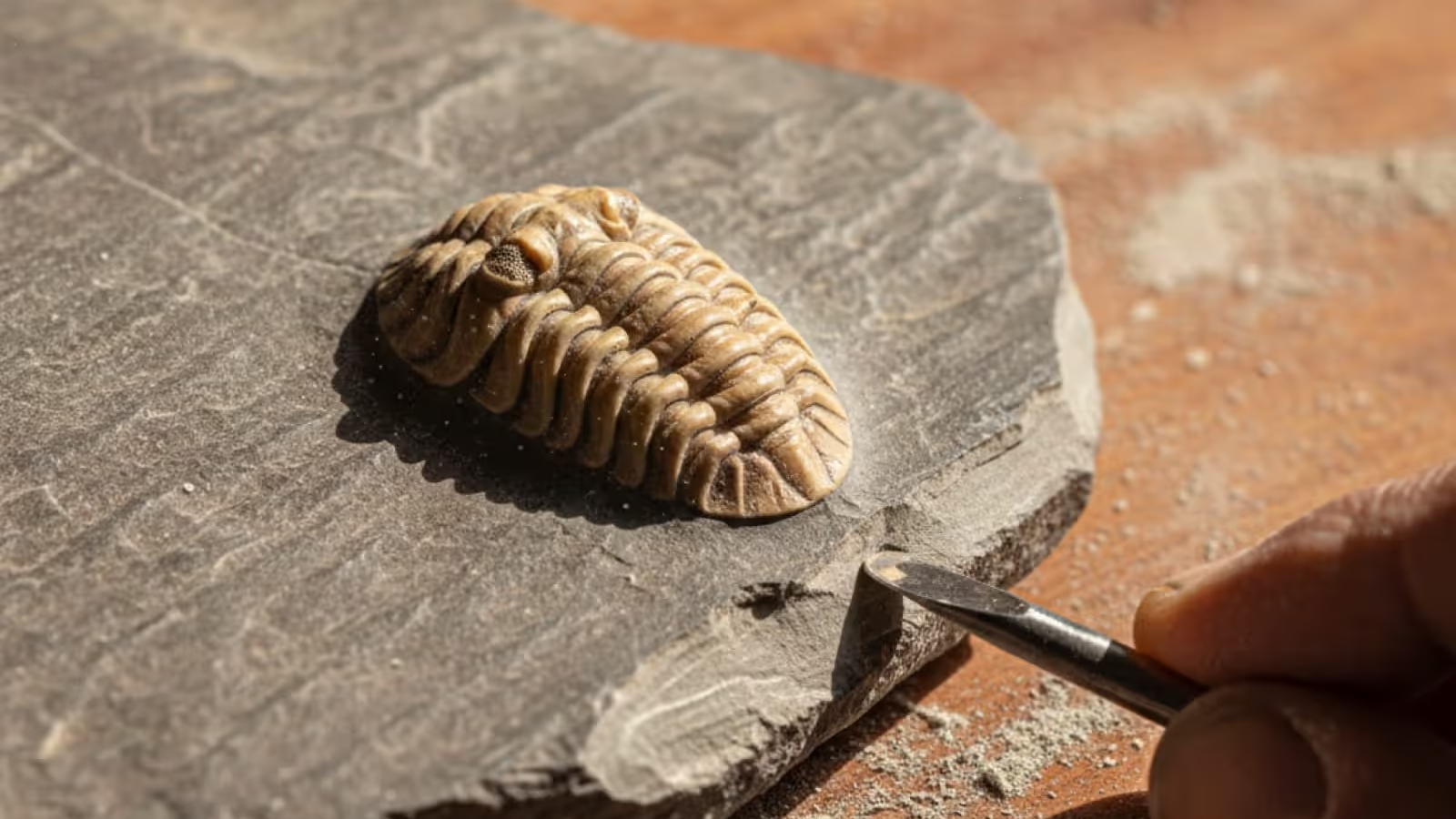
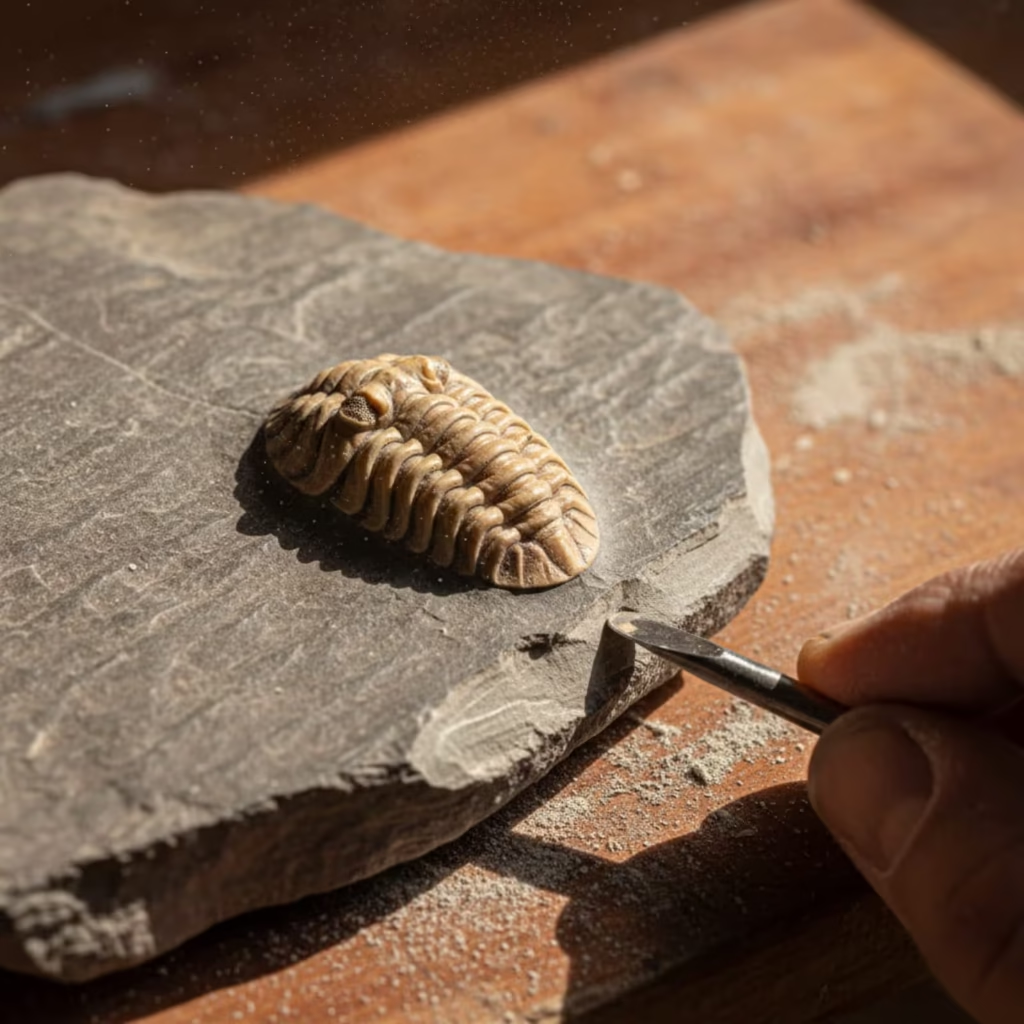
Preparation is where the value is made. Freeing a specimen from its matrix can take days under magnification.
Why Morocco is one of the world’s great fossil countries
Two things came together. First the rock: Morocco exposes an almost unbroken sequence of marine sediments from the Cambrian through to the Cretaceous, laid down when most of the country lay under a shallow sea. Second the landscape: the south-east is arid and barely vegetated, so those beds sit exposed at the surface across hundreds of kilometres instead of being buried under soil and forest.
Then a third, human factor. Since the 1970s the Tafilalet region has built up generations of expertise in finding, extracting and preparing fossils. The result is a supply chain running from a man with a hammer on a hillside to a polished slab in a European showroom.
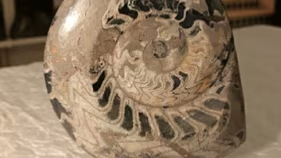
Trilobite, Devonian — AlnifAmmonite — coiled chambers exposedGoniatite, cut and polished in stone
What you can actually find
Trilobites
The signature Moroccan fossil. These marine arthropods lived from the Cambrian to the Permian, and Morocco produces them in exceptional variety, particularly Ordovician and Devonian forms from the Anti-Atlas. Spiny genera such as Dicranurus and Walliserops, with its extraordinary trident, are the ones collectors chase and, not coincidentally, the ones most often faked.
Orthoceras and goniatites
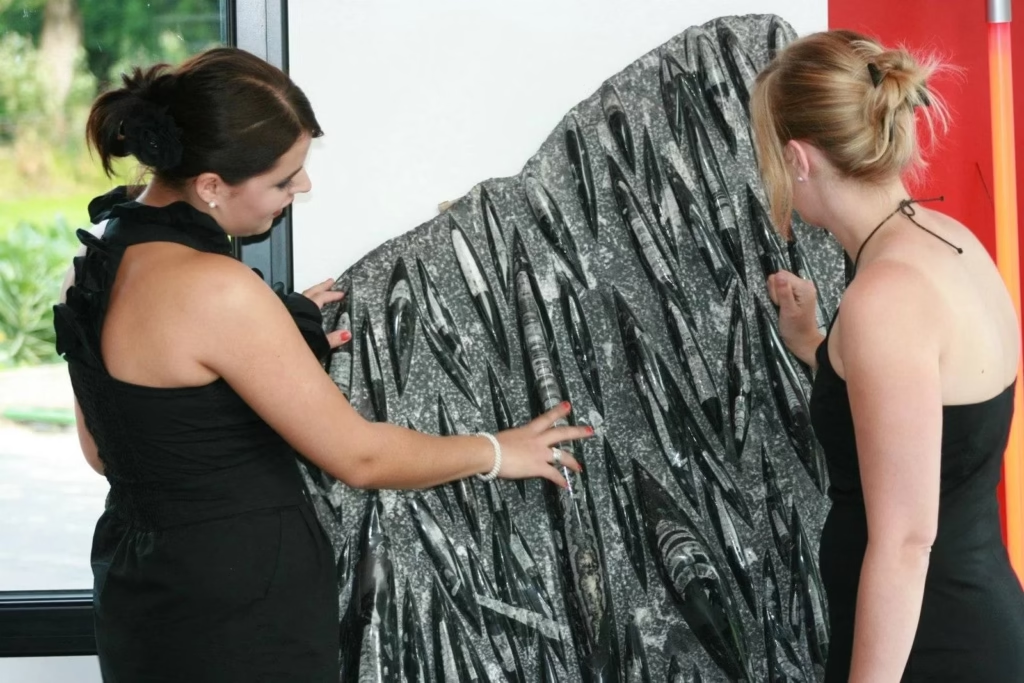
The straight-shelled nautiloids you see embedded in black polished slabs, sold as tabletops, sinks, clock faces and coasters. They are Devonian, they are genuinely abundant, and the black limestone around Erfoud is full of them. Goniatites, the coiled ancestors of ammonites, come out of the same beds.
A polished orthoceras plaque from the Erfoud workshops. Slabs like this are cut, ground and finished by hand.
Ammonites
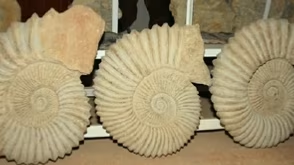
Coiled cephalopods, mostly Jurassic and Cretaceous, found across the Middle Atlas and the south. Sizes run from a coin to well over half a metre. Cut and polished pairs are a workshop staple.
Shark and mosasaur teeth
The phosphate beds around Khouribga and Oued Zem are among the richest marine vertebrate deposits anywhere, spanning the end of the Cretaceous into the Eocene. They yield shark teeth by the tonne, including large Otodus, along with mosasaur teeth and jaw sections, sea turtle material and, higher in the sequence, early whales.
The Kem Kem beds
South-east of Erfoud, towards Taouz, lie the Kem Kem beds: mid-Cretaceous river deposits that have produced Spinosaurus, Carcharodontosaurus and the sawfish Onchopristis. Isolated teeth from these animals are sold everywhere in the region. This is also where fakery and provenance problems are most acute, and where the scientific loss from uncontrolled digging is greatest.
Where to go
Erfoud
The centre of the trade and the best place to see fossils being worked rather than just sold. The marble workshops on the edge of town cut, grind and polish orthoceras and ammonite slabs, and most will let you walk through the process from raw block to finished surface. It costs nothing to look and it is genuinely interesting.
Rissani
Thirty minutes south, and the regional market town. The souk runs on Sunday, Tuesday and Thursday and is where a great deal of material changes hands between diggers and dealers. Prices are lower here than in Erfoud showrooms, and so is the average level of explanation.
Alnif
A small town west of Rissani that has become the trilobite capital of Morocco. Many of the specimens sold worldwide were prepared in workshops here. If trilobites are your interest, this is the place, though it is off the standard tourist route and you will need a driver who knows it.
Midelt and the Middle Atlas
Better known for minerals than fossils, but the road north through Midelt is lined with stalls selling ammonites, geodes and crystals alongside a lot of dyed and heat-treated material sold as natural.
Khouribga and Oued Zem
The phosphate country north-east of Casablanca. These are working industrial mines, not collecting sites, and access to the pits is not open to visitors. Material from here reaches you through dealers rather than by wandering onto a mine.
How Moroccan fossils are found and prepared
Most material is dug by small independent teams working shallow pits and hillside seams by hand. A find comes out of the ground as a lump of rock with something inside it, and the value is created afterwards, in preparation.
That work is done in home and village workshops, increasingly with air scribes and micro-abrasive tools, and the best Moroccan preparators are genuinely world class. It is slow: a spiny trilobite can take days of work under magnification to free each spine from the matrix. Understanding that is the key to understanding price, because you are largely paying for labour rather than rarity.
Fakes, composites and how to spot them
This is the part most guides skip. A significant share of the trilobites and dinosaur teeth sold to visitors are not what they appear to be, and the techniques are good. Broadly there are four categories:
Carvings. A shape cut from stone with no fossil inside it at all, sometimes over a genuine but unremarkable piece of matrix.
Casts. Resin or plaster copies taken from a mould, often painted and set into real rock. The giveaway is that you will see the same specimen repeatedly on the same stall.
Composites. Parts of several genuine specimens glued together into one impressive whole, with filler between. Very common in larger trilobites.
Restorations sold as complete. A real fossil with substantial reconstructed sections not disclosed.
What to look for:
Too perfect. Real fossils are asymmetric and damaged. Flawless bilateral symmetry and complete, undamaged spines should raise suspicion, not excitement.
Colour and texture mismatch. The fossil and the surrounding rock formed together. If the specimen looks applied to the matrix rather than emerging from it, it probably was.
Look at the underside and the edges. Glue lines, filler, air bubbles and a suspiciously flat base are all signs of assembly.
Surface under magnification. Bring a hand lens. Genuine shell has fine structure. Carved stone shows tool marks; resin shows bubbles and a slightly soft, warm feel.
Repetition. Five identical specimens means a mould. Nature does not repeat.
Price. A large, fully prepared spiny trilobite represents days of skilled work. If it costs a few hundred dirhams, that work did not happen.
You may read about testing resin with a hot needle. It works, it also damages the piece, and no reputable seller will let you do it to their stock. Better to buy from a workshop where you can watch preparation happening and ask direct questions.
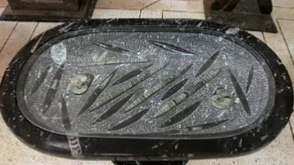
Orthoceras table top — Erfoud workshopPolished ammonite halves, sold by weight
What you should pay
There is no fixed scale, and bargaining is expected in souks though much less so in established workshops. As a rough orientation: small common trilobites, orthoceras coasters and shark teeth are inexpensive souvenirs. Mid-size polished ammonite pairs and orthoceras plates cost more but remain reasonable. A large, well-prepared spiny trilobite from a named locality is a serious purchase and should be, because it is hundreds of hours of accumulated skill.
The most useful rule is to decide what a piece is worth to you before asking, and to treat an implausibly low price as information rather than a bargain.
The law: what you can and cannot take home
This deserves more attention than it usually gets. Morocco regulates the export of fossils and minerals, and significant specimens require authorisation from the relevant ministry. In practice, small commercial souvenirs bought from established shops leave the country routinely and without incident. Large, rare or scientifically important material is a different matter, and so is anything approaching a complete vertebrate skeleton.
Sensible practice: buy from a registered business, keep the receipt, declare what you are carrying if asked, and do not attempt to remove anything that looks scientifically significant. Check your own country’s import rules too, since some jurisdictions ask for proof of lawful export.
There is an ethical dimension as well. Uncontrolled digging in beds like the Kem Kem destroys the context that makes a fossil scientifically useful, and a specimen without provenance is largely lost to research. Buying prepared, common material from working shops supports the local economy. Commissioning someone to dig out something spectacular does not sit in the same place.
Can you dig it yourself?
Realistically, not in the way visitors imagine. There is no organised public fossil-collecting site with a permit desk. Land is owned, worked or licensed, the productive seams are known and already being worked by the families who depend on them, and wandering onto a working site with a hammer is neither legal nor welcome.
What is possible, and genuinely rewarding, is to arrange a visit to an active digging area with someone who works it. You see how the beds are read, how a seam is followed and how a find is extracted, which teaches you far more about fossils than buying one. We can set that up around Erfoud and Alnif with notice.
When to go
The fossil towns sit on the edge of the Sahara, so the sensible seasons are the same as for any desert travel: March to May and September to November. Summer regularly passes 45 C and the workshops are hot, dusty places. Winter days are pleasant and the nights are cold.
Market days matter more than the season for Rissani: aim for a Sunday, Tuesday or Thursday.
Seeing it on a tour
Erfoud and Rissani sit on the main road to Merzouga, which means almost any desert itinerary passes within a few kilometres of the workshops. It is one of the easiest worthwhile stops in Morocco to add.
Tell us when you enquire if fossils are a priority and we will build in a workshop visit rather than a shop stop, which are not the same thing. If you are interested in how things are made here more generally, our guides to Moroccan craftsmanship and Moroccan ceramics cover the other trades worth seeing.
Frequently asked questions
Is it legal to buy fossils in Morocco?
Yes. Buying is legal and the trade is open and long established. What is regulated is export: significant specimens require authorisation, while ordinary commercial souvenirs from registered shops leave routinely. Keep your receipt and declare what you are carrying if asked.
How can I tell if a Moroccan trilobite is real?
Look for asymmetry and genuine damage, check that fossil and matrix share the same colour and texture, examine the underside for glue lines and filler, use a hand lens for tool marks or resin bubbles, and be suspicious of identical repeated specimens. A price far below the labour the piece would have taken is the clearest warning of all.
Where is the best place to buy fossils in Morocco?
Erfoud for polished orthoceras and ammonite work and for seeing preparation done, Alnif for trilobites, Rissani souk for lower prices and less explanation. Buying at a workshop is generally better value and far more informative than buying at a roadside stall.
Can I collect fossils myself in Morocco?
Not freely. There is no public collecting site, land is owned or licensed, and productive seams are worked by local families. You can arrange to visit an active dig with the people who work it, which is more interesting than collecting anyway.
What is the Kem Kem and why does it matter?
A mid-Cretaceous rock sequence in south-east Morocco that has produced Spinosaurus, Carcharodontosaurus and other large vertebrates. It is scientifically important, heavily dug commercially, and the source of most of the dinosaur teeth sold in the region.
Are the shark teeth sold in Morocco genuine?
Usually yes. The phosphate beds around Khouribga produce them in enormous quantity, so there is little incentive to fake common ones. Large or unusually perfect teeth, and anything sold as a rare species, deserve more scrutiny.
How do I get a large fossil slab home?
Shipping, not luggage. Established Erfoud workshops crate and ship internationally as a matter of routine. Agree the cost in writing before you pay, and expect the freight on a heavy stone slab to rival the price of the piece.
Ready to Discover Morocco?
Tell us when you'd like to come, what you want to see and where you'd like to stay. We'll build the itinerary around it — no obligation. Contact ·
WhatsApp.