Moroccan ceramics are the souvenir people most often regret buying badly and most often wish they had bought more of. A tagine bought in a hurry on the last afternoon usually turns out to be a painted ornament that cracks the first time it meets a flame. A plate bought well can outlive you.
This guide covers where Moroccan pottery is actually made, how to tell the main traditions apart, how to spot handmade work against factory decoration, the lead-glaze question nobody in the souk will raise with you, and how to get it home in one piece. We are a Moroccan tour operator and we take people to these workshops regularly.
The four traditions worth knowing
Almost everything you will see for sale comes from one of four places, and once you can tell them apart the whole market makes more sense.
Fes: cobalt blue on white
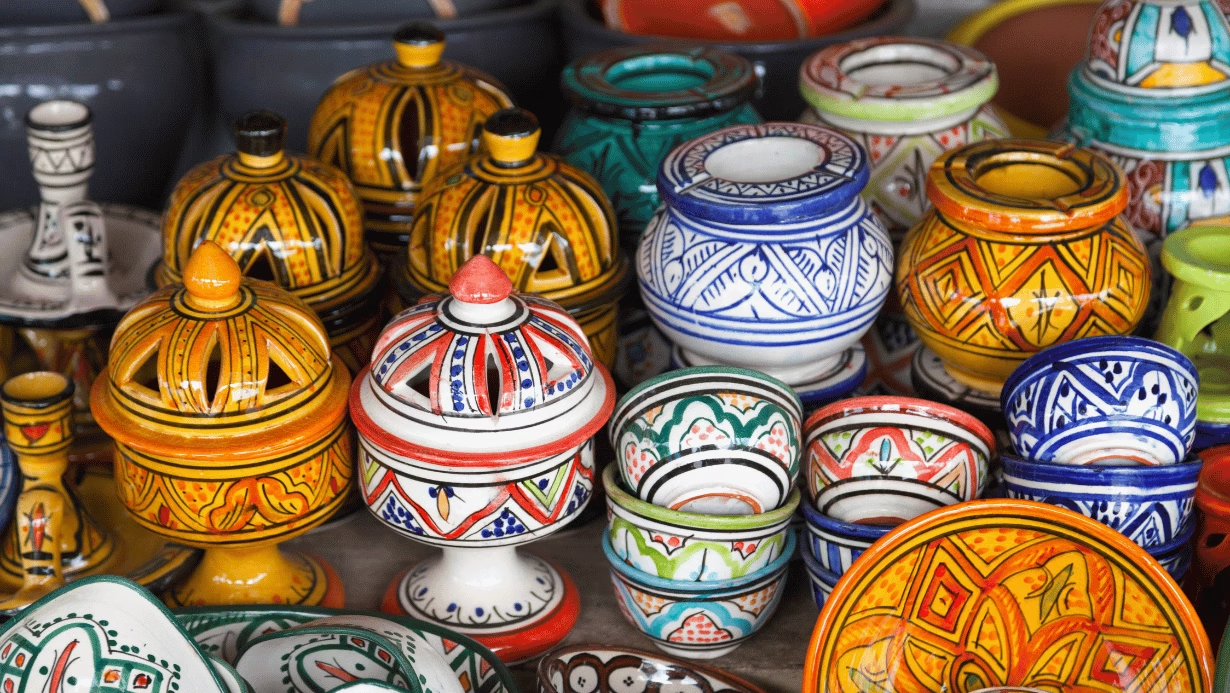
The most recognisable Moroccan pottery: deep cobalt blue painted on a white tin glaze in dense geometric and floral patterns. Fes has been producing it for around a thousand years, and the particular shade, bleu de Fes, is the city’s signature. The best pieces are painted freehand, which is why no two are ever quite identical.
Fes is also the centre of zellige, which is a different craft entirely: glazed terracotta hand-chiselled into small geometric pieces and assembled face-down into mosaic. If you watch one thing being made in Morocco, watch a maalem cutting zellige. It looks impossible.
Safi: the pottery city
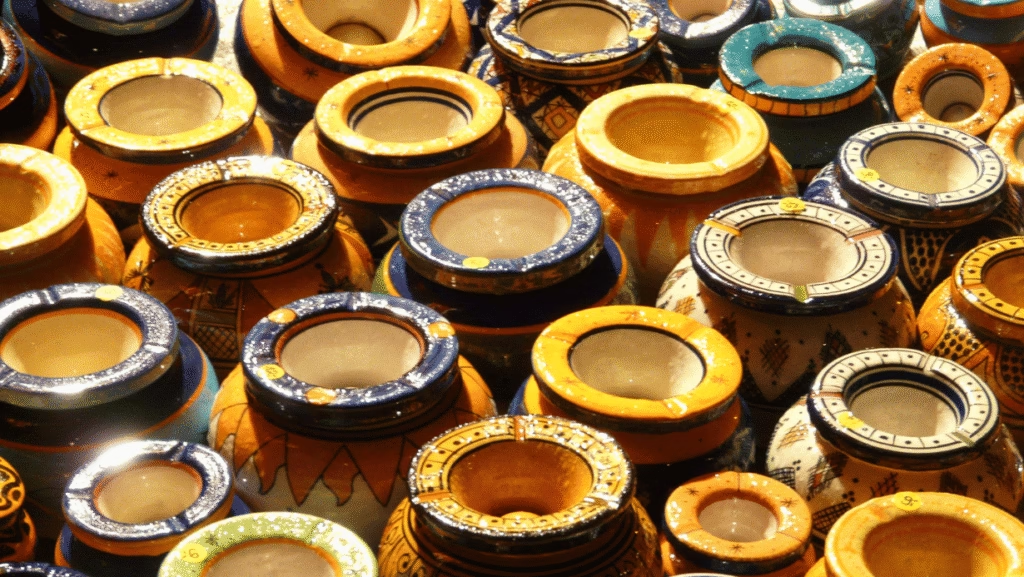
On the Atlantic coast between El Jadida and Essaouira, Safi is the country’s largest pottery centre, with an entire hillside, the Colline des Potiers, given over to workshops and kilns. Safi work is more colourful than Fes: polychrome patterns in turquoise, green and ochre, often on larger serving pieces. If you buy Moroccan ceramics anywhere in the country, a good share of it was made here.
Tamegroute: the green glaze
In the Draa valley south of Zagora, the potters of Tamegroute make something that looks like nothing else in Morocco: rough, heavy earthenware under a thick, uneven, luminous green glaze coloured with copper. The pieces are fired in kilns fed with palm, the glaze pools and runs, and no two come out the same. It has become fashionable abroad over the last decade, which has pushed prices up, but at source it is still made by a handful of families in the same few workshops.
Sale and Meknes
Sale, across the river from Rabat, has a long pottery tradition and produces both traditional and contemporary work. Meknes makes solid, everyday pieces. Neither has the profile of Fes or Safi, which sometimes means better prices for equivalent quality.
How it is made
The sequence is much the same in every workshop, and seeing it explains the price differences immediately.
Clay is dug locally, cleaned and left to rest. The piece is thrown on a wheel, in the older workshops a kick wheel turned by the potter’s own foot, or press-moulded for shapes like tagine bases. It then dries slowly in the shade, because drying it fast in the sun cracks it.
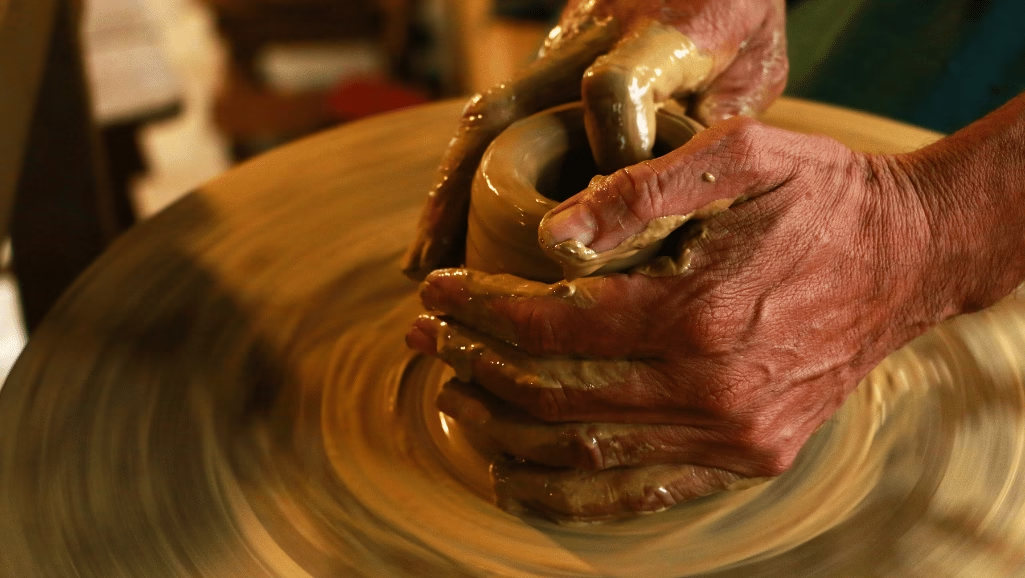
The first firing hardens the clay into biscuit. Glaze goes on next, the decoration is painted by hand, and the piece is fired a second time to fuse the glaze. Zellige adds a further step: the fired, glazed tile is chiselled by hand into the individual shapes that make up the pattern.
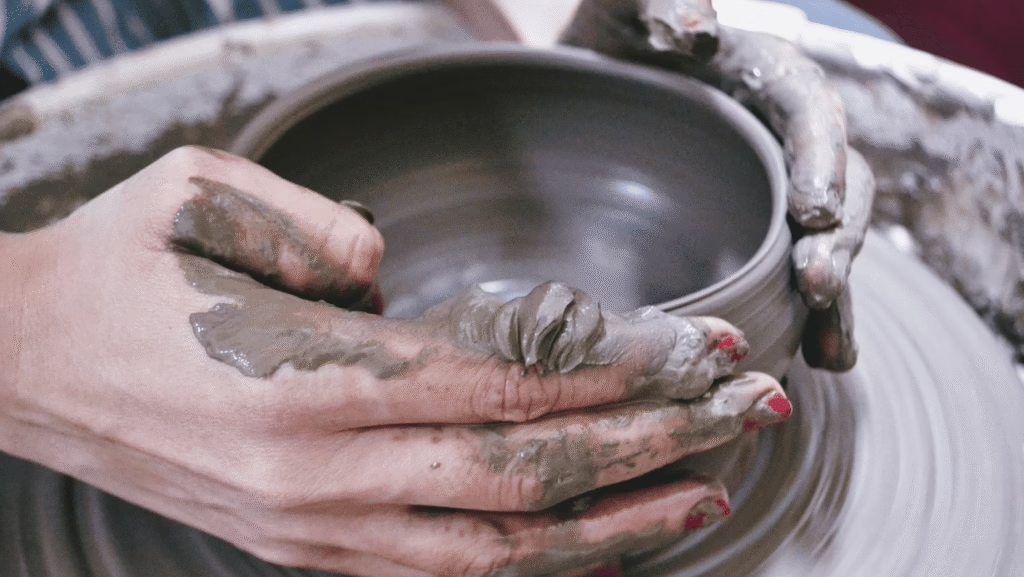
Every one of those stages is somewhere a corner can be cut. The two that matter most to you as a buyer are how the decoration was applied, and what was in the glaze.
Handmade, or decorated by machine
A great deal of what is sold as handmade Moroccan pottery is factory-made and transfer-printed. Neither is dishonest in itself, a printed plate is still a nice plate, but you should know which one you are paying for.
- Look for variation. Hand-painted patterns wobble. Lines vary in thickness, motifs differ slightly in size, and a repeated border does not repeat perfectly. Machine decoration is flawless and identical piece to piece.
- Turn it over. Handmade work usually shows wheel rings, an unglazed or roughly finished foot, and often the potter’s mark. A perfectly smooth, uniform base suggests a mould and a factory.
- Feel the surface. Hand-painted glaze has slight relief where the brush loaded. A transfer sits dead flat beneath the glaze.
- Check the stack. If a shop has forty identical items, they were not painted one at a time.
Tagines: the one that catches people out
There are two completely different objects sold under the same name, and shops are not always careful to distinguish them.
- A cooking tagine is plain, heavy, usually unglazed or simply glazed inside, and often rather unattractive. It is meant for the fire.
- A decorative tagine is the painted, glossy, beautiful one. It is a serving dish and an ornament. Put it on a flame and it will crack, often on the first attempt.
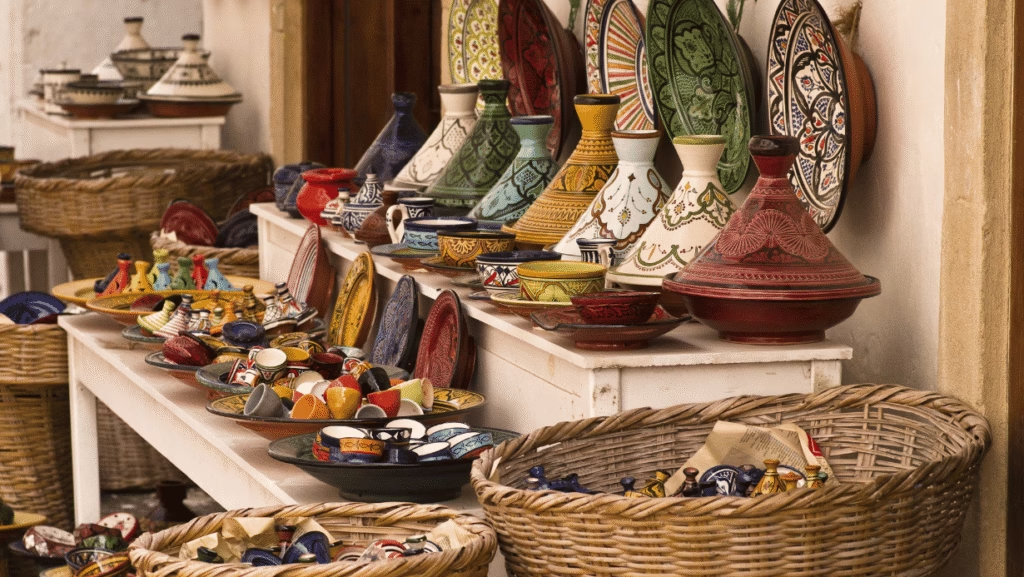
If you want one you can actually cook in, ask directly and expect to be shown something much plainer. Season it before first use by soaking it in water for a few hours, rubbing the inside with oil and heating it slowly. Always cook over low heat, use a diffuser on a gas hob, and never move it straight from the fridge to the flame. Earthenware fails from thermal shock more than from anything else.
The lead-glaze question
This is worth raising plainly, because almost nobody else will raise it with you.
Traditional glazes across North Africa and the Mediterranean have historically used lead compounds, which give a bright, low-firing, glassy finish. Lead can leach out of a glaze that was not fired hot enough, and it leaches fastest into acidic contents: lemon, vinegar, tomato, wine, and preserved lemon in particular.
The practical position is straightforward. Buy freely, and use decorative pieces decoratively: bread, dates, nuts and dry things are not a concern. If you want ceramics you will eat from every day, or cook acidic food in, ask specifically for lead-free or food-safe glaze. The better workshops and export-oriented producers use it and will tell you so. This is not a reason to avoid Moroccan pottery. It is a reason to ask one extra question.
What to pay, and how to bargain
Prices vary enormously with size, quality of painting and where you happen to be standing. A small hand-painted bowl is inexpensive anywhere. A large, finely painted Fes platter is a serious purchase and should be. Tamegroute green has risen sharply since it became fashionable.
Bargaining is expected in the souk and much less so at a workshop, where the person quoting the price is often the person who made the piece. Two rules serve people well: decide what it is worth to you before you ask the price, and never start bargaining for something you do not intend to buy. If you are taking several pieces, ask for a price for the group rather than haggling each one.
Getting it home
Ceramics survive the journey far more often than people expect, provided you take the packing seriously.
- Buy from a shop that packs properly, and watch them do it. Newspaper alone is not enough for a plate.
- Pack it in the middle of a checked bag, wrapped in clothes, away from the edges and corners. That is where cases take the impact.
- Large or heavy pieces are usually better shipped. Established workshops in Fes and Safi ship regularly and can arrange it. Agree the cost and get it in writing.
- Tagine lids travel worst, because of the knob. Wrap the lid separately from the base.
Where to see it made
Watching pottery being made is more interesting than shopping for it, and it costs nothing.
- Fes. The pottery and zellige workshops of the Ain Nokbi quarter, outside the medina walls, where throwing, painting and tile-cutting all happen in one visit. Any of our tours from Fes can include it.
- Safi. The Colline des Potiers, with kilns working in the open. Easy to add if you are travelling the Atlantic coast.
- Tamegroute. The green-glaze workshops and the old kilns, in the Draa valley on the road to Zagora. A two-day desert tour to Zagora passes through it.
- Marrakech. Plenty of selling, much less making. Buy here if you are short of time, but do not expect to watch it produced.
If ceramics are something you particularly want to see made rather than simply bought, say so when you enquire and we will build a workshop stop into the route. Our guide to Moroccan craftsmanship covers the other trades worth seeing, and where to go in Morocco explains how these cities fit together on a route.
Frequently asked questions
Can I cook in a Moroccan tagine bought in the souk?
Only if it is a cooking tagine, which is plain and heavy rather than painted and glossy. Ask explicitly. Season it before first use, cook on low heat, and use a heat diffuser on a gas hob.
Is Moroccan pottery safe to eat from?
Pieces sold as food-safe or lead-free are. Traditional glazes may contain lead, which matters most with acidic food. Use unmarked decorative pieces for dry food and display, and ask for food-safe glaze if you intend to eat from them daily.
Is Moroccan pottery dishwasher safe?
Generally no. Hand-painted glazes fade and craze in a dishwasher and the heat cycle is hard on earthenware. Wash it by hand.
Where is the best place to buy ceramics in Morocco?
Fes for blue-and-white and zellige, Safi for colourful everyday pieces and the widest choice, Tamegroute for the green glaze. Buying at the workshop is cheaper than the medina, and you can see who made it.
What is the difference between zellige and ordinary tiles?
Zellige is glazed terracotta, fired and then hand-chiselled into individual geometric pieces and assembled into mosaic. Ordinary tiles are cut or moulded to shape and printed. The slight irregularity of zellige is the point: it is what makes the surface move in the light.
Can I take ceramics in hand luggage?
You can, and for a small, valuable piece it is the safest place. Be aware that a heavy ceramic object may attract a second look at security, and anything sharp or pointed can be questioned.