
10-day private tour · Marrakech
10-Day Morocco Birdwatching Tour from Marrakech
Morocco is the most rewarding birding destination in North Africa, and this ten-day circuit is the classic route through it. In a single loop from Marrakech you cross the High Atlas above the treeline, the…
About This Tour
10 days - 9 nights · Marrakech
Morocco is the most rewarding birding destination in North Africa, and this ten-day circuit is the classic route through it. In a single loop from Marrakech you cross the High Atlas above the treeline, the stony pre-Saharan plains, the dunes and seasonal lake at Merzouga, the palm oases of the Draa, and finish on the Atlantic at Souss-Massa, home to the last wild colonies of the Northern Bald Ibis.
It is a private tour: your own vehicle, your own driver-guide, and a pace set by the birds rather than a timetable. Dawn starts where dawn matters, long stops where the light is right, and no obligation to be anywhere by a fixed hour.
Tour Highlights
The best of this journey
Photo Gallery
10-Day Morocco Birdwatching Tour from Marrakech
Tour Itinerary
Day by day, 10 days
-
Iti1
Day 1: Arrival in Marrakech
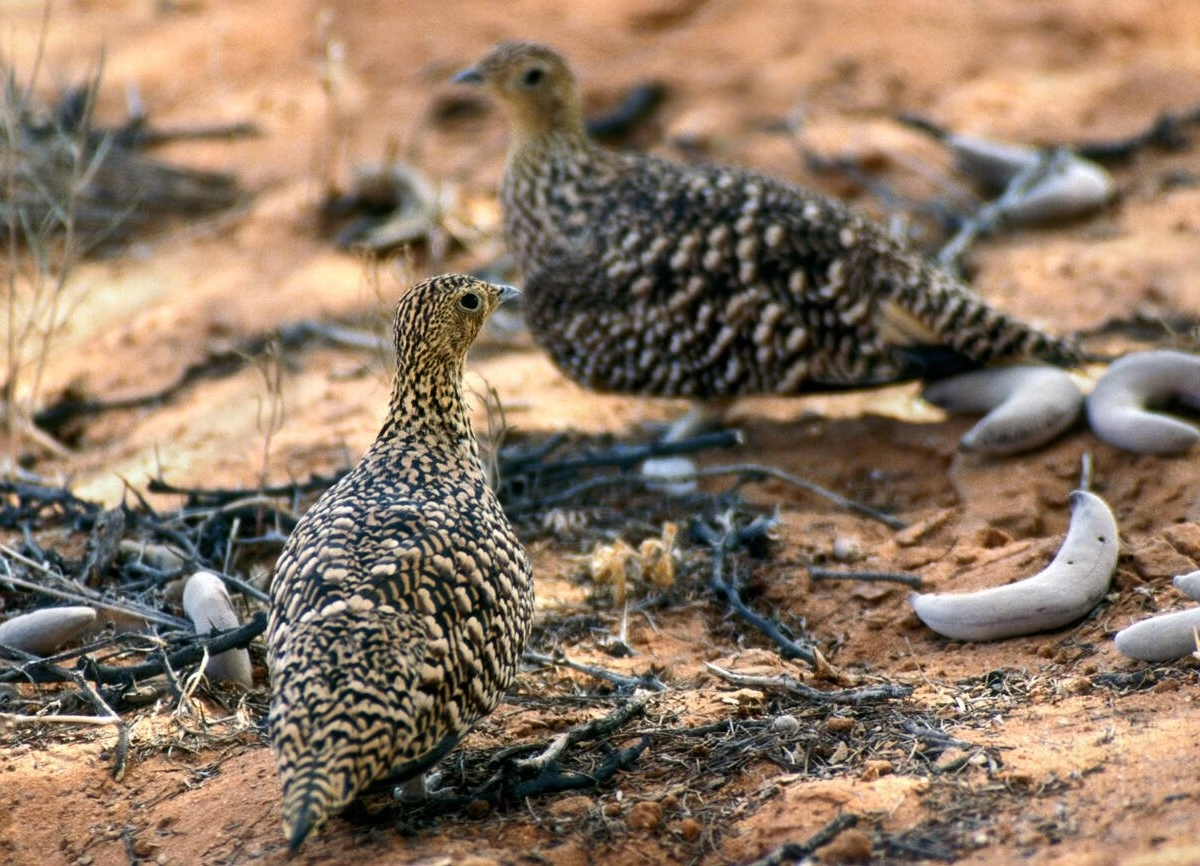
We collect you from Marrakech airport and transfer you to your riad. Depending on your arrival time there is usually an hour or two for the Menara gardens or the olive groves on the edge of the city, which are good for Common Bulbul, House Bunting, Little Swift and White Stork on the walls.
A briefing over mint tea in the evening: what we expect to see, where, and what time we leave each morning.
-
Iti2
Day 2: Oukaimeden and the High Atlas
An early start for the drive up to Oukaimeden, at 2,600 m the most reliable high-altitude birding in the country. The target list here is short and specific: Crimson-winged Finch, Alpine Chough, Alpine Accentor, Atlas Horned Lark, Seebohm's Wheatear and Rock Sparrow.
On the way up and down we stop in the juniper and oak zone for Levaillant's Woodpecker, African Blue Tit, Moussier's Redstart and Barbary Partridge. Back in Marrakech for the night.
-
Iti3
Day 3: Over the Tizi n'Tichka to the Ouarzazate reservoir
We cross the High Atlas by the Tizi n'Tichka pass, birding the roadside scrub and cultivation on the descent for Black Wheatear, Blue Rock Thrush, Bonelli's Eagle and Long-legged Buzzard.
The afternoon is spent on the El Mansour Eddahbi reservoir east of Ouarzazate, which holds Greater Flamingo, Ruddy Shelduck, Marbled Duck in good years, and a shifting cast of waders, terns and herons. Overnight Ouarzazate.
-
Iti4
Day 4: Boumalne Dades and the Tagdilt track
The Tagdilt track is a stony plain that looks like nothing at all from the road and is one of the most famous birding sites in Morocco. We work it at first light for Thick-billed Lark, Temminck's Lark, Bar-tailed Lark, Desert Wheatear, Red-rumped Wheatear and Cream-coloured Courser.
Raptors move through in the middle of the day, and the surrounding fields can produce sandgrouse coming to drink. Afternoon at leisure or a second session at dusk. Overnight in the Dades valley.
-
Iti5
Day 5: Todra Gorge to Merzouga
Morning in the Todra gorge, where the cliffs hold Tristram's Warbler, Black Wheatear, Blue Rock Thrush, Bonelli's Eagle and, with luck, Barbary Falcon.
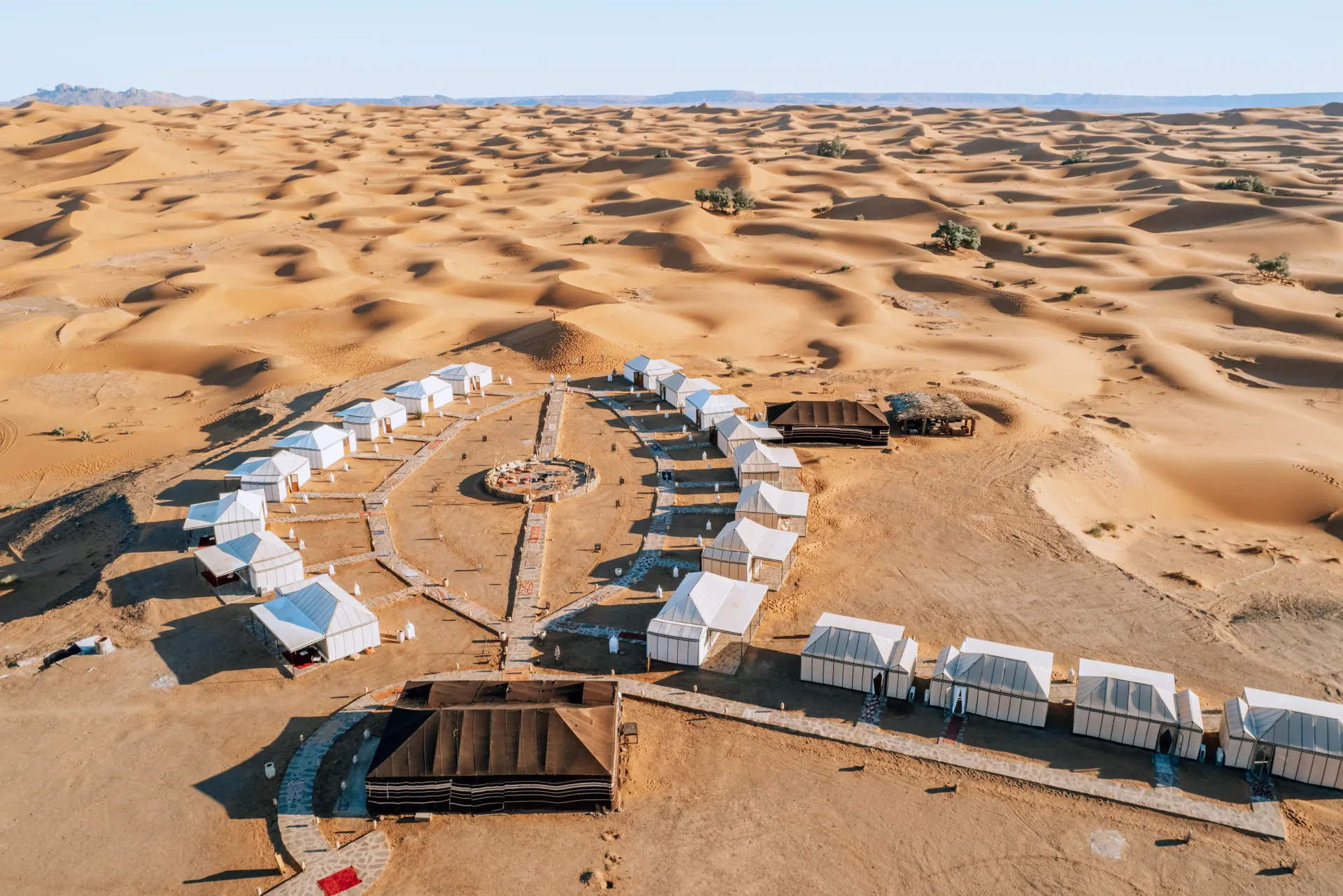
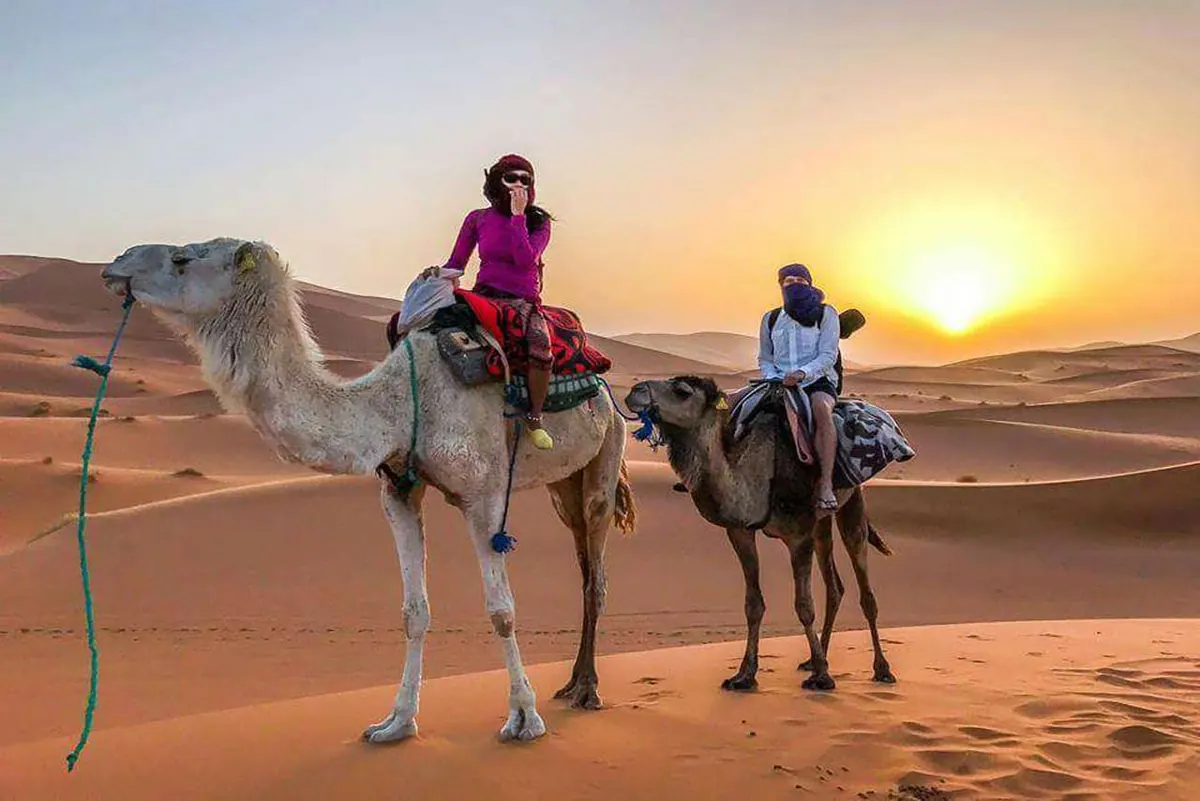
We continue east through Tinjdad and Erfoud, reaching Merzouga in the late afternoon in time for the dunes of Erg Chebbi at sunset. Two nights here.
-
Iti6
Day 6: Erg Chebbi, Dayet Srji and a night drive
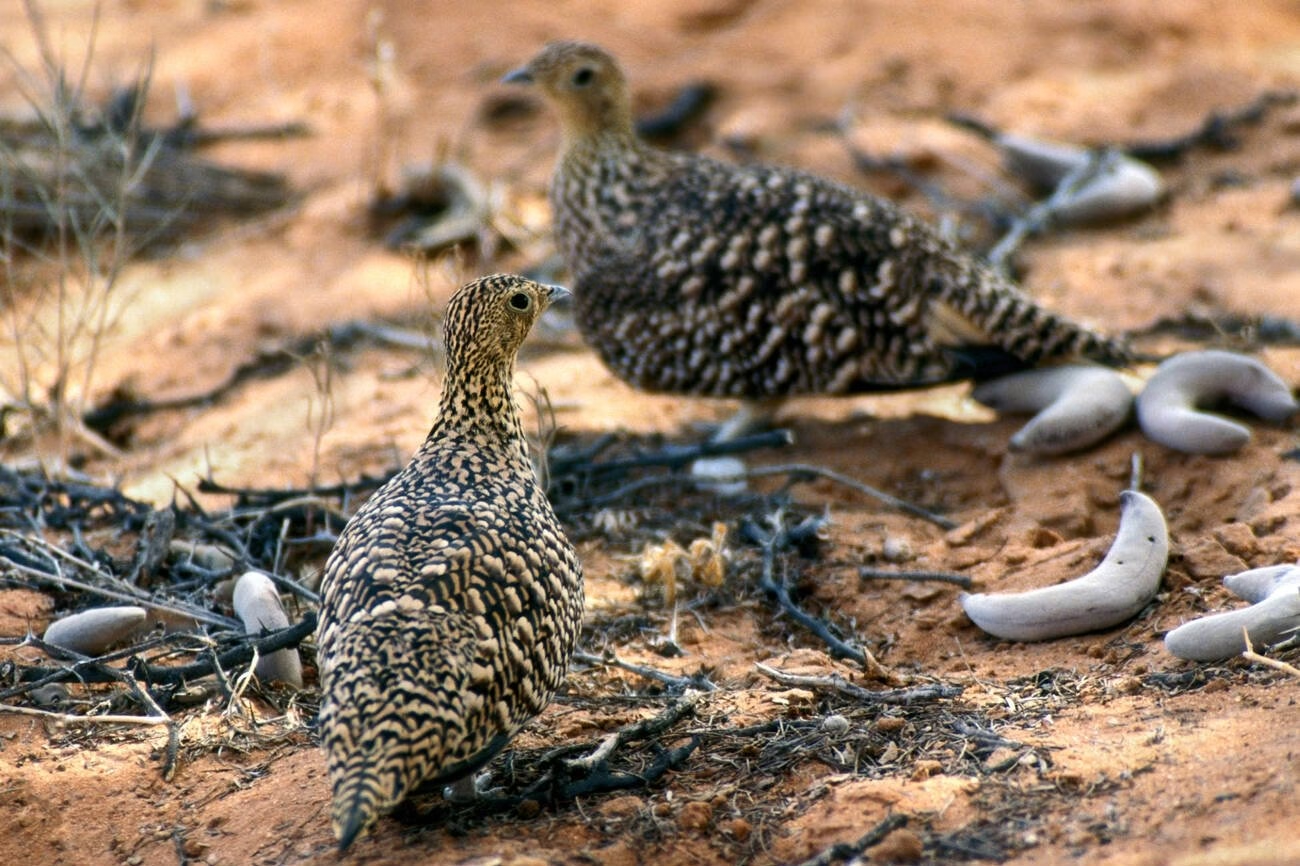
A full day in the desert. The seasonal lake at Dayet Srji, when it holds water, brings Greater Flamingo, waders and terns to the edge of the sand. The dunes and the hammada around them are the place for Desert Sparrow, Hoopoe Lark, African Desert Warbler, Fulvous Chatterer, Brown-necked Raven and Spotted and Crowned Sandgrouse coming to drink.
After dark we go out again for Egyptian Nightjar and Pharaoh Eagle-Owl, both of which are realistic here and very hard anywhere else.
-
Iti7
Day 7: Rissani, the Tafilalet and the Draa valley
We bird the palmeries around Rissani in the morning for Fulvous Chatterer, Blue-cheeked Bee-eater in season, Laughing Dove and Western Olivaceous Warbler.
The road then turns west through Alnif and Nkob into the Draa valley, the longest palm grove in Morocco. Overnight in Agdz.
-
Iti8
Day 8: Anti-Atlas to Taroudant
A long but productive drive west through the Anti-Atlas, stopping in the argan and euphorbia country for Barbary Partridge, Black Wheatear, Trumpeter Finch, Thekla's Lark and raptors over the ridges.
We arrive in Taroudant in the late afternoon, on the edge of the Souss plain. Overnight Taroudant.
-
Iti9
Day 9: Souss-Massa National Park and Tamri
The main event. Souss-Massa protects the world's largest remaining population of the critically endangered Northern Bald Ibis, and the Oued Massa estuary behind it is the richest wetland on this coast: Marbled Duck, Plain Martin, Black-crowned Tchagra, Moussier's Redstart, waders, herons and terns.
In the afternoon we work north along the coast to Tamri, where the ibis feed on the open ground near the river mouth and are usually easy to watch at close range. Overnight on the coast.
-
Iti10
Day 10: Coast to Marrakech and departure
A last morning session on the coast or in the argan forest, then the drive back to Marrakech through the argan belt, with time for a final stop if your flight allows.
Transfer to Marrakech airport.
What the Price Includes
Everything covered in the price
Price Includes
- ✓ Private air-conditioned 4x4 or minivan for the whole circuit
- ✓ Experienced driver-guide who knows the sites and the access tracks
- ✓ All fuel, tolls and parking
- ✓ Airport pickup and drop-off in Marrakech
- ✓ A night drive at Merzouga for nightjar and eagle-owl
- ✓ Bottled water in the vehicle
Price Excludes
- ✗ International flights
- ✗ Accommodation, all meals and drinks
- ✗ A specialist ornithologist guide, which we can arrange at extra cost
- ✗ Travel insurance and personal expenses
- ✗ Tips
If this itinerary does not quite match what you had in mind, tell us your ideas and we will rebuild it around them.
Tour Map
Marrakech
Why Book This Tour
What makes it worth the time
Roughly 120 to 170 species on a typical run, including most of the North African endemics and near-endemics, with the Northern Bald Ibis as the headline bird.
Know Before You Go
Practical travel notes
- Best months are late February to mid-April for resident specialists and spring migration, and October to November for autumn passage. July and August are too hot for productive desert birding.
- Bring your own optics. We provide transport and access, not telescopes.
- Mornings start early, often before sunrise, because desert and plain species go quiet by mid-morning.
- The Tagdilt track and parts of Souss-Massa are rough ground. Sturdy footwear matters more than anything else you pack.
- A specialist bird guide can join the whole trip or single days if you want species-level expertise beyond a driver-guide who knows the sites.
- Species totals vary with season and water levels. Dayet Srji is dry in some years and the bird list changes accordingly.
Frequently Asked Questions
Questions about this tour
How many species can I expect on this tour?
Will I definitely see the Northern Bald Ibis?
When is the best time of year for birding in Morocco?
Do you provide a specialist bird guide?
Is this tour suitable for photographers?
How much driving is involved?
You May Also Like
More private Morocco tours
 12 days - 11 nights
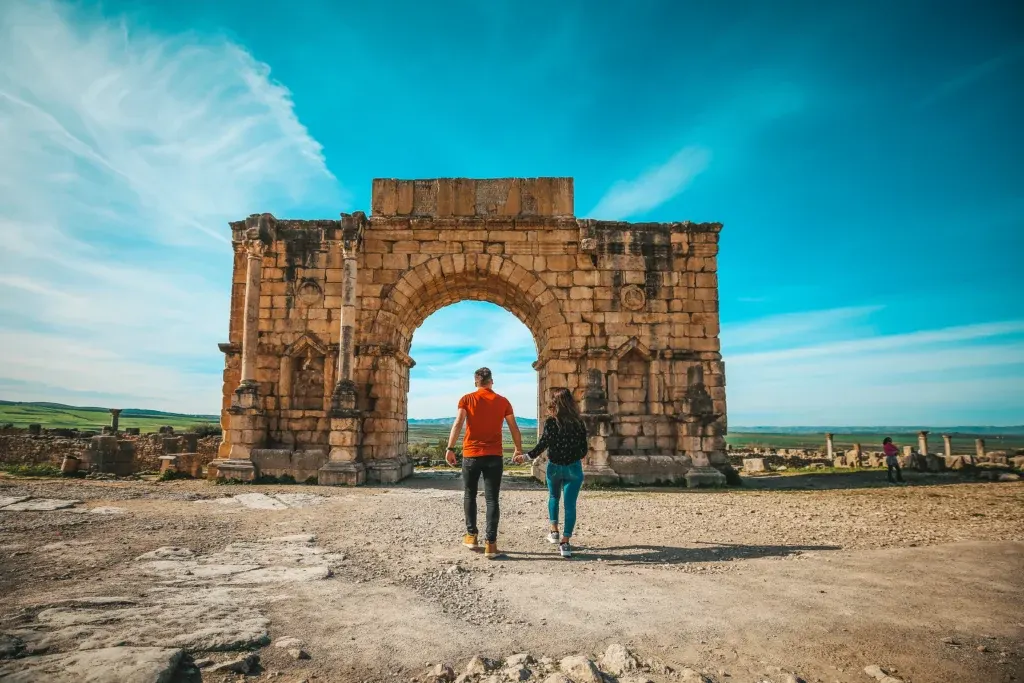
Desert Tour From Marrakech 12-day
Our 12 Days Desert Journey From Marrakech follows the coastline to the charming city of…
View Tour Details →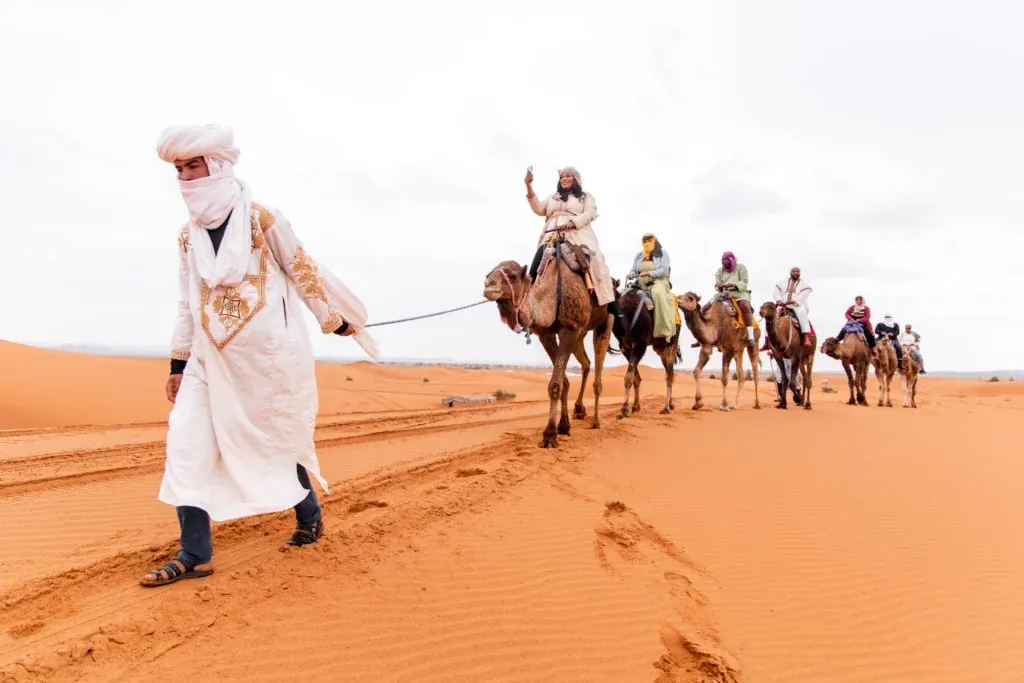 3 days - 2 nights
Authentic Desert Tour from Marrakech 3-day
A private 3-day desert tour from Marrakech to the Erg Chebbi dunes
View Tour Details →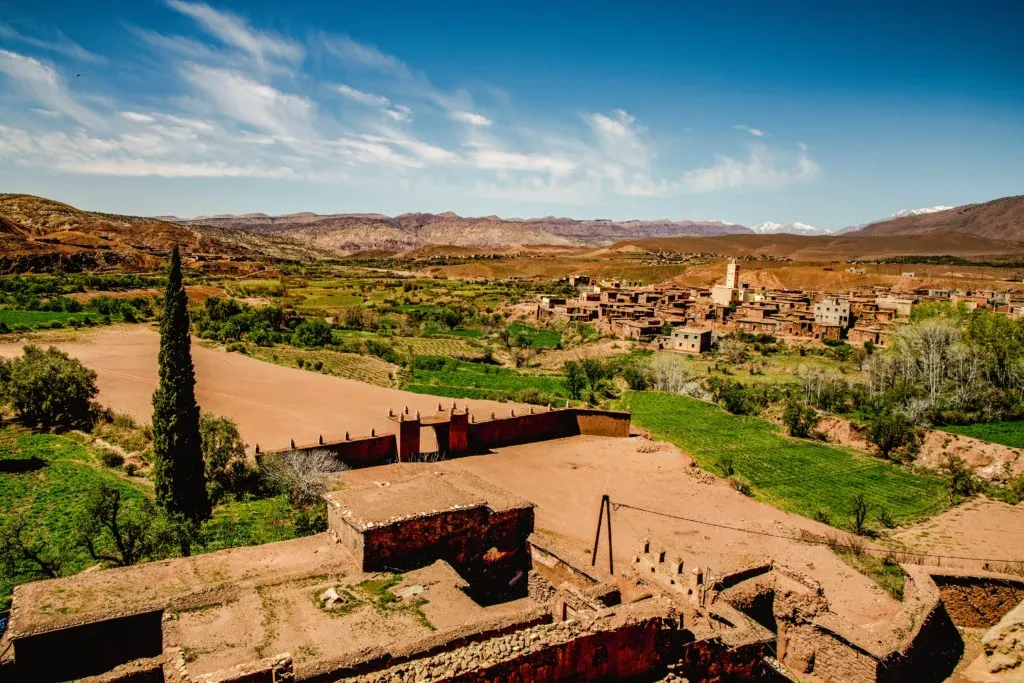 7 days - 6 nights
Finest 7-Day Tour Marrakech to Desert & Back
A private 7-day Marrakech tour
View Tour Details →