Morocco is one of the most rewarding birdwatching destinations in the world, and most visitors never realise it. In a single week you can stand in Atlantic wetlands full of flamingos, walk cedar forest at 2,000 metres, and watch sandgrouse come to drink at a desert waterhole, because the country stacks Europe, Africa and the Sahara into one drive. Over 500 species have been recorded here, including birds you cannot reliably see anywhere else on Earth.
This guide covers where to go, what you can realistically expect to see, when to come, and how to plan a trip that works. We are a Moroccan tour operator, and these are the places our drivers actually take birders.
Why Morocco is such good birding country
Three things come together here. First, geography: Morocco sits at the narrowest crossing between Europe and Africa, so millions of migrating birds funnel through the Strait of Gibraltar twice a year. Second, habitat range: within roughly 500 kilometres you pass Atlantic coast, wetland, farmland, oak and cedar forest, high mountains above the treeline, stony desert and true sand sea. Each holds a different community of birds.
Third, and most important for anyone keeping a list, Morocco holds North African species that are difficult or impossible to see in Europe. Some are true endemics of the region, some are the only accessible populations left, and a handful are among the rarest birds in the world.
The star species
Northern Bald Ibis
This is the bird that brings serious birders to Morocco. The Northern Bald Ibis is one of the rarest birds on the planet, and the coast near Agadir holds the last significant wild breeding population anywhere. Glossy black with a bare red head and a shaggy crest, it feeds in loose groups on coastal grassland. Souss-Massa National Park and the coast around Tamri are the reliable places. Seeing it is a genuine privilege, not a tick.
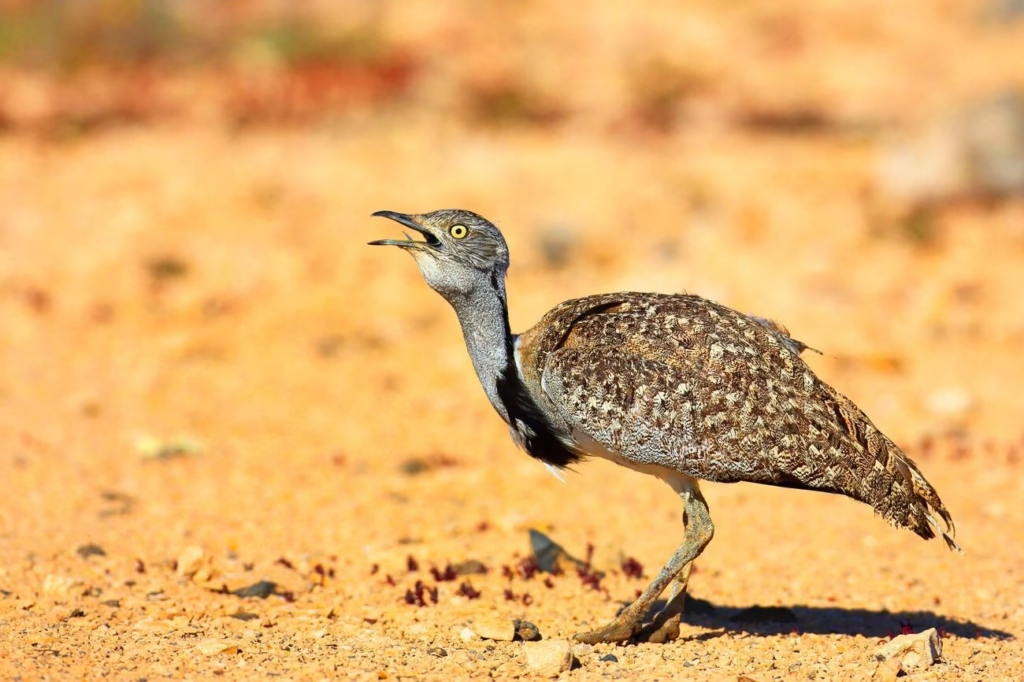
Houbara Bustard
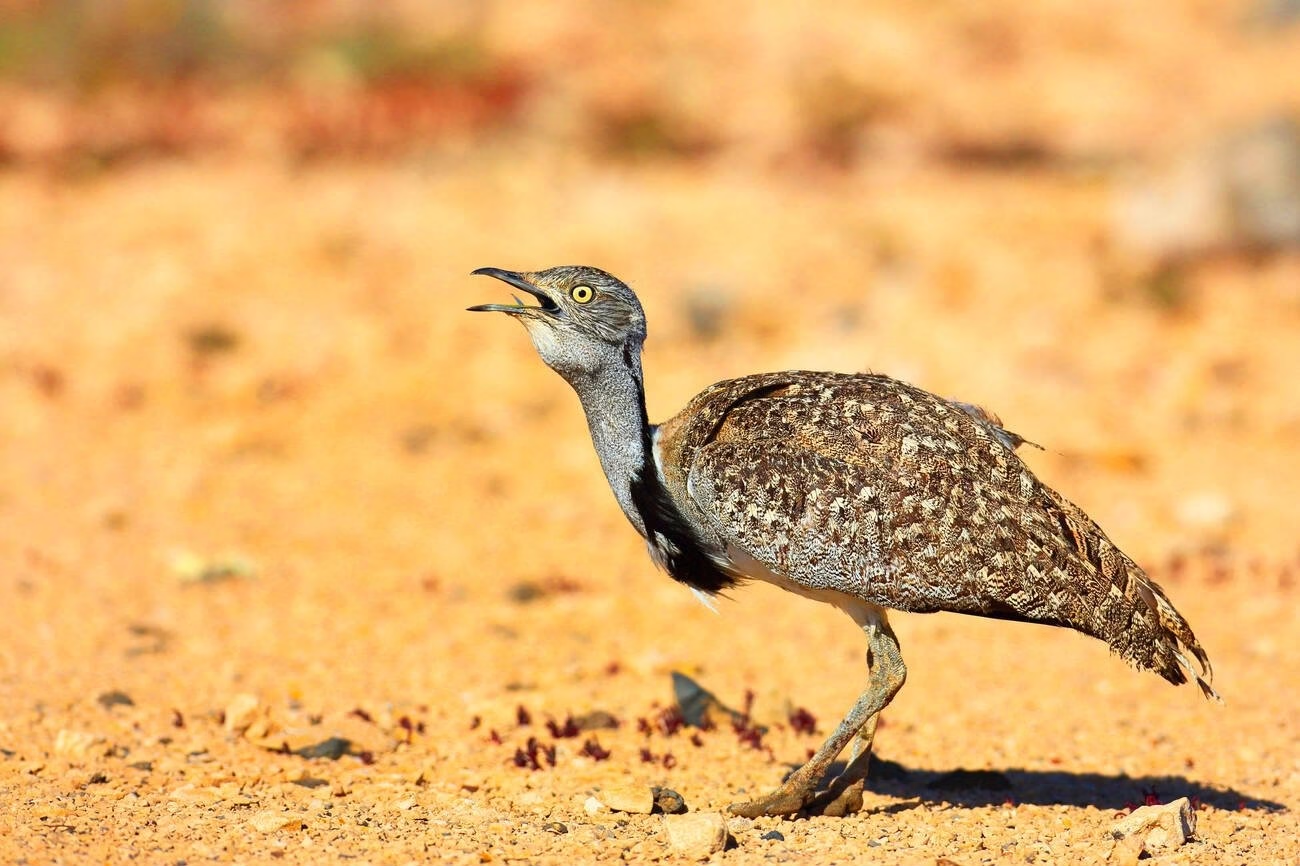
A large, superbly camouflaged desert bird that walks the stony plains south and east of the Atlas. It is far more often heard of than seen: the plumage disappears against gravel, and birds tend to walk away rather than flush. Early morning on the hammada, with a driver who knows which plains hold them, is how people find one.
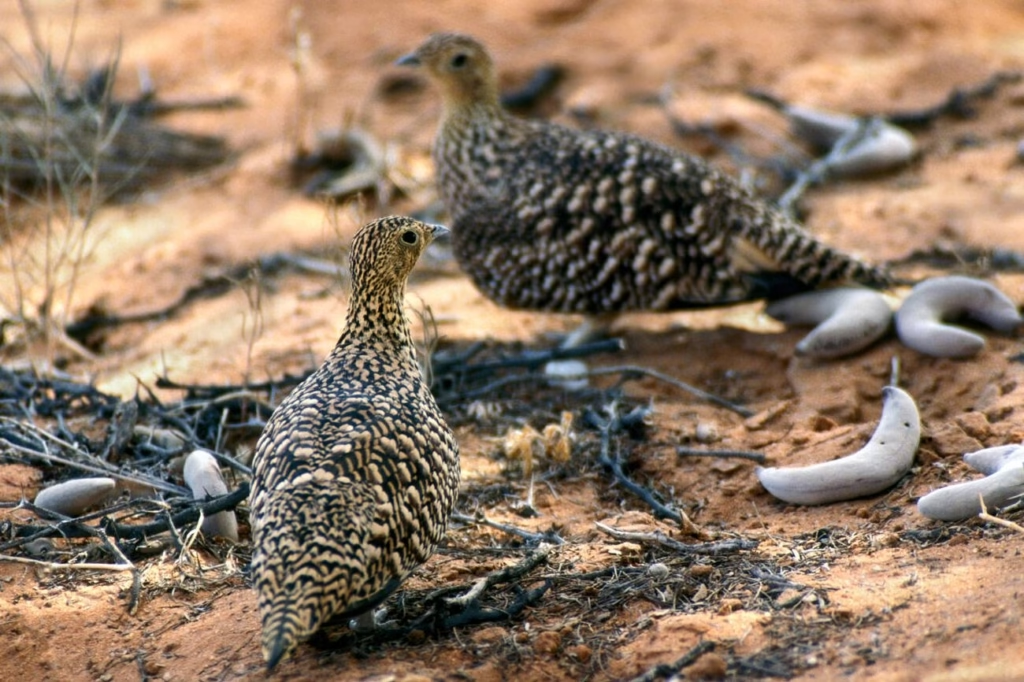
Sandgrouse
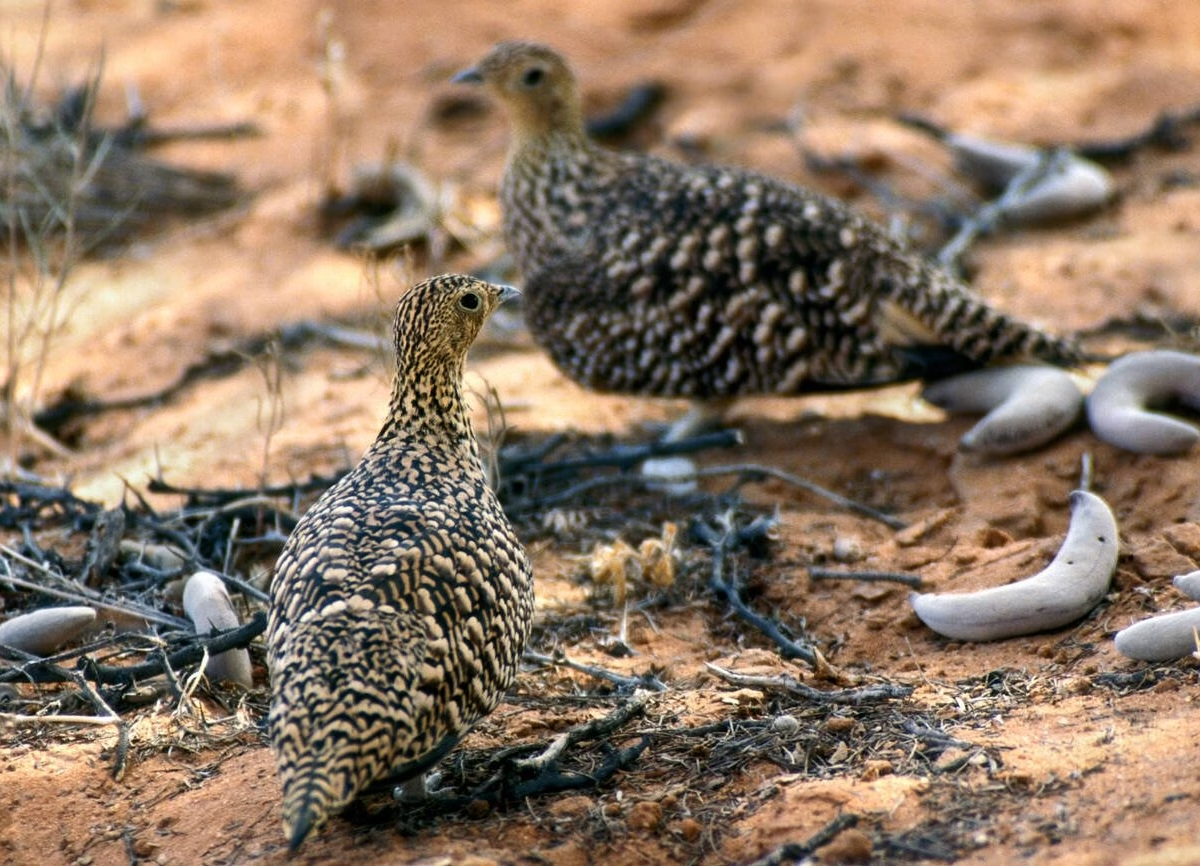
Several species occur, and all of them are a highlight. Sandgrouse fly long distances to water at dawn, and males carry water back to their chicks in specially adapted belly feathers, one of the more remarkable adaptations in the bird world. Waiting quietly near a desert waterhole at first light is one of the best hours you can spend birding in Morocco.
Moussier’s Redstart
A true North African endemic, found nowhere outside the Maghreb, and unmistakable: slate and black above, deep orange below, with a bold white stripe over the eye and down the neck. Common enough in the Atlas that most visiting birders see one, but no less striking for it.
Desert Sparrow, larks and wheatears
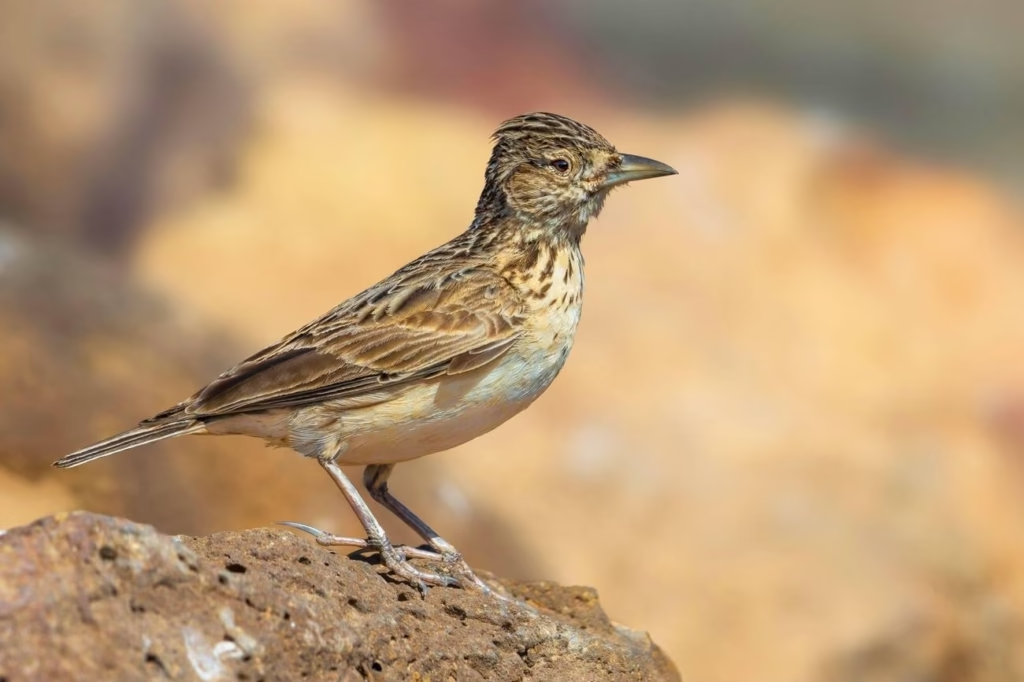
The Sahara around Merzouga is the place for the desert specialists. Desert Sparrow is the one people want, along with a suite of larks that look plain in a book and become fascinating in the field: Bar-tailed, Thick-billed, Greater Hoopoe-Lark and others, each tied to a slightly different substrate. Wheatears are everywhere, and sorting them is half the pleasure.
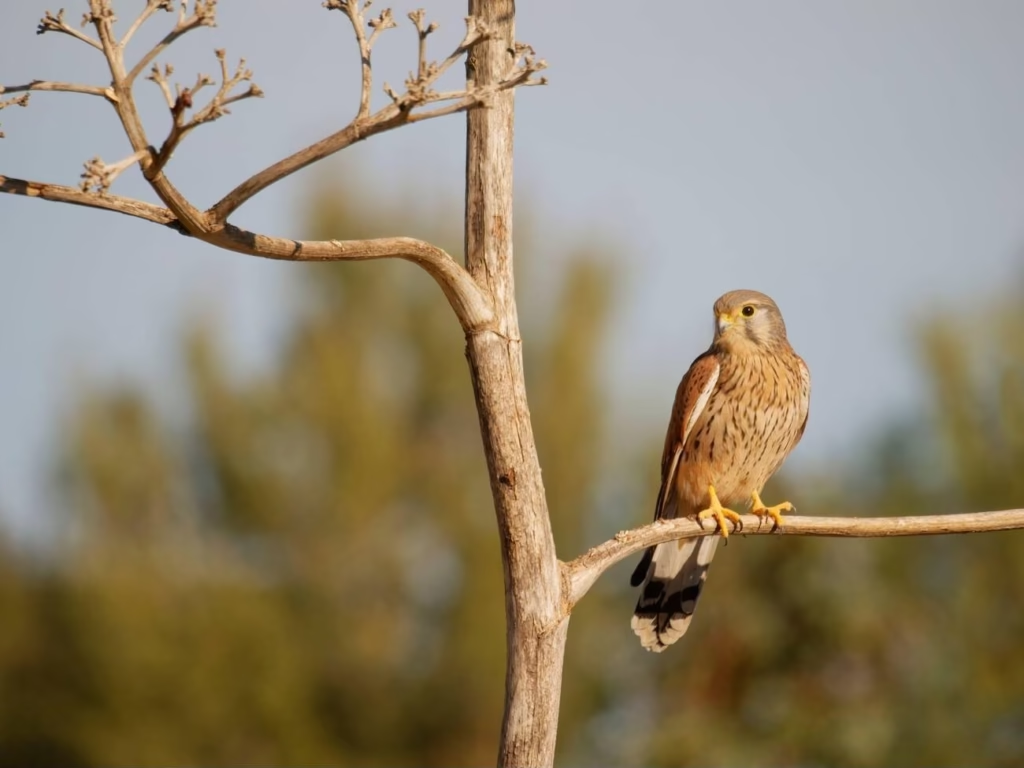
Raptors
Common Kestrel and Long-legged Buzzard are widespread and easy. Higher up you have a chance of Bonelli’s Eagle and Golden Eagle, and the desert holds Pharaoh Eagle-Owl, a pale desert owl that most birders find by scanning cliff faces at dusk. During migration, the north can produce raptor passage in real numbers.
Where to go
Souss-Massa National Park and the Atlantic coast
South of Agadir, this is the single most important birding site in the country: the Northern Bald Ibis stronghold, plus coastal wetland, river mouth and scrub. Add the Oued Massa estuary and the coast up to Tamri and you have a comfortable two or three days without moving far.
Merja Zerga
A large coastal lagoon on the Atlantic between Kenitra and Larache, and one of Morocco’s most important wetlands. Waders, terns, gulls, flamingos and wintering wildfowl in numbers. Best worked from a small boat with a local guide, and best in winter and on migration.
The Middle Atlas cedar forest
The cedar forests around Azrou and Ifrane hold a completely different set of birds from anywhere else in the country: Levaillant’s Woodpecker, Atlas Flycatcher, Firecrest, crossbills, and forest raptors, along with Barbary macaques. Cool, green and utterly unlike most people’s mental image of Morocco.
The High Atlas
Above the treeline you are looking for Alpine Chough, Alpine Accentor, Crimson-winged Finch and, with luck and altitude, Levaillant’s and other high-mountain specialists. The Oukaimeden road above Marrakech is the classic access point, and it is an easy day from the city.
The Sahara: Merzouga and Erg Chebbi
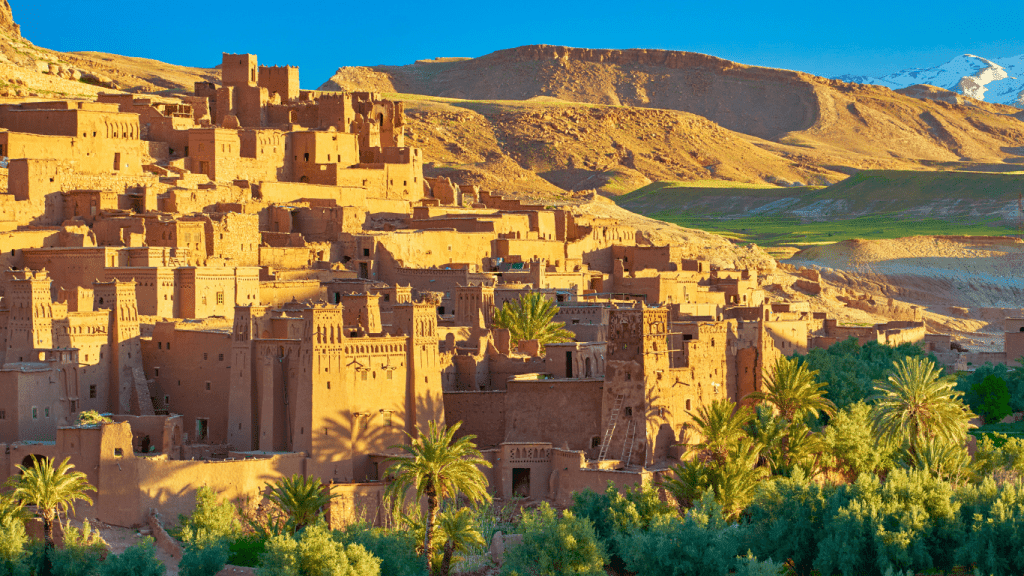
Desert birding is about water and timing. The seasonal lake at Dayet Srji near Merzouga can hold flamingos and waders when it has water, and the surrounding hammada and dunes hold the desert specialists. Everything happens in the first two hours of light and the last two.
Errachidia is the nearest airport to all of this, and the two-day desert run from Errachidia is the shortest way in from the north: it puts you at Dayet Srji for a dusk and a dawn without a long transfer eating either end of the trip.
The Tagdilt track and the stony plains
The gravel plains near Boumalne Dades are famous among birders for coursers, sandgrouse, wheatears and larks. It looks like nothing at all from the road, which is exactly the point.
When to visit
- March to mid-May is the best all-round window. Resident birds are singing and displaying, spring migration is running, the desert is bearable and the mountains are accessible. If you come once, come now.
- September to November brings autumn migration and comfortable temperatures, with big movements through the north.
- December to February is excellent for wetlands and wintering waterbirds, and the desert is pleasant by day, though nights are cold and the high mountains may be closed by snow.
- June to August is hard work. The desert is genuinely dangerous in the middle of the day and much of the birding shuts down by mid-morning. Coastal and mountain sites still work.
Practical advice
- Distances are long. Souss-Massa to Merzouga is a full day of driving. Build a route rather than a list of sites, and accept that you cannot do the whole country in a week.
- Start early. In the desert and on the plains, the birding is effectively over by ten in the morning for much of the year.
- A vehicle you can stop anywhere is worth more than a fancy hotel. The best birding here happens at unmarked pull-offs.
- Bring a scope for the wetlands and the plains, and expect heat haze to defeat it by late morning.
- Water, sun cover and a paper map. Phone signal disappears on the tracks that matter.
Watching birds responsibly
Some of Morocco’s most sought-after birds are also its most vulnerable, and a few sites are under real pressure. Keep your distance from nests and colonies, never use playback near breeding birds or with threatened species, stay on existing tracks rather than driving across desert crust, and take local guidance seriously at protected sites. The Northern Bald Ibis colonies in particular are monitored, and the rules exist because the population is small enough that disturbance matters.
Planning a birding trip with us
Every tour we run is private, which suits birding better than any fixed itinerary: you set the start time, you stop where the birds are, and you stay longer when something turns up. We can build a route around the sites above, pair a driver with a specialist local bird guide for the key areas, and adjust as the season dictates.
Two birding itineraries we run
 10 days - 9 nights
10-Day Morocco Birdwatching Tour from Marrakech
Roughly 120 to 170 species on a typical run, including most of the North African endemics and near-endemics, with the…
View Tour Details →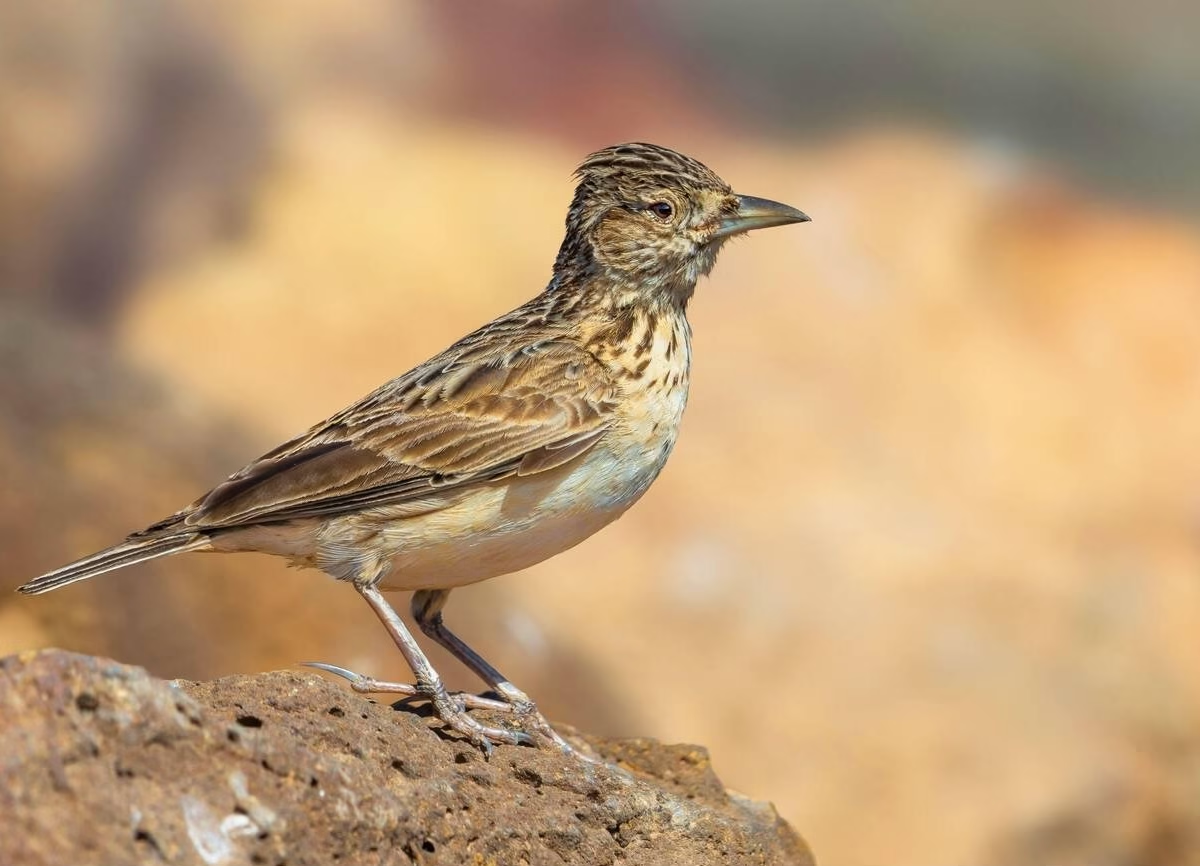 5 days - 4 nights
5-Day Sahara Birding Tour from Marrakech to Merzouga
The shortest itinerary that still reaches Tagdilt and Erg Chebbi, the two sites that produce the birds most visitors…
View Tour Details →The ten-day circuit is the one most visitors want: Oukaimeden in the High Atlas for Crimson-winged Finch and Atlas Horned Lark, the Tagdilt track at first light, two nights at Erg Chebbi with a night drive for Egyptian Nightjar and Pharaoh Eagle-Owl, then west to Souss-Massa and Tamri for the Northern Bald Ibis. A typical run produces between 120 and 170 species.
The five-day version suits a week rather than a fortnight. It leaves out the Atlantic coast, and so the ibis, but still reaches the two sites most birders come to Morocco for — the Tagdilt plains and Erg Chebbi — with a full day and two dawns in the desert.
Many visitors combine birding with the classic route, and it works well: the 3-day desert tour from Marrakech to Fes passes the Dades plains and Merzouga, while a longer trip such as the 15-day Morocco tour covers coast, mountains and desert in one journey. See all our Morocco tours, or tell us what you hope to see and we will plan the route around it.
Frequently asked questions
How many bird species can you see in Morocco?
Over 500 species have been recorded in Morocco. A well-planned two-week trip covering coast, mountains and desert can realistically produce 180 to 220 species, and a focused week in one region will still yield well over 100.
What is the best time of year for birdwatching in Morocco?
March to mid-May is the strongest overall window, combining resident breeding activity with spring migration and manageable temperatures. Autumn migration from September to November is also excellent, and winter is best for wetlands.
Where can I see the Northern Bald Ibis?
Souss-Massa National Park and the coast around Tamri, south and north of Agadir, hold the last significant wild population. It is the most reliable place in the world to see this species.
Do I need a specialist bird guide in Morocco?
Not for the common species, but yes for the difficult ones. Houbara Bustard, desert larks and the Sahara specialists are far easier with someone who knows the exact plains and waterholes. We can pair a local bird guide with your driver for the sections where it matters.
Is Morocco safe for independent birdwatching?
Yes. The practical risks are logistical rather than personal: long distances, rough tracks, heat and no phone signal in the places you most want to be. A private vehicle and driver removes most of that.
Can birdwatching be combined with a normal Morocco tour?
Easily. The standard desert route passes several of the best birding areas, and because our tours are private the itinerary can start earlier, linger longer and add stops without changing the overall shape of the trip.