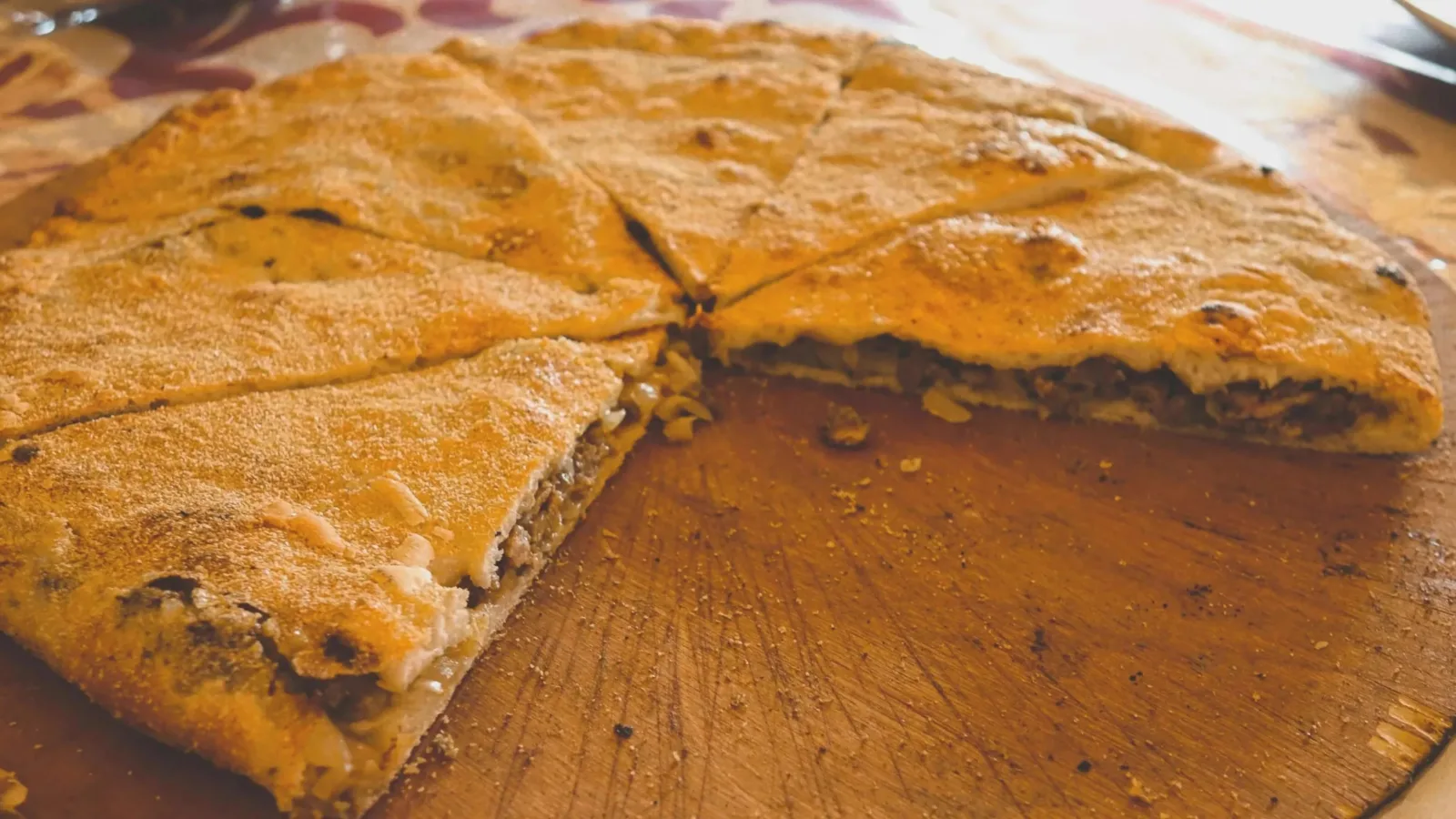
Berber pizza is not pizza, and calling it that does it no favours. The Moroccan name is medfouna, from the Arabic for buried, and the name is literal: in the desert it is cooked by burying it in hot sand under the embers of a fire. It is a stuffed bread, closer to a filled loaf than to anything with a topping.
It belongs to the Tafilalet, the oasis region of south-east Morocco around Rissani, Erfoud and the dunes of Erg Chebbi. If you take a desert tour to Merzouga you will very likely be offered it, and it is one of the few dishes in Morocco that most visitors have never heard of before they arrive.
What medfouna actually is
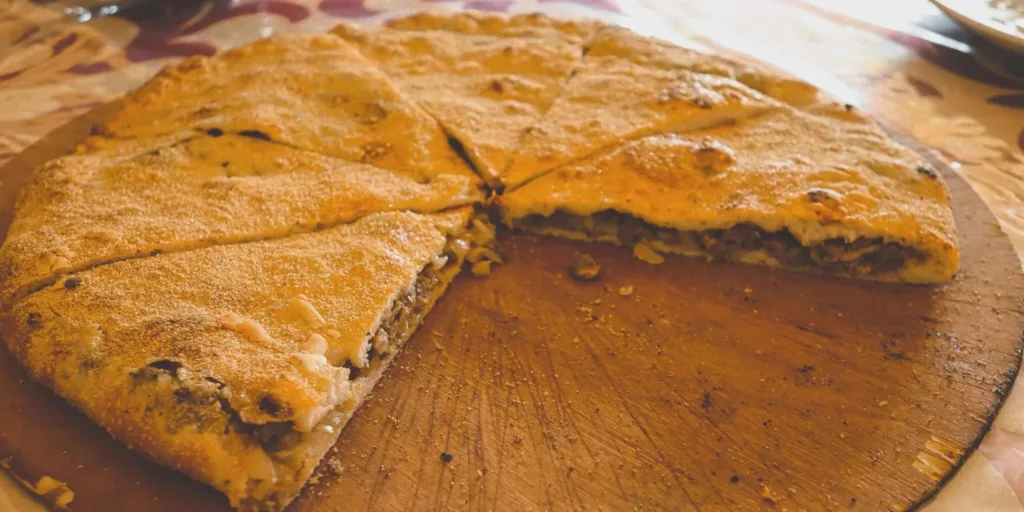
A disc of bread dough is rolled out, a spiced filling is spread across it, a second disc goes on top, and the edges are sealed. The whole thing is then baked slowly until the crust is firm and the inside has cooked in its own steam. Cut into wedges, it looks a little like a pie and eats like very good stuffed bread.
The comparison to pizza comes from the shape and from the fact that it is sliced into wedges and shared. Everything else is different: the filling is enclosed rather than exposed, there is no tomato and no cheese, and the cooking method has nothing to do with a pizza oven.
What goes inside
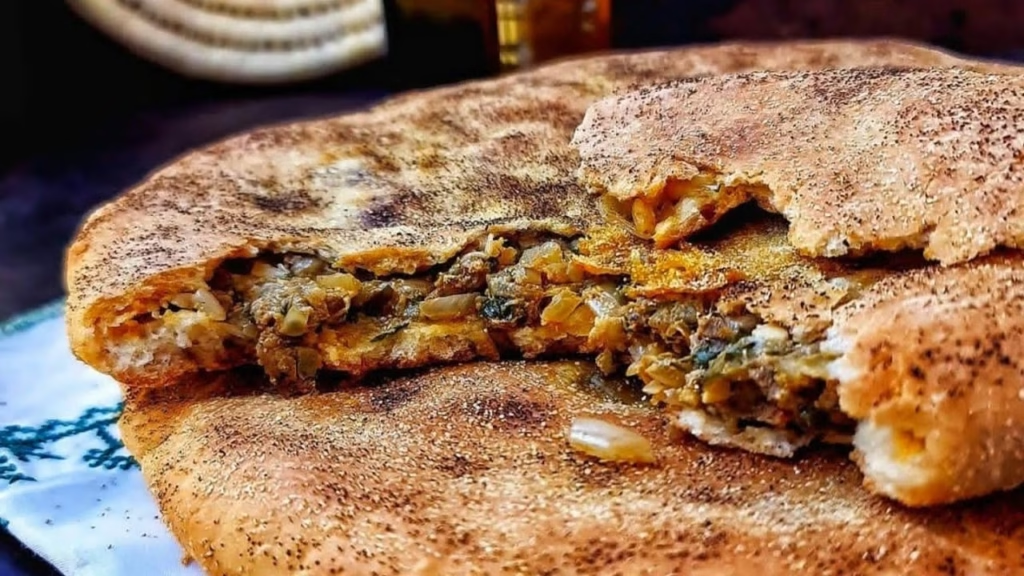
The filling varies from family to family, which is part of the appeal. The common version contains:
- Meat. Minced lamb or beef, cut small rather than ground to paste. In some households khlii, the preserved spiced meat of the region, is used instead, which makes it saltier and much richer.
- Onion, a great deal of it, softened until sweet. This is what gives medfouna its character more than the meat does.
- Herbs and spices. Parsley and coriander, garlic, cumin, sweet paprika, black pepper, sometimes a little chilli or ras el hanout.
- Fat. Olive oil, or smen, the aged preserved butter that gives southern Moroccan cooking its distinctive depth.
Beyond that it opens up. Around Rissani you will find versions with chopped almonds for texture, with hard-boiled egg, or with dates worked into the filling, which sounds odd and is very good. Vegetarian medfouna, filled with onion, herbs, egg and almonds, is common enough that you can usually ask for it.
How it is cooked
The desert method
This is the one that gives the dish its name. A fire is built directly on the sand and allowed to burn down to embers. The sand beneath is now extremely hot. The embers are raked aside, a hollow is scooped out, the sealed bread is laid in, and sand and embers are pulled back over the top. It bakes buried, with no oven and no pot, for something like forty minutes.
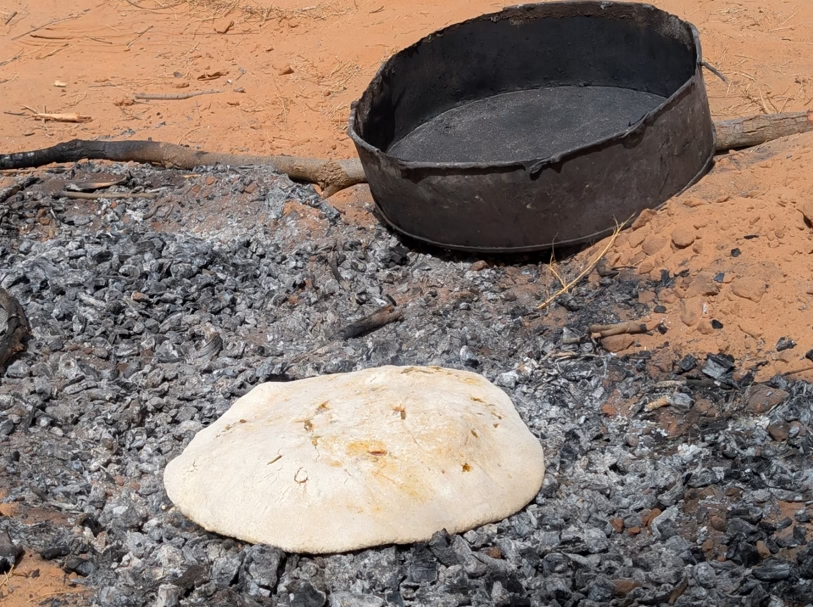
When it comes out it is dusted with sand, which is brushed off with a cloth. A little always remains. That is normal, everyone eats it anyway, and it is a fair price for bread cooked in the ground.
The Rissani ovens
Rissani is the town most associated with medfouna, and there it is made in wood-fired ovens rather than in sand. The ovens are communal, the same ones that bake the neighbourhood’s daily bread, and you can take your own assembled medfouna to be baked. Several places in the market make it to order all day.
The oven version has a more even crust. The sand version has a smokiness the oven cannot reproduce. Most people who have eaten both prefer the sand.
Where and when you will eat it
Medfouna is not really restaurant food in the north. You are unlikely to find it in Marrakech or Fes, and if you do it will not be a local speciality. It belongs to the south-east, and the reliable places to eat it are:
- Rissani. The home of the dish. Market days, when the town fills up, are the best time.
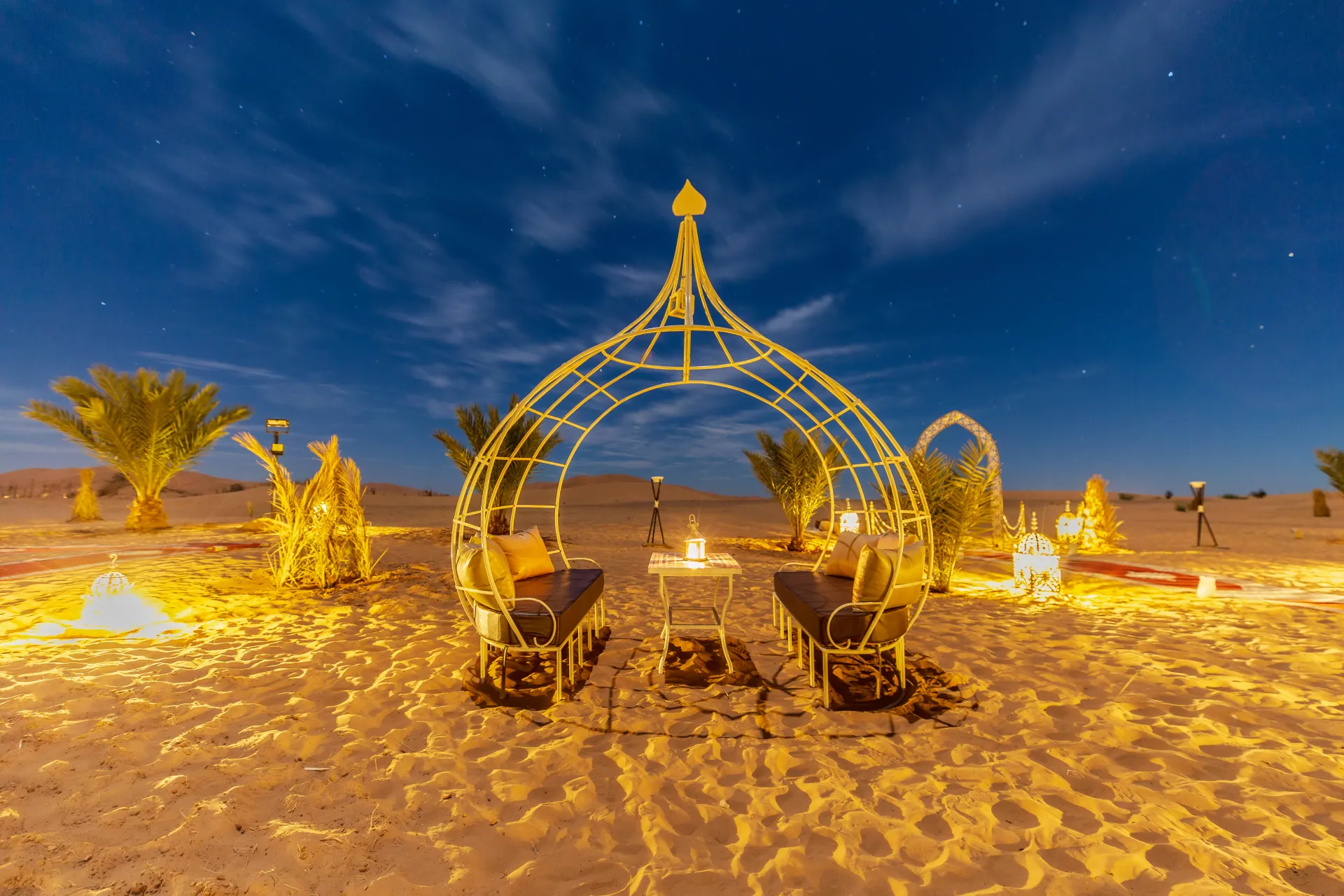
- Merzouga and the Erg Chebbi camps. Many desert camps serve it, and a good number cook it in the sand as part of the evening.
- Erfoud and the Ziz valley. Widely made throughout the oasis towns.
- Nomad and family lunches. If you are invited to eat with a family in the region, this is often what appears.
One practical note: it takes time. A medfouna made to order needs an hour or more between asking and eating. Order it at the start of the afternoon rather than when you are already hungry, and if you are staying at a desert camp, ask the day before.
Our three-day desert tour from Marrakech and the two-day run down from Errachidia both end in the Erg Chebbi dunes, which is exactly where to eat it. Tell us in advance if you want medfouna cooked in the sand rather than simply served, and we will arrange it with the camp.
Why it exists
The method is not a novelty for visitors. It is what you do when you are travelling with animals across a region with no ovens, no fuel to spare and a great deal of very hot sand. Bread cooked this way needs nothing but a fire, and it feeds a group from a single piece.
The Tafilalet was for centuries a major staging post on the trans-Saharan caravan routes, and Rissani sits beside the ruins of Sijilmassa, the medieval city that controlled the gold and salt trade across the desert. Food that travels well, cooks without equipment and shares easily is exactly what that history produces.
How it compares to other Moroccan breads
Morocco has a lot of bread, and medfouna is distinct from the ones you will see everywhere:
- Khobz is the round everyday loaf on every table, used as a utensil more than a side dish.
- Batbout is a soft, hollow pan-cooked flatbread, often split and filled like a pocket.
- Msemen and rghaif are laminated, folded and pan-fried, closer to a flaky pastry.
- Harcha is a semolina griddle cake, eaten at breakfast with butter and honey.
- Medfouna is the only one of them that is a complete meal in itself.
Our guide to traditional Moroccan food covers where each of these fits into a day of eating.
Making it at home
You do not need sand. A very hot oven, ideally with a pizza stone or a heavy tray preheated for half an hour, gets you most of the way there.
Make a plain bread dough and let it rise. Cook the onion slowly until soft and sweet, add the minced meat, garlic, herbs and spices, cook it through, and let the mixture cool completely before it goes near the dough, or it will make the base soggy. Roll two discs, fill, seal the edges well, prick the top a couple of times, and bake hot until the crust colours. Rest it for ten minutes before cutting, then cut it into wedges and eat it with mint tea.
The single most common mistake is overfilling. The seal fails, the filling escapes, and the bread bakes dry.
Frequently asked questions
What is Berber pizza called in Morocco?
Medfouna, sometimes written madfouna, from the Arabic for buried. You may also hear it called Rissani pizza, after the town most associated with it. Berber pizza is a name used mainly for visitors.
Is medfouna actually cooked in sand?
Traditionally yes, buried beneath hot sand and embers. In Rissani and the oasis towns it is more often baked in a wood-fired oven. Many desert camps will still cook it in the sand if you ask ahead.
Does it taste like pizza?
No. There is no tomato and no cheese. It tastes of spiced meat, sweet cooked onion, cumin and good bread, and the filling is enclosed rather than on top. The name refers to the shape and to how it is shared.
Is there a vegetarian version?
Yes, usually onion, parsley, egg and almonds, and it is worth eating in its own right. Ask when you order, since it needs to be made from the start rather than adapted.
Where is the best medfouna in Morocco?
Rissani, without much argument, and best on a market day. The camps around Merzouga and Erg Chebbi are the other reliable option, particularly when it is cooked in the sand.
How long does it take to make?
Around an hour and a half from ordering, including the baking. Order it well before you are hungry, or ask your camp the night before.
Do you actually eat the sand?
A little, unavoidably. It is brushed off with a cloth when it comes out of the ground, but some always remains in the crust. Nobody in the desert considers this a problem.