On Monday 2 August 2027, the moon’s shadow will cross northern Morocco and the sun will disappear completely for almost five minutes. This is not an ordinary eclipse. The solar eclipse in Morocco in 2027 is the longest total solar eclipse over easily reachable land anywhere on Earth this century, and Morocco sits in one of the best places on the entire track to watch it.
This guide covers exactly where totality falls, which Moroccan cities will and will not see it, when it happens to the minute, and how to pick a viewing spot that will not be spoiled by cloud. We are a local Moroccan tour company based here, and we have written this the way we would explain it to a guest planning the trip.
The solar eclipse in Morocco at a glance
| Detail | What to expect |
|---|---|
| Date | Monday 2 August 2027 |
| Type | Total solar eclipse |
| Totality begins in Tangier | Around 09:45 local time (WEST) |
| Length of totality in Morocco | Roughly 4 minutes 30 seconds to 4 minutes 55 seconds |
| Where totality falls | Northern Morocco only: Tangier, Tetouan, Chefchaouen, Al Hoceima and the Rif |
| Where it is partial only | Marrakech, Fes, Casablanca, Merzouga and the whole south |
| Longest totality worldwide | 6 minutes 23 seconds, in Egypt near Luxor |
| Chance of clear sky | Around 79% in Morocco, but it varies sharply by site |
Why the 2027 eclipse is the one worth travelling for
Total solar eclipses are not rare in themselves. One happens somewhere on Earth roughly every 18 months. What makes them hard to see is that the shadow usually falls on ocean, ice or somewhere with no roads.
The 2027 eclipse is different. Its path runs across southern Spain, northern Morocco, Algeria, Tunisia, Libya, Egypt, Saudi Arabia, Yemen and Somalia, and the shadow is up to 258 kilometres wide. At its maximum, near Luxor in Egypt, totality lasts 6 minutes and 23 seconds. That makes it the longest total solar eclipse over easily accessible land in the entire 21st century. Nothing longer will happen until 3 June 2114.
Morocco’s share of that is close to five minutes, in early August, in a country with reliable summer weather and a short flight from most of Europe. That combination is why eclipse chasers have had this date circled for years, and why northern Moroccan hotels are already taking bookings for it.
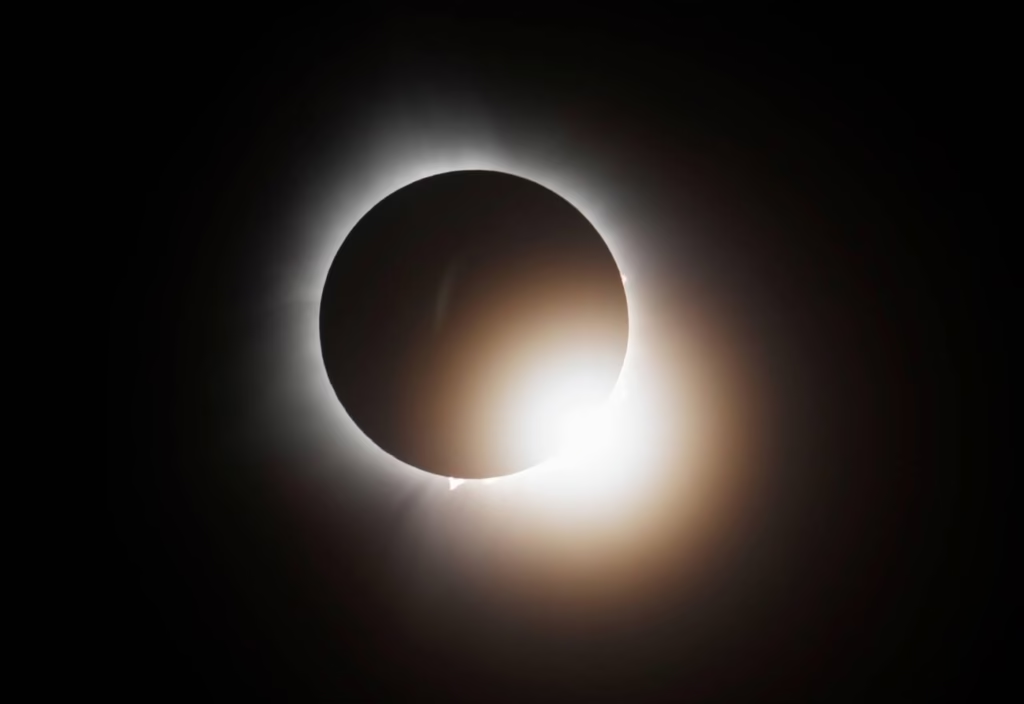
Where the path of totality crosses Morocco
This is the part most articles get wrong, so it is worth being precise. The shadow makes landfall on the Atlantic coast, crosses the north of the country from west to east, and leaves over the Mediterranean towards Algeria. The band is a few hundred kilometres wide, and everything south of it sees a partial eclipse only.
Tangier and the Strait of Gibraltar
Tangier sits solidly inside the path and gets roughly 4 minutes 51 seconds of totality, beginning at about 09:45 in the morning. It is the easiest base of all: an international airport, ferries from Spain, plenty of hotels and good roads inland if the coastal forecast turns bad on the day. The drawback is that it is also where most international visitors will head, so book early.
Tetouan and the Mediterranean coast
Tetouan is close to the centre line and gets a fraction longer than Tangier, around 4 minutes 53 seconds. On paper it is the ideal spot. In practice, the Mediterranean coast is the riskiest part of the whole Moroccan track for weather, and we explain why below. Beautiful place, uncertain sky.
Chefchaouen and the Rif mountains
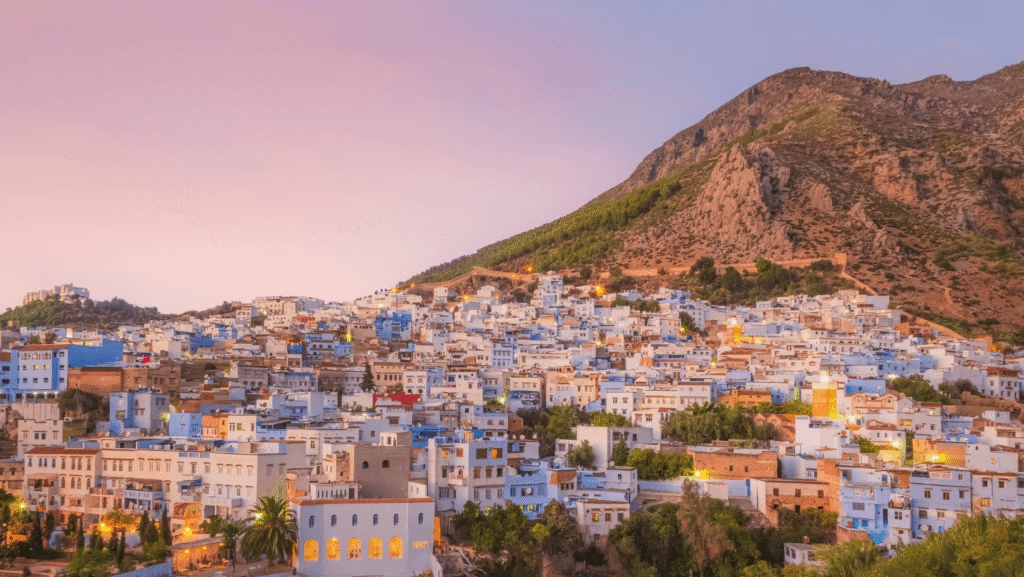
The blue city gets around 4 minutes 30 seconds, slightly less than the coast because it sits nearer the edge of the path, but it has two real advantages. It is high enough and far enough inland to escape much of the morning cloud that plagues the coast, and it is a genuinely beautiful place to spend the surrounding days. If you want one base that combines a good eclipse chance with somewhere worth being, Chefchaouen is our pick.
Al Hoceima, Nador and the eastern Rif
Further east the path continues over Al Hoceima and Nador before crossing into Algeria. Totality is comparable, the crowds will be far thinner, and morning cloud tends to clear more readily here than around Tetouan. The trade-off is distance: these towns are a long drive from the main airports.
Larache, Asilah and Ouazzane
The western end of the path also takes in Asilah, Larache and Ouazzane. Asilah in particular is an appealing base, a small whitewashed Atlantic town with painted medina walls, an easy drive south of Tangier and far calmer than the city.
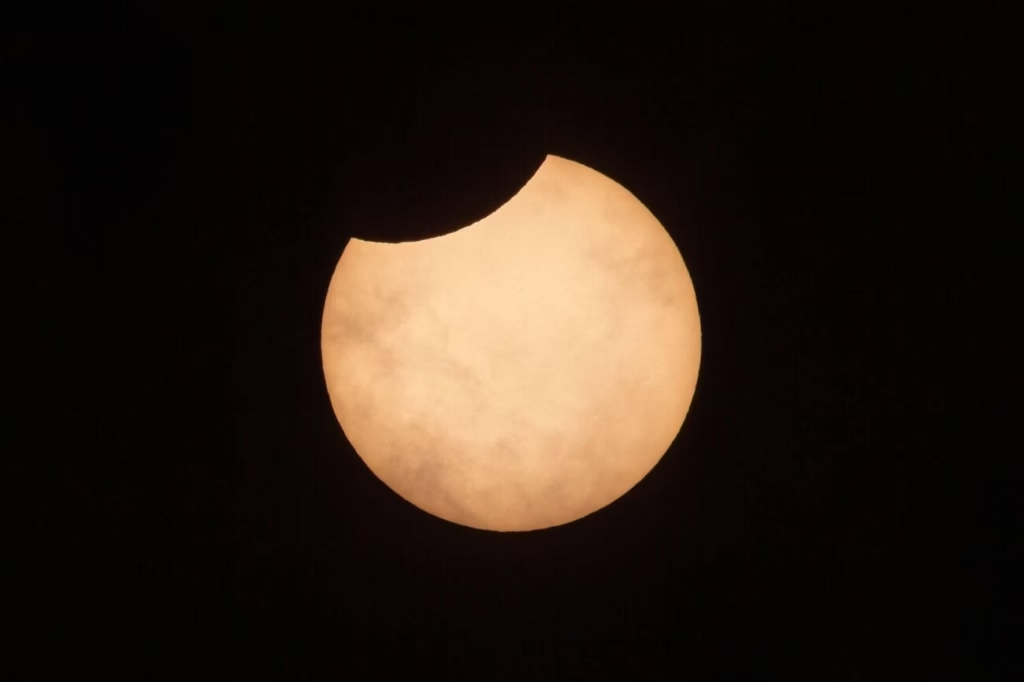
The Moroccan cities that will not see totality
This matters more than anything else on this page, because a lot of eclipse travel content lists Marrakech, Merzouga and the Atlas mountains as places to watch the 2027 eclipse. They are not. They lie well south of the path and will see a partial eclipse only.
That distinction is not a technicality. A partial eclipse, even a deep one, is a dimming. The sun stays too bright to look at, the corona never appears, the stars do not come out and the temperature barely moves. Totality is a different event entirely, and the boundary between them is a line on a map, not a gradient. Ninety-nine percent is not almost totality. It is a partial eclipse.
So if seeing the total eclipse is the point of your trip, you must be north of that line on the morning of 2 August 2027. Marrakech, Fes, Casablanca, Rabat, Essaouira, Ouarzazate and the whole Sahara will get an interesting partial eclipse and nothing more.
Choosing where to stand: weather decides everything
Morocco averages roughly a 79% chance of clear sky in early August, which sounds decisive until you look at where the cloud actually forms. Along this particular track, the risk is not summer storms. It is low morning stratus, and the eclipse happens at 09:45 in the morning, exactly when that cloud is most likely to still be sitting there.
Two patterns matter:
- The Mediterranean coast is the weakest choice. Easterly winds pile moist air against the Rif mountains and hold morning stratus in place. Tetouan and the small coastal towns east of it are the places most likely to be clouded out, despite having the longest totality on paper.
- The Atlantic coast carries a fog risk. Marine stratus and morning fog affect the Tangier and Asilah coastline, though it usually does not push far inland.
- Inland is the safer bet. Moving 70 kilometres or more away from the coast improves the odds substantially. The country around Chefchaouen and Ouazzane is the sensible compromise between good weather odds and a long totality.
The practical answer is not to commit to one spot months ahead. Base yourself somewhere inside the path with roads running in several directions, watch the forecast for the final 48 hours, and be prepared to drive an hour or two on the morning itself. This is exactly what experienced eclipse chasers do, and it is the single biggest thing that separates people who see totality from people who watch a grey sky get darker. A private vehicle and a driver who knows the back roads is worth more on that morning than any hotel booking.
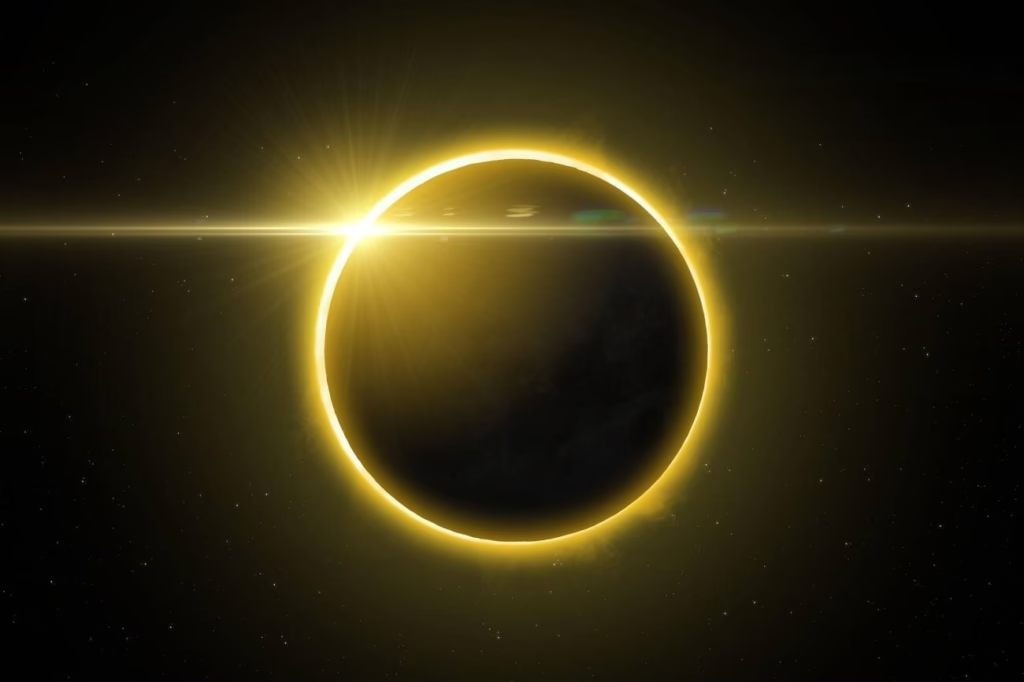
What actually happens during totality
If you have not seen one before, the sequence is worth knowing so you do not spend it fumbling with a camera.
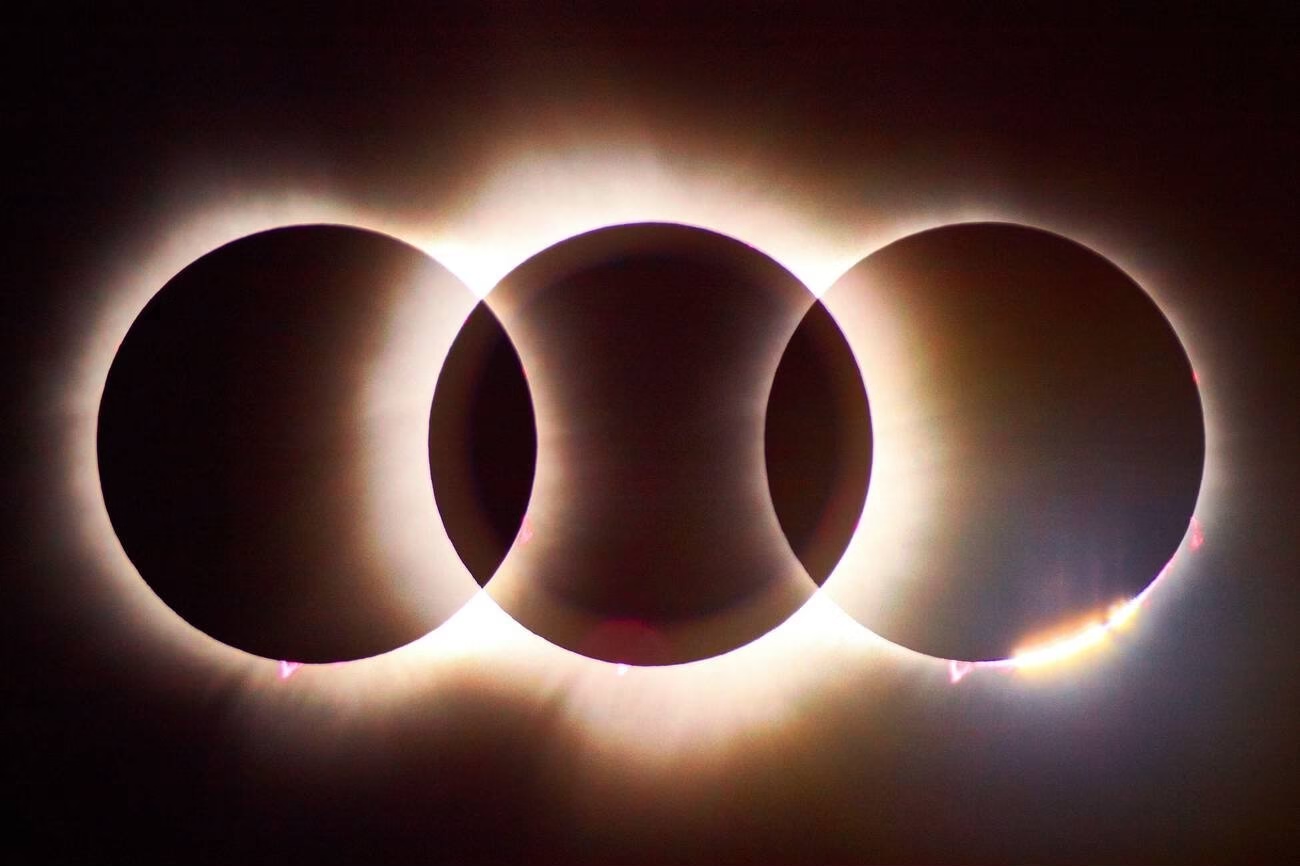
The partial phase lasts over an hour and is undramatic. The light turns strange and metallic in the last fifteen minutes, shadows sharpen, and the temperature drops noticeably. In the final minute the light falls away fast. Rippling bands of shadow may race across pale ground. The last bead of sunlight breaks into points around the moon’s edge, then vanishes.
Then the corona appears, a pale silver halo far larger than the sun, and it is safe to look with the naked eye. Bright planets and stars come out. The horizon glows orange in every direction at once, because you are standing inside a shadow only a couple of hundred kilometres wide and seeing daylight beyond its edges. Birds go quiet. It lasts, here, not quite five minutes.
Then a single point of sunlight returns, and you must have the filters back on immediately.
How to watch it safely
The rules are simple and non-negotiable:
- Use eclipse glasses certified to ISO 12312-2 for every second of the partial phases. Sunglasses, smoked glass, exposed film and phone screens are not safe and cause permanent retinal damage without pain to warn you.
- Buy from a reputable supplier before you travel. Counterfeit glasses appear in quantity before every major eclipse.
- Cameras, binoculars and telescopes need a proper solar filter over the front of the lens. A filter behind the lens will crack from concentrated heat.
- During totality only, and only once the last sliver of sun has gone, it is safe to look directly. Put the filters back on the instant the sun reappears.
- Watch children closely during the partial phases.
Photographing the eclipse in Morocco
Our honest advice for a first total eclipse: do not photograph it. Five minutes is shorter than you think, and a photograph taken badly is a poor trade for an experience missed. Set a phone on a tripod recording wide if you want a memento, and spend the totality looking up.
If you do intend to shoot it properly, a telephoto of 200mm or more on a tripod, a front-mounted solar filter for the partial phases, and a rehearsed bracketing sequence for the corona are the essentials. Practise the whole sequence on the sun weeks beforehand. Morocco’s dry summer air and low humidity inland make for excellent transparency, and the landscape gives you foreground options that a city rooftop will not.
Planning a trip around the eclipse
A few things are specific to this event rather than general Morocco advice:
- Book accommodation early. Northern Morocco has a limited number of good rooms and the eclipse falls in high season. Rooms in Tangier, Tetouan and Chefchaouen for the nights around 1 and 2 August 2027 will go long before the date.
- Arrive at least two days ahead. Flight delays on the morning of an eclipse cannot be recovered from. There is no second chance.
- Keep the eclipse morning flexible. Do not schedule anything else for 2 August. Treat it as a day where you may need to drive at short notice.
- Build a real trip around it. Totality lasts five minutes; you will have flown here for it, so make the surrounding week worth the journey.
Combining the eclipse with a Morocco tour
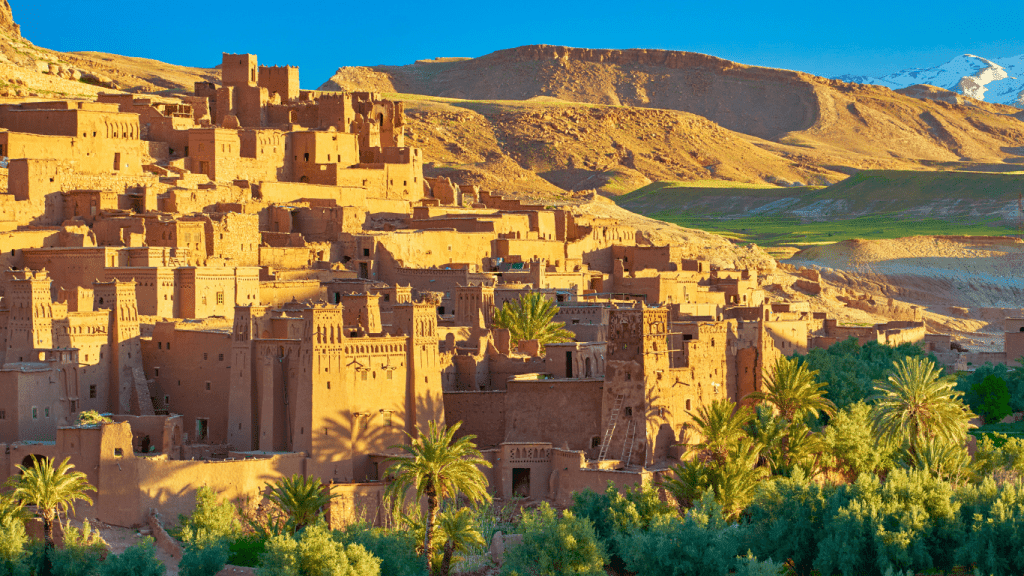
The north is the natural region to build around, and it happens to be one of the most rewarding parts of the country: Chefchaouen’s blue lanes, the Roman mosaics at Volubilis, the imperial city of Meknes, Asilah’s painted walls, and Fes, the oldest of the imperial cities, all sit within reach of the eclipse path.
Our 8-day tour from Tangier and 10-day Tangier to Marrakech tour both start where the eclipse path runs, and either can be reshaped so that you are in the right place on the morning of 2 August. If you would rather see the Sahara as well, the 12-day tour from Tangier to Marrakech covers the north, the desert and the imperial cities in one trip. For a shorter add-on, the Chefchaouen day trip from Fes is the quickest way to see the blue city.
Every tour we run is private, so the itinerary is yours: we can hold the eclipse morning open, keep a vehicle and driver on standby, and move you inland if the forecast turns. That flexibility is genuinely the difference between seeing this and missing it. You can see the full range on our Morocco tours page, or tell us your dates and we will plan around the eclipse.
What about the 2026 eclipse?
The total solar eclipse of 12 August 2026 has already passed. Its path of totality crossed Greenland, Iceland and northern Spain; Morocco saw a partial eclipse only. If you were searching for that one, 2 August 2027 is the date that now matters, and it is a far better event from Morocco: the 2027 eclipse brings genuine totality to Moroccan soil, which 2026 never did.
Frequently asked questions
When is the next solar eclipse in Morocco?
The next total solar eclipse visible from Morocco is on Monday 2 August 2027. Totality crosses northern Morocco in the late morning, beginning around 09:45 local time, and lasts up to about 4 minutes 55 seconds depending on where you stand.
Where is the best place in Morocco to see the 2027 eclipse?
Anywhere inside the northern path will show totality. Tangier is the most convenient base, Tetouan sits closest to the centre line, and Chefchaouen offers the best balance of long totality and lower cloud risk. Inland sites generally have better weather odds than the Mediterranean coast.
Will Marrakech see the total solar eclipse?
No. Marrakech lies south of the path of totality and will see a partial eclipse only. The same applies to Fes, Casablanca, Merzouga and the Sahara. To see totality you must travel to northern Morocco.
How long will the eclipse last in Morocco?
Totality lasts roughly 4 minutes 30 seconds to 4 minutes 55 seconds across northern Morocco. The partial phases either side of it last more than an hour each.
Do I need special glasses to watch the eclipse?
Yes. Eclipse glasses certified to ISO 12312-2 are required for the partial phases. Only during the brief period of complete totality is it safe to look without a filter, and filters must go back on the moment the sun reappears.
When should I book a Morocco eclipse trip?
As early as you can. Northern Morocco has limited quality accommodation, the eclipse falls in peak summer season, and rooms along the path are already being reserved for the nights around 2 August 2027.
Is Morocco a good place to photograph a solar eclipse?
Yes, particularly inland, where dry summer air gives excellent transparency and the landscape offers strong foregrounds. The main risk is low morning cloud along the coast, which is why a flexible viewing plan matters more than the camera.