Deciding where to go in Morocco is mostly a question of arithmetic. The country is bigger than it looks, the interesting places are spread across it rather than clustered, and the single most common mistake visitors make is listing everything they have read about and then discovering that the list needs three weeks and they have nine days.
This guide sets out the main destinations, what each is actually for, how long each needs, and which combinations work. We run tours here, so the distances below are the real ones rather than the ones a mapping app promises.
Start with the arithmetic
Four numbers worth knowing before you plan anything:
| Route | Realistic driving time |
|---|---|
| Marrakech to Merzouga (the Sahara) | 9–10 hours, normally split over two days |
| Marrakech to Fes direct | 7–8 hours |
| Fes to Chefchaouen | 4 hours |
| Marrakech to Essaouira | 3 hours |
Morocco is roughly the size of France. Nothing is close to anything, and the mountain roads are slow. Plan around two or three bases rather than a new town every night.
Marrakech
Needs 2–3 days. The obvious entry point and the busiest city in the country. Jemaa el-Fna at dusk, the Koutoubia, the Bahia palace, the Saadian tombs, the Ben Youssef madrasa and souks organised by trade. Add the Majorelle garden if gardens interest you.
Marrakech is intense and divides people. Give it two days rather than five, stay in a riad with a courtyard so you have somewhere quiet to retreat to, and use it as the launch point for the Atlas, the Agafay desert or Essaouira.
Fes
Needs 2 days, one of them guided. If Marrakech is the one everyone visits, Fes is the one people who know Morocco tend to prefer. Fes el-Bali is the largest car-free urban area in the world, founded in the ninth century, and it is still a working medieval city rather than a preserved one: tanneries, brass beaters, dyers, bread ovens, and the Al-Qarawiyyin mosque and university, founded in 859 and recognised as the oldest continuously operating university anywhere.
You need a licensed local guide for at least one day here. The medina has some nine thousand lanes and no logic that reveals itself to a visitor.
The Sahara: Merzouga and Erg Chebbi
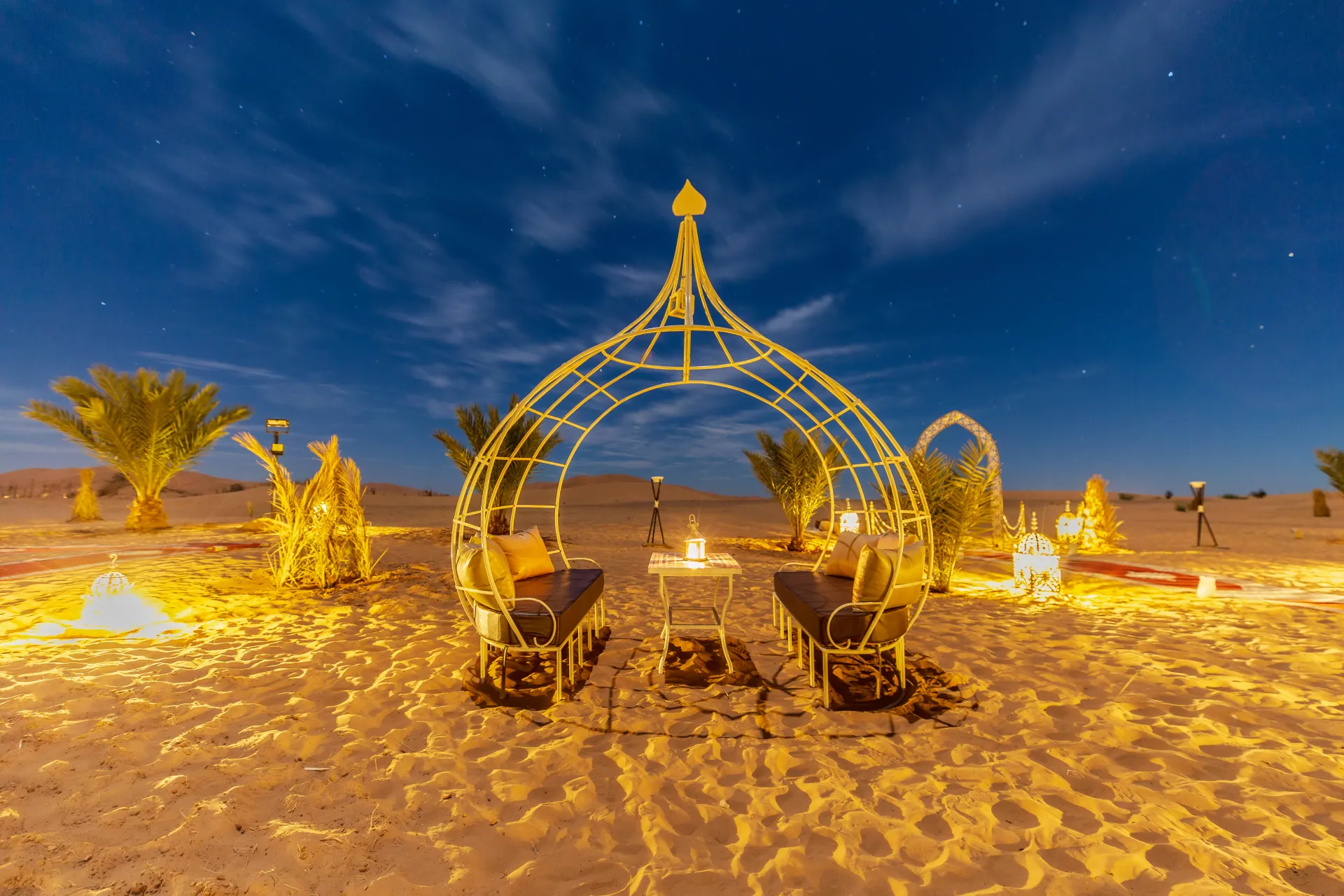
Needs 2 nights in the area. This is the reason most people come. Erg Chebbi’s dunes rise to about 150 metres, you ride out by camel for sunset, sleep at a desert camp, and see sunrise over the sand.
The mistake is doing it in one night. Arriving at dusk and leaving after breakfast makes the Sahara a photo stop at the end of a long drive. A second day, out among nomad families, the old mine workings and the Gnawa musicians of Khamlia, is what turns it into a place.
There is a second desert area at Erg Chigaga, beyond Zagora, which is wilder, harder to reach and far less visited. Choose it if remoteness matters more to you than convenience.
Chefchaouen
Needs 1–2 nights. The blue city in the Rif mountains, small, walkable and calm in a way no other Moroccan town is. It is genuinely beautiful and genuinely touristy, and both of those are true at once. Arrive in the late afternoon, walk the lanes early before the day-trippers, and use it as a decompression stop after Fes.
The catch is location: it is far north, and adding it to a southern route costs the better part of two days.
The Atlas mountains
Needs 1 day, or 2–3 for walking. The High Atlas is an hour from Marrakech and a completely different country: Berber villages, terraced fields, walnut trees and cold rivers. Imlil is the base for walking, including Mount Toubkal, North Africa’s highest peak, for the properly equipped. The Ourika valley is the easy day trip.
The Middle Atlas, further north around Azrou and Ifrane, is cedar forest with Barbary macaques and alpine-looking towns, and it sits conveniently on the road between Fes and the desert.
Essaouira
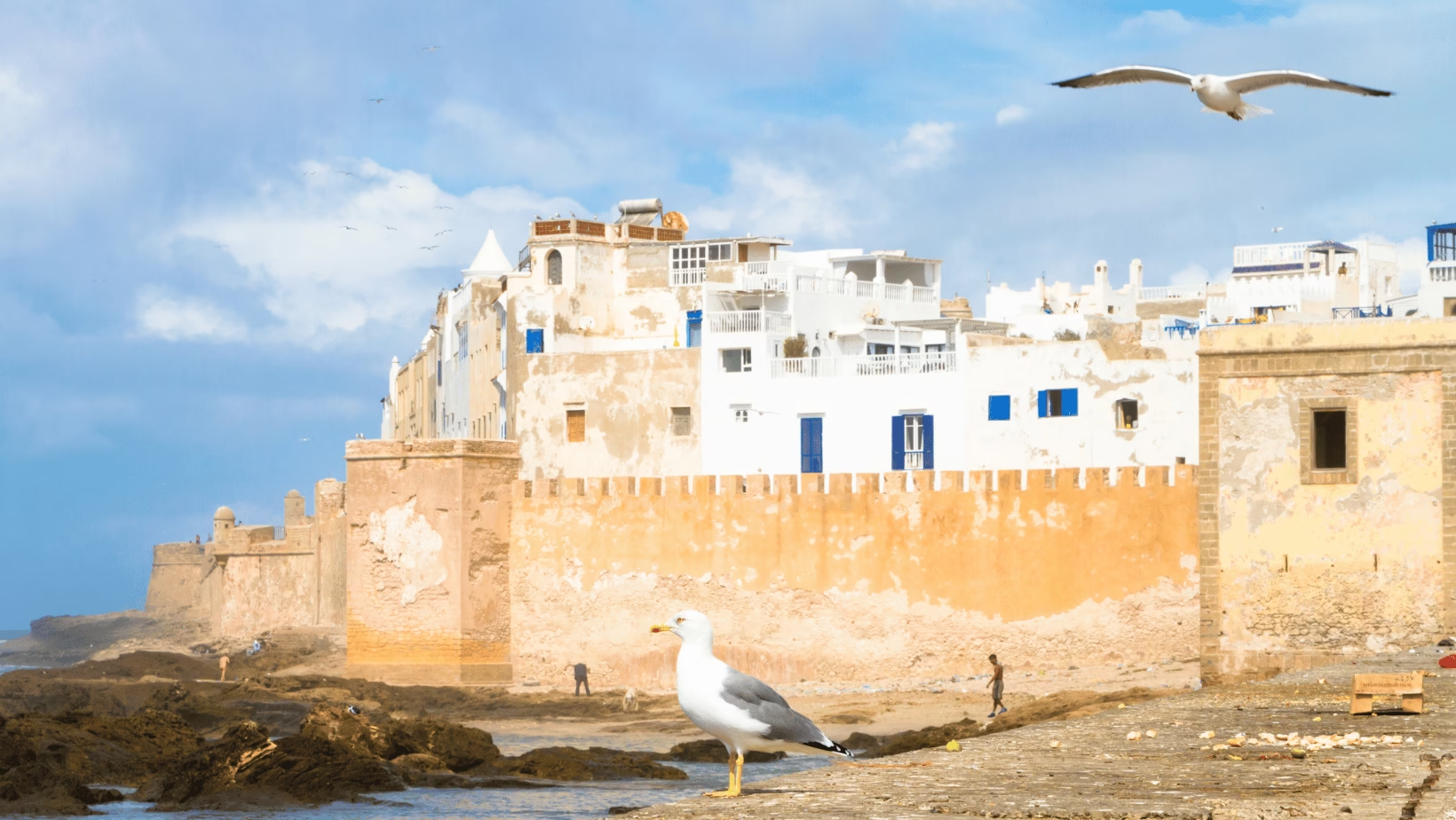
Needs 1–2 nights. A windswept Atlantic port inside eighteenth-century ramparts, three hours from Marrakech. Flat, walkable, low-pressure, with a working fishing harbour, thuya wood workshops, a wide beach and reliable wind that makes it a kitesurfing and windsurfing centre. The easiest town in Morocco to spend time in, and the best antidote to Marrakech.
Ait Ben Haddou and Ouarzazate
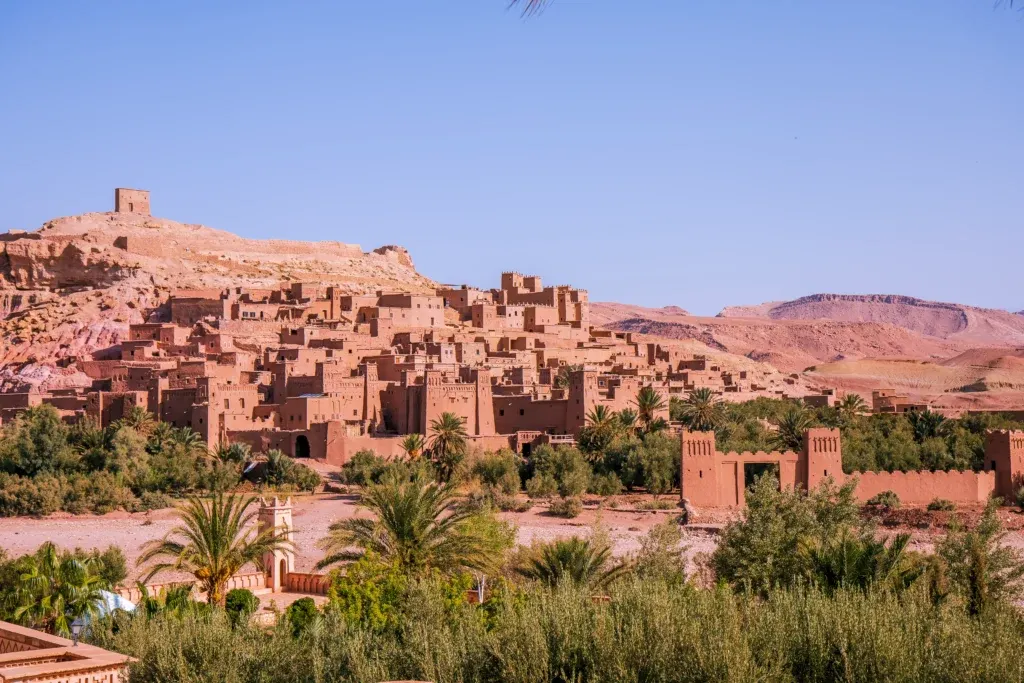
Needs half a day, or a night. The fortified ksar at Ait Ben Haddou is a UNESCO World Heritage site and one of the most filmed locations in the country. It sits on the road between Marrakech and the desert, so most people see it in passing, but staying the night lets you have it to yourself at dawn. Ouarzazate nearby has the Atlas film studios and the Taourirt kasbah.
The gorges and oasis valleys
Needs 1–2 days, on the way. The Dades gorge, where the road folds back on itself between red rock walls, and the Todra gorge, a 300-metre canyon that narrows to a corridor. Both sit on the standard route between Marrakech and Merzouga, along with the Valley of Roses, the Skoura oasis and the Draa valley’s unbroken line of date palms.
Casablanca, Rabat and Tangier
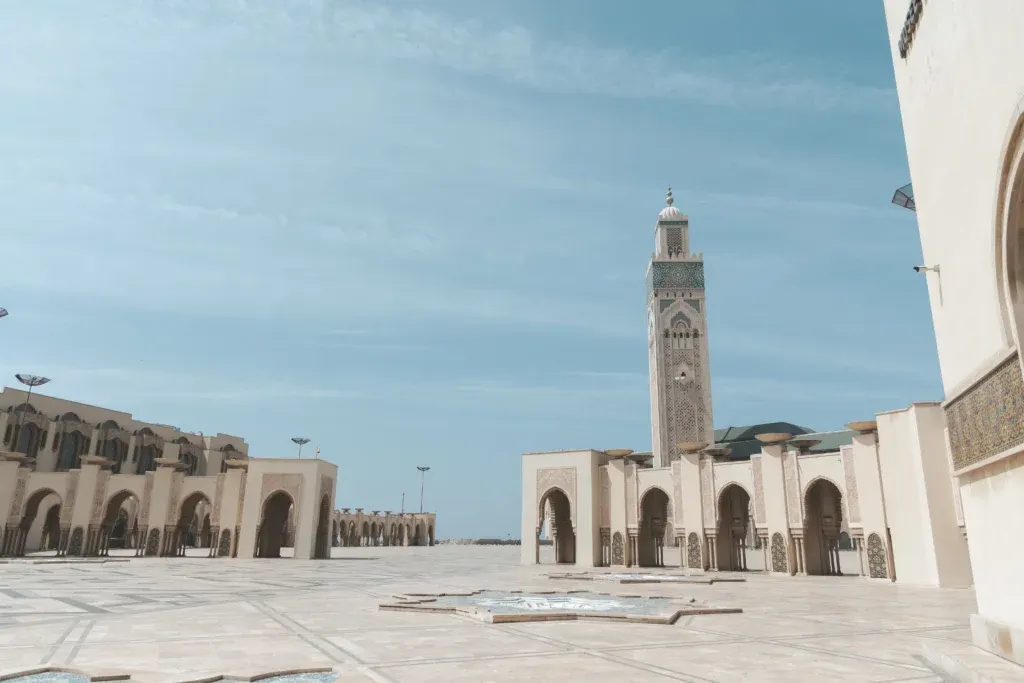
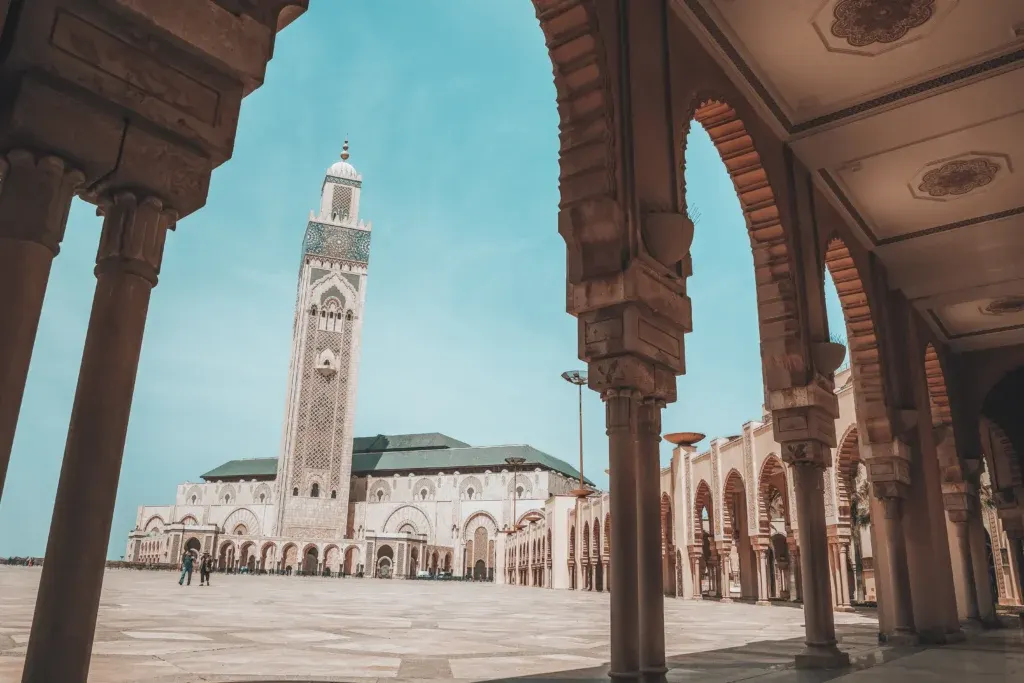
Half a day to a day each. Casablanca is the economic capital and mostly modern; the Hassan II mosque, built out over the Atlantic, is genuinely extraordinary and is the reason to stop. Rabat, the political capital, is calm and underrated, with the Hassan Tower and the Kasbah of the Udayas. Tangier, where the Mediterranean meets the Atlantic, has been transformed in the last decade and is now a pleasant entry point from Spain.
None of these are why people come to Morocco, but all three are easy to slot in around flights.
Agadir and the south coast
As long as you want. Agadir is a purpose-built beach resort, rebuilt after the 1960 earthquake, with reliable sun and international hotels. Taghazout up the coast is the surf town. This is where to go if your trip needs beach days rather than sightseeing, and it pairs naturally with the Souss-Massa national park for birdwatching.
Where to go, by trip length
- 4–5 days: Pick one. Either Marrakech plus the Atlas and Essaouira, or a short desert route. Do not attempt both ends of the country.
- 7–8 days: Marrakech, the gorges, the Sahara and finish in Fes. The classic crossing.
- 10 days: The above plus the imperial cities, or plus Chefchaouen. Not both.
- 12–15 days: North, desert, imperial cities and coast, with room to sit still occasionally.
Where to go, by what you want
- First visit: Marrakech, the gorges, the Sahara, Fes.
- With children: Marrakech, the desert, Essaouira, the Middle Atlas for the monkeys.
- Culture and craft: Fes above all, then Marrakech, Rabat, Meknes and Volubilis.
- Walking: The High Atlas from Imlil, or the Todra and Dades gorges.
- Beach and surf: Essaouira, Taghazout, Agadir.
- Quiet and slow: Chefchaouen, Essaouira, the Atlas villages, Erg Chigaga.
- Second visit: The north, the Atlantic coast, Erg Chigaga, or the far south towards Tafraoute.
When to go
March to May and September to November are the best windows almost everywhere: warm days, cool nights, open mountain passes. Summer is difficult in Marrakech and the south, where midday can exceed 45°C, but excellent on the Atlantic coast. Winter is quiet and pleasant by day in the desert, cold at night, and can close the high passes with snow.
Planning the route
The routes above are the ones we run. Our 3-day Marrakech to Fes desert tour is the compressed classic, the 10-day tour from Casablanca adds the imperial cities, and the 15-day tour covers north, coast, desert and cities without rushing. If you are weighing durations, our guide on whether 10 days is enough goes into the trade-offs.
Every tour is private, so any of these can be reshaped around what you actually want to see. Browse them all on our Morocco tours page, or tell us how long you have and we will tell you honestly what fits.
Frequently asked questions
Where should I go in Morocco for the first time?
Marrakech, the Dades and Todra gorges, the Sahara at Merzouga, and Fes. That route covers a city, mountains, desert and the oldest medina in the country, and needs about seven to ten days depending on pace.
What is the most beautiful place in Morocco?
Subjective, but the three most cited are the dunes of Erg Chebbi at sunrise, the blue lanes of Chefchaouen, and the fortified ksar of Ait Ben Haddou. The Todra gorge and the High Atlas villages have strong claims too.
How many days do you need in Morocco?
Seven days is the practical minimum to see a city and the Sahara properly. Ten days lets you add the imperial cities. Under five days, choose one region rather than crossing the country.
Is Marrakech or Fes better?
Marrakech is easier to reach, livelier and better for first-time visitors and families. Fes has the larger and more intact medieval medina and is generally preferred by people interested in history and craft. Most itineraries include both.
Can I visit the Sahara and Chefchaouen in one trip?
Yes, but they sit at opposite ends of the country and the combination needs at least twelve days to be comfortable. In ten days you can do it only by dropping the imperial cities or accepting two very long driving days.
What is the best time of year to visit Morocco?
March to May and September to November. Both give warm days, cool nights and open mountain passes. Avoid the southern interior in July and August, when midday temperatures can exceed 45°C.