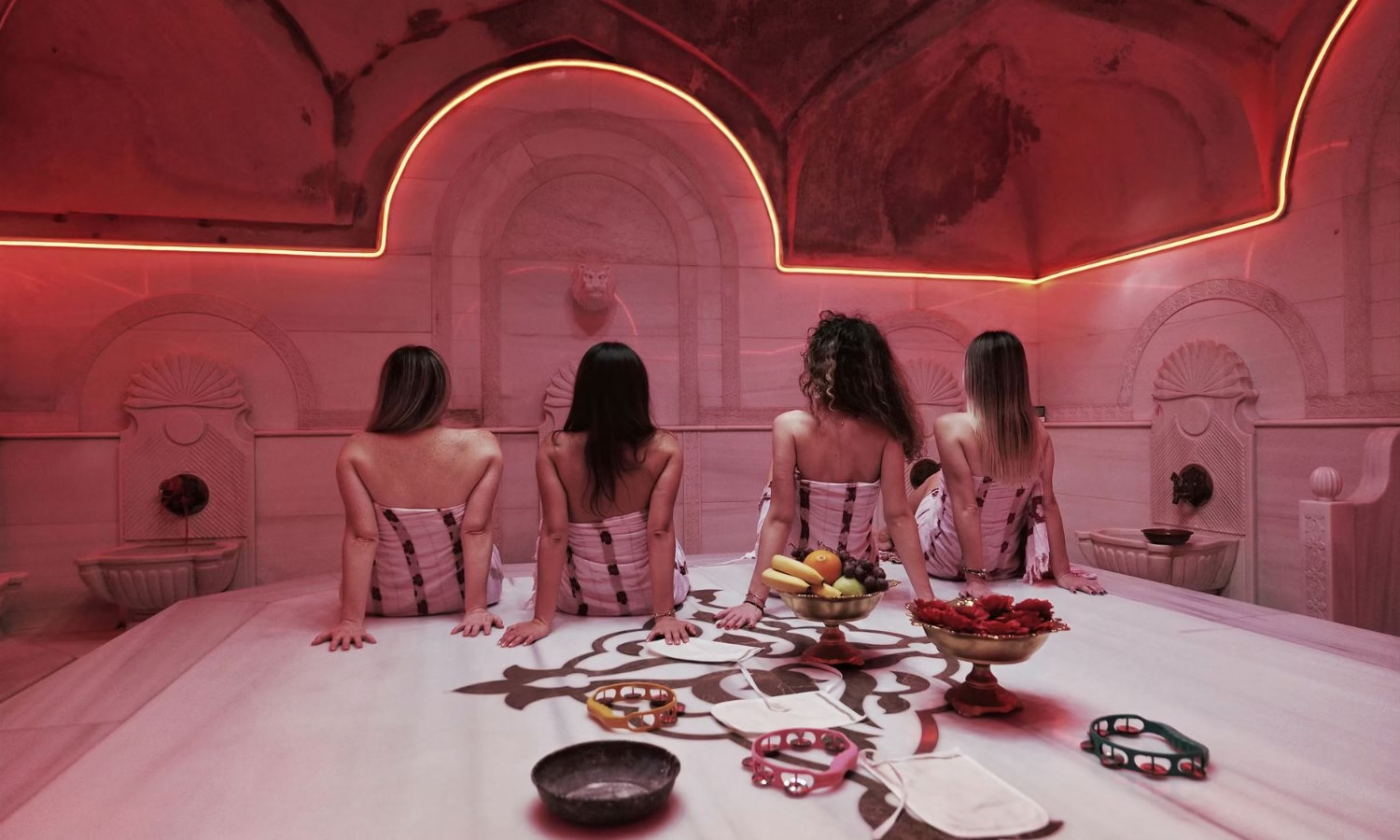
Spas in Marrakech range from a neighbourhood bathhouse where you scrub yourself on a hot marble floor for the price of a coffee, to palace hotels charging European rates for an hour of argan oil. Both are worth doing, and they are not really the same experience.
This guide explains what a hammam actually is, what happens step by step, how the three types of establishment differ, what to bring, and the etiquette that stops a first visit being awkward. We are a Moroccan tour operator and we book these constantly, including for people who are quite nervous about the idea.
What a hammam is
A hammam is a steam bathhouse, descended from Roman baths and adapted across the Islamic world. In Morocco it has been a fixture of neighbourhood life for centuries: traditionally the local hammam sat beside the mosque and the bread oven, sharing the same furnace, and it remains a social institution as much as a place to get clean.
The essential idea is heat, then exfoliation, then rinsing. Steam opens the pores, black soap softens the skin, a coarse glove removes a genuinely startling quantity of dead skin, and you emerge feeling several years newer. What varies between establishments is the setting, the privacy and how much is done for you.
The three kinds of place
The public neighbourhood hammam
What Moroccans use, typically weekly. Separate hours or separate entrances for men and women, a few dirhams for entry, and you bring your own soap, glove, towel and a mat to sit on. You wash yourself, or pay a kessala or tayeba a small amount to scrub you.
It is communal, functional, loud and completely unglamorous. Nobody is providing a towel or a herbal tea. It is also the real thing, and if you want to understand Moroccan daily life it is the most authentic hour you can spend. Bring flip-flops.
The riad or private hammam
The middle ground and, for most visitors, the right choice. Many riads have a small hammam and will book you a private session: you have the room to yourself or share it with your own group, an attendant does the work, and everything is provided. Prices are moderate and the experience is calm rather than social.
This is the version to book for a couple, a family or a birthday group. Our guide to a birthday in Marrakech covers group bookings.
The luxury hotel or destination spa
Full spa facilities: hammam plus massage, facials, hydrotherapy, pools, sometimes yoga. Prices approach European levels, the surroundings are beautiful, and treatments are longer and more elaborate. Worth it as an occasion, and often the easiest option for anyone hesitant about the whole idea.
What actually happens, step by step
- Changing. You undress and put on disposable underwear, or your own swimwear bottoms. There is usually a relaxation area first.
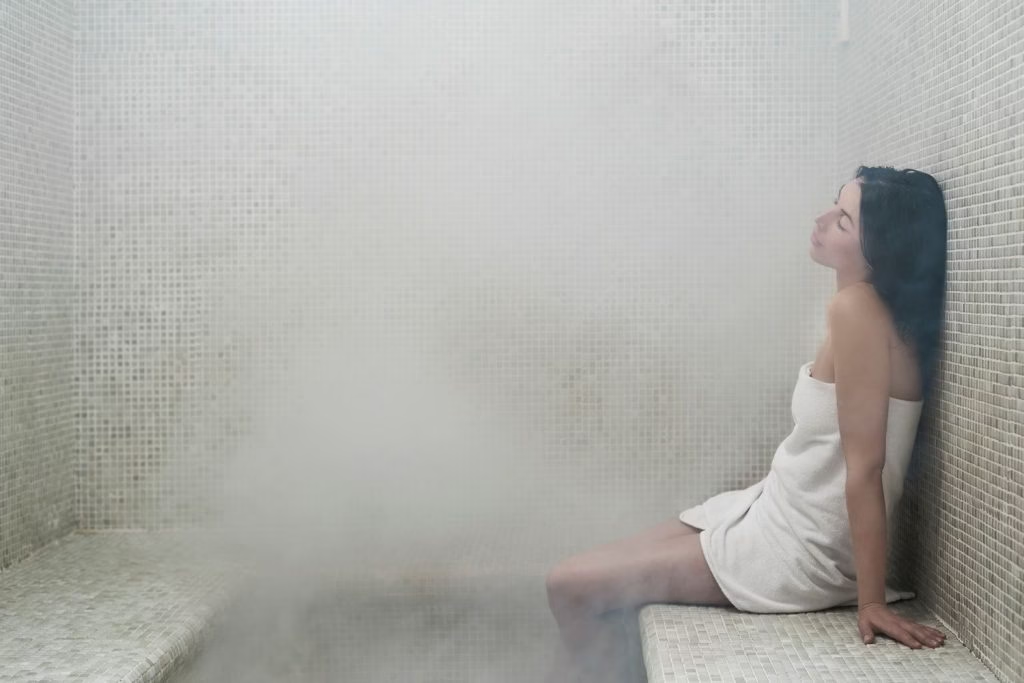
- The warm room. You sit and acclimatise while the heat and steam begin to work. Ten to fifteen minutes.
- The hot room. Hotter and steamier, lying on heated marble. You sweat properly. This is the point at which the skin softens.
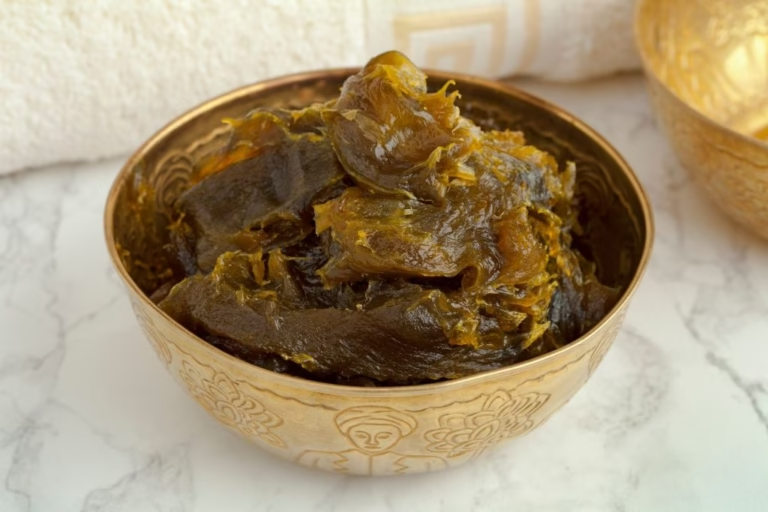
- Black soap. Savon beldi, a soft olive-oil soap the colour and consistency of tar, is spread all over you and left for five to ten minutes.
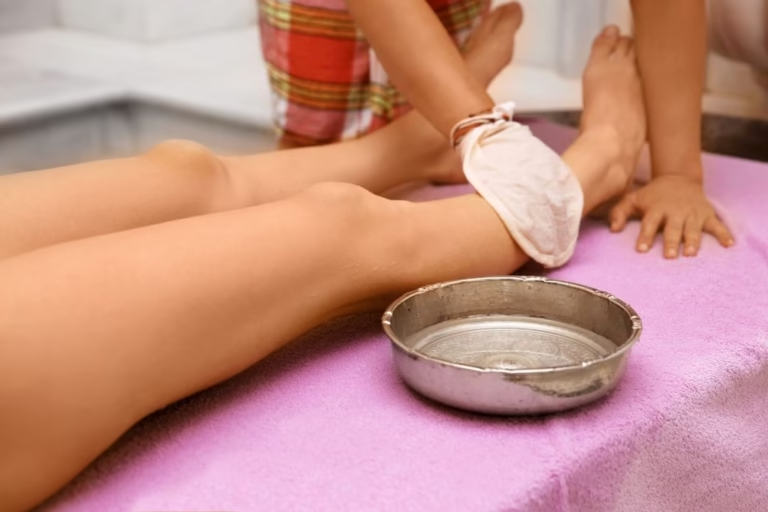
- The scrub. The kessa, a coarse mitt, is worked hard over every inch of you. Grey rolls of dead skin come off in visible quantity. It is vigorous, occasionally borderline uncomfortable, and the part everyone talks about afterwards.
- Rinsing. Buckets of warm water, repeatedly.
- Ghassoul clay. Optional and usual in spas: a mineral clay from the Middle Atlas, mixed with rose water, applied and left to draw out impurities.
- A cool rinse. Closes the pores and wakes you up.
- Argan oil. Massaged in afterwards, sometimes with a full massage.
- Tea and rest. Mint tea, water, and twenty minutes of sitting still. Do not skip this; you will be dehydrated and slightly light-headed.
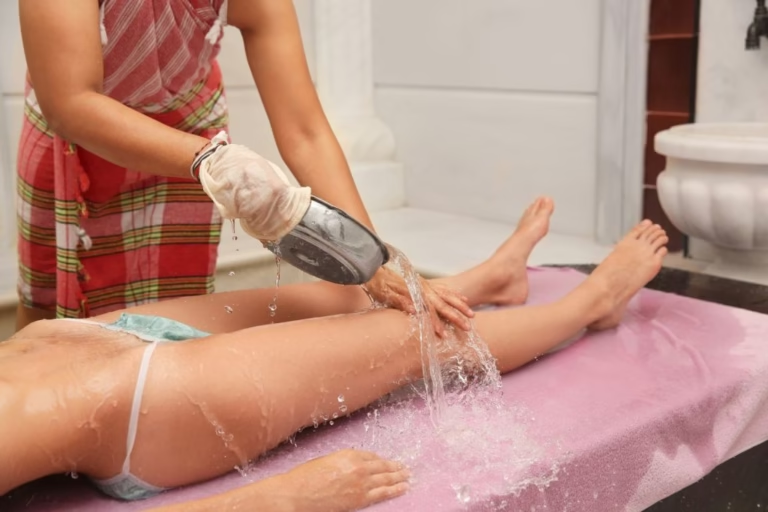

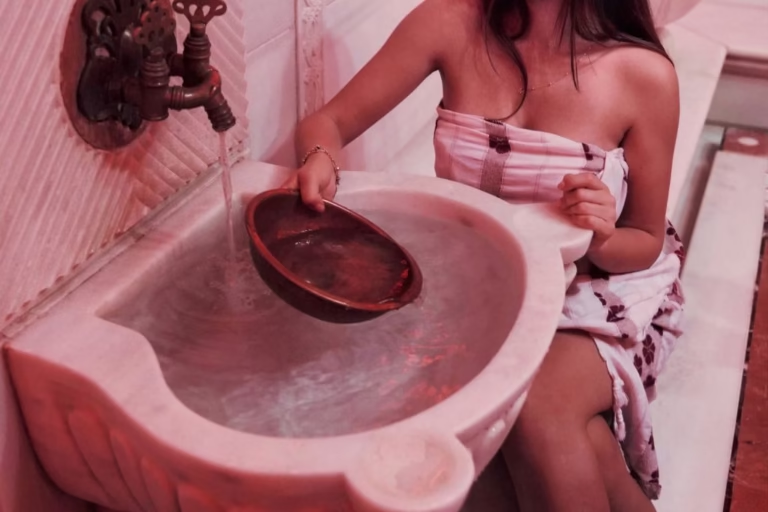

A basic hammam runs about 45 minutes. With clay, oil and a massage, allow two hours.
The ingredients, and why they are used
- Savon beldi — black olive-oil soap, rich in vitamin E, which softens the skin so the scrub can work.
- Kessa glove — coarse woven mitt. You can buy one in any souk for very little and take the ritual home.
- Ghassoul — mineral clay mined in the Middle Atlas, used for centuries on skin and hair, absorbs oil without stripping.
- Argan oil — pressed from the nuts of a tree that grows almost nowhere else, produced largely by women’s cooperatives in the Souss. Cosmetic argan is cold-pressed and pale; culinary argan is roasted, darker and nutty.
- Rose water — distilled in the Valley of Roses near Kelaat M’Gouna, whose damask harvest is in May.
- Orange blossom water — used on skin and in cooking alike.
Etiquette, and the nudity question
This is what people actually want to know, so plainly:
- You keep your underwear on. Bottoms stay on throughout, in every kind of hammam. Women are usually topless in the women’s section of a public hammam; in a private or spa hammam you can keep a bikini top on if you prefer, and nobody will comment.
- Men and women are always separated in public hammams, either by different hours or by different entrances. Mixed sessions only exist in private spa settings for couples.
- Attendants are the same gender as you. Always.
- Do not photograph anything. People are undressed. Phones stay in the locker.
- Tipping. Customary for the person who scrubs you, and appreciated. Around 10 to 20 percent at a spa; a small note at a public hammam.
- Speak up. If the scrub is too hard or the room too hot, say so. “Bshwiya” means gently.
What to bring
To a public hammam: black soap, a kessa glove, shampoo, a towel, flip-flops, a change of underwear, a plastic mat or stool, and a small bucket. All of it is sold cheaply in the souk, and the entry fee is negligible.
To a riad or spa hammam: nothing. Everything is provided. Take a hair tie and expect to leave with skin that does not want makeup for a few hours.
Practical advice
- Do not shave or wax for 24 hours beforehand. The scrub on freshly shaved skin is unpleasant.
- Do not go on a full stomach, and drink plenty of water before and after.
- Book it for the right day. A hammam is excellent after a long drive, after the desert, or the morning after a late night. It is not ideal immediately before a long day of walking, because you will feel pleasantly useless for an hour.
- Timing in the trip. Many people book one for their last full day. Mid-trip is better; you get the benefit for the rest of the holiday.
- Sensitive skin, pregnancy, heart or blood-pressure conditions. Say so when booking. The heat is significant, and a gentler treatment can be arranged.
- Beware the hard sell. Some spas push expensive argan products afterwards. The same oil is far cheaper from a cooperative, and better.
How to choose
Decide what you want first. For authenticity and cost, a public neighbourhood hammam, accepting that it is basic and communal. For comfort and privacy at a fair price, a riad hammam booked privately, which is what we recommend to most guests. For an occasion, a hotel spa with a full treatment menu.
Then check three things: that the establishment is clean and busy, that prices are written down before you start rather than negotiated after, and that treatments are listed with durations. Ask your riad for their recommendation, since they book these every week and have no interest in sending guests somewhere disappointing.
Beyond Marrakech
Every Moroccan city has hammams, and some of the best are outside Marrakech: Fes has beautiful historic bathhouses, Essaouira‘s are relaxed and cheap, and a hammam after two nights in the Sahara is possibly the best-timed one available. If your trip crosses the country, spread them out rather than doing everything in Marrakech.
Our 3-day desert tour from Marrakech to Fes ends in a city with an excellent hammam tradition, and any of our routes can have a spa afternoon built in. Because every tour is private, it slots wherever your group wants it. See our Morocco tours, read about the craftsmanship behind the soaps and clays, or ask us to arrange a private hammam.
Frequently asked questions
What is a Moroccan hammam?
A hammam is a traditional steam bathhouse. You acclimatise in a warm room, sweat in a hot steam room, are covered in black olive-oil soap, then scrubbed hard with a coarse kessa glove to remove dead skin, rinsed, and finished with ghassoul clay and argan oil. It has been part of Moroccan neighbourhood life for centuries.
Do you have to be naked in a Moroccan hammam?
No. You keep your underwear bottoms on, or wear disposable ones provided by the spa. Women are commonly topless in the women’s section of a public hammam, but in a private or spa hammam you can wear a bikini top. Men and women are always separated, and attendants are always the same gender as you.
How much does a hammam in Marrakech cost?
A public neighbourhood hammam costs a few dirhams for entry, plus a small fee if you want someone to scrub you. A private riad hammam is moderate and includes everything. Luxury hotel spas approach European prices. All three are worth doing for different reasons.
How long does a hammam take?
A basic hammam takes around 45 minutes. With ghassoul clay, argan oil and a massage, allow about two hours including the rest and mint tea afterwards, which you should not skip.
What should I bring to a hammam?
To a public hammam: black soap, a kessa glove, shampoo, towel, flip-flops, spare underwear and a mat, all cheaply bought in the souk. To a riad or spa hammam, nothing at all is needed as everything is provided.
Is a hammam suitable for everyone?
The heat is significant, so mention pregnancy, heart conditions, low or high blood pressure or very sensitive skin when booking and a gentler treatment can be arranged. Avoid shaving or waxing in the 24 hours beforehand, and do not go on a full stomach.